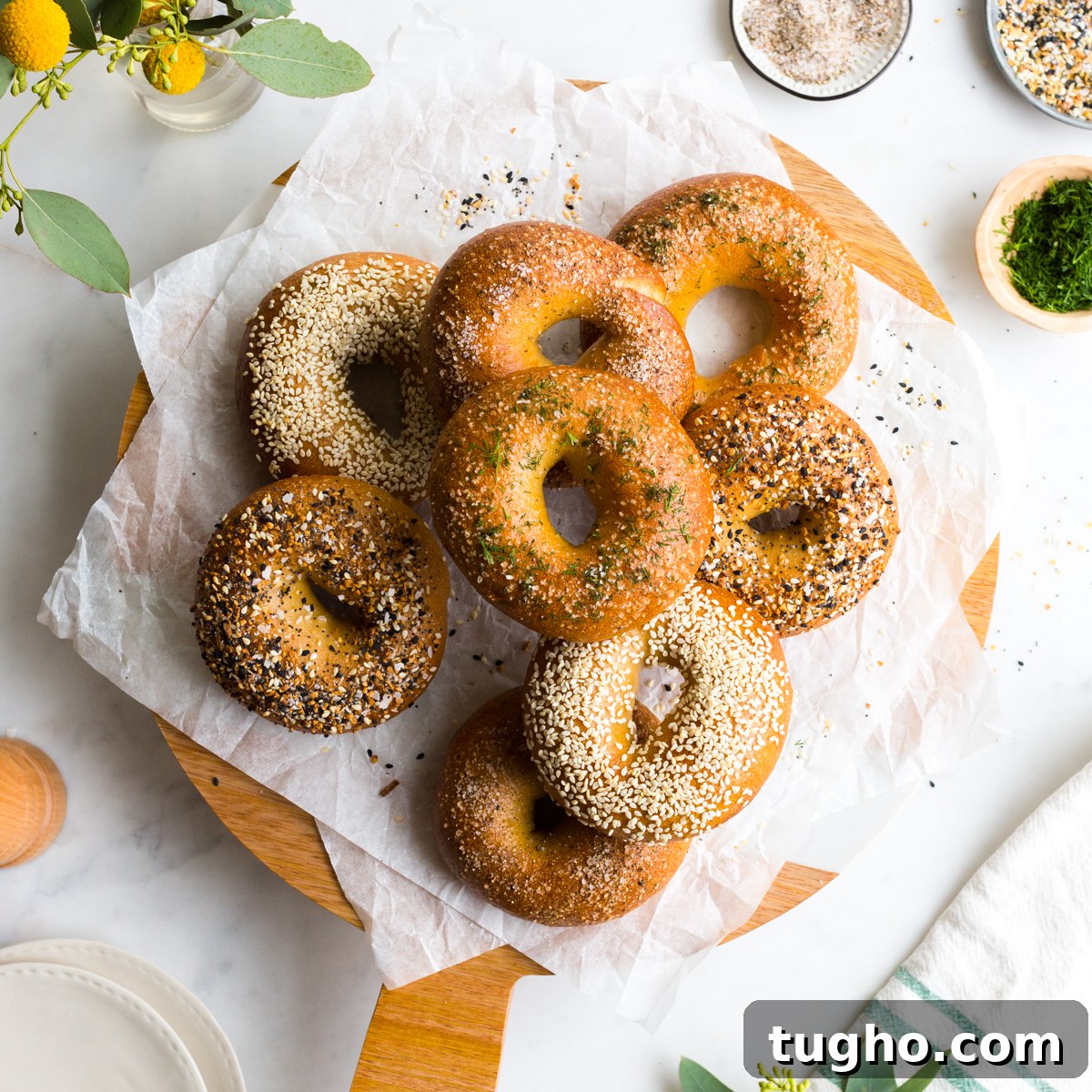
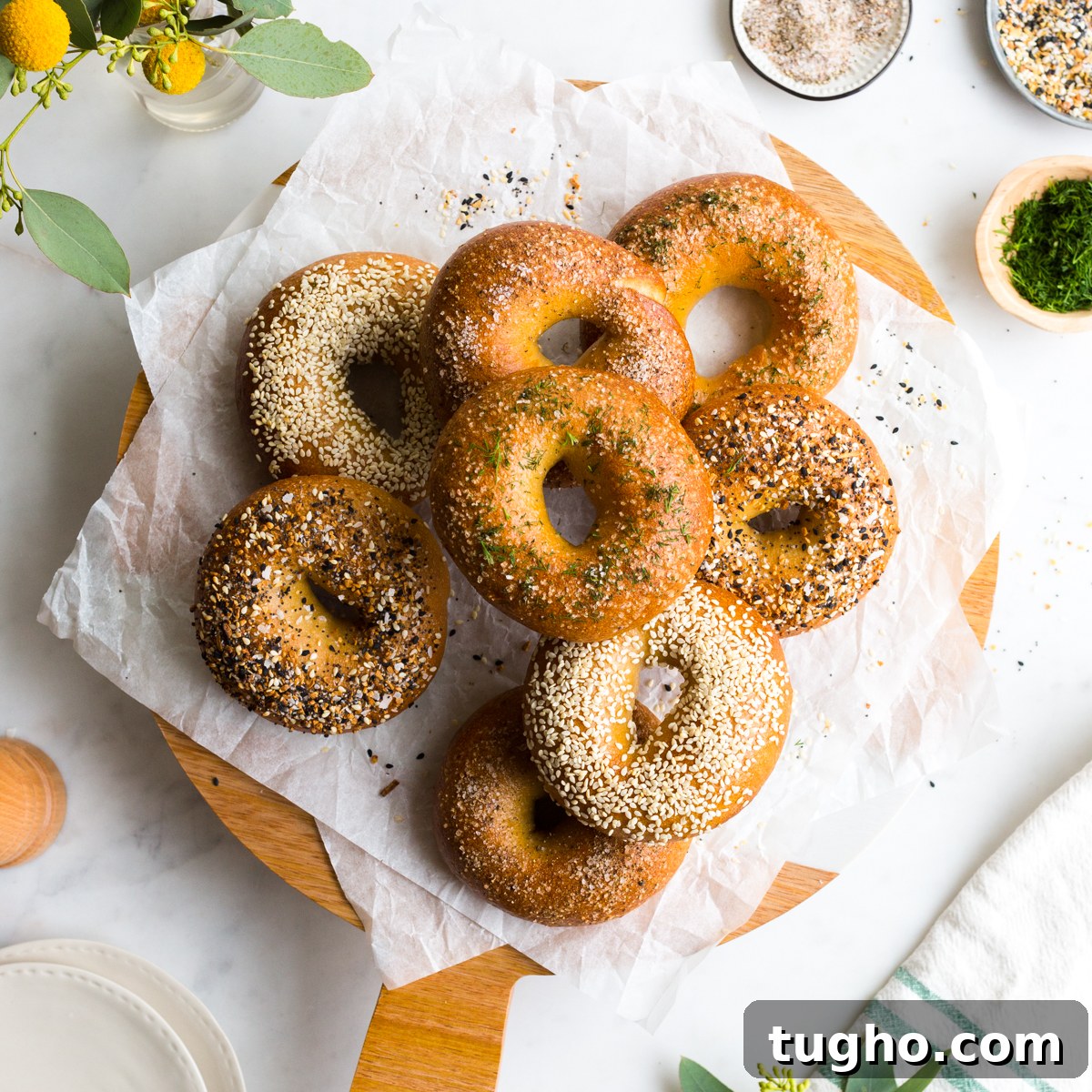
This Best Basic Bagels recipe has been a long time in the making. Homemade bagels may look intimidating at first, but the process is much more approachable when it is broken down into clear, manageable steps. Bagels are built from simple ingredients, yet every detail matters: the flour, the yeast, the hydration, the shaping, the slow rest, the boil, and the final bake all work together to create that classic chewy crust and soft, satisfying interior.
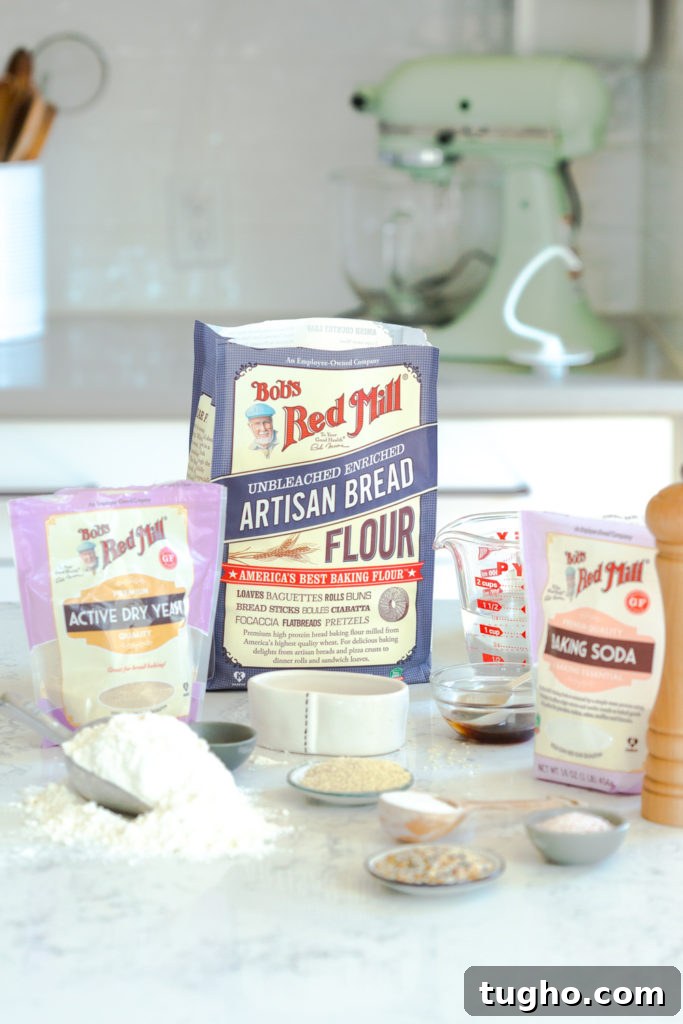
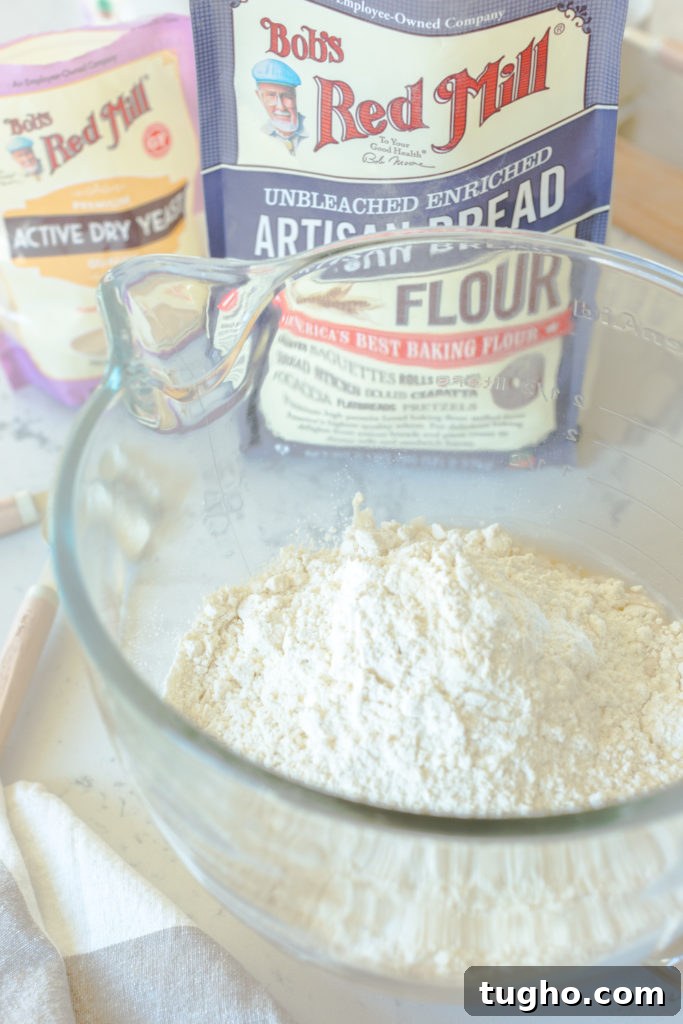
At their core, bagels are wonderfully basic. You do not need a long list of complicated ingredients or any harsh chemicals to make a great batch at home. Bread flour gives the dough the strength and chew that bagels are known for. Active dry yeast helps the dough rise slowly and evenly. A little sweetener, such as date syrup, barley malt syrup, honey, or sugar, helps encourage a beautifully golden crust. Baking soda in the poaching liquid adds to the signature exterior, while salt brings balance and flavor.
The recipe does require time, but most of that time is hands-off. The dough is mixed, kneaded, proofed, shaped, chilled, boiled, topped, and baked. The slow refrigeration period is especially helpful because it develops flavor and gives the bagels a better texture. You can chill the shaped bagels for at least 4 hours or up to 24 hours, making this a practical recipe to start the day before you want to serve them.
This guide includes two reliable shaping methods. The first, called Poke & Spin, starts with a round dough ball and uses your thumb and fingers to open and stretch the center. The second, called Tuck & Roll, begins with a short rope of dough that is wrapped into a ring and sealed. Both methods work well, and trying both is a great way to discover which technique feels more natural to you.
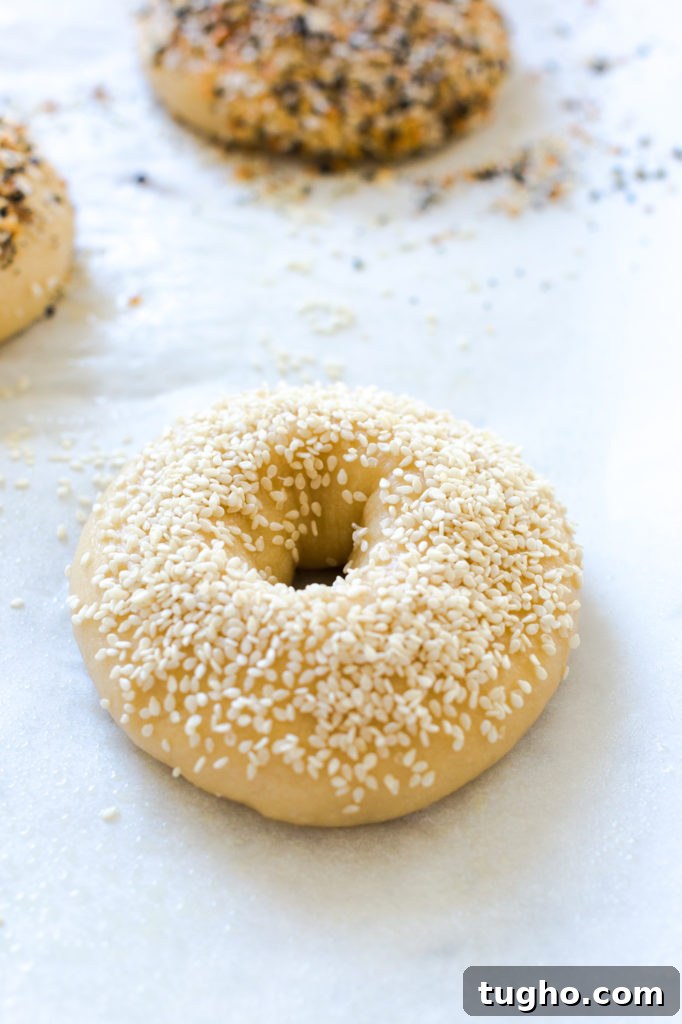
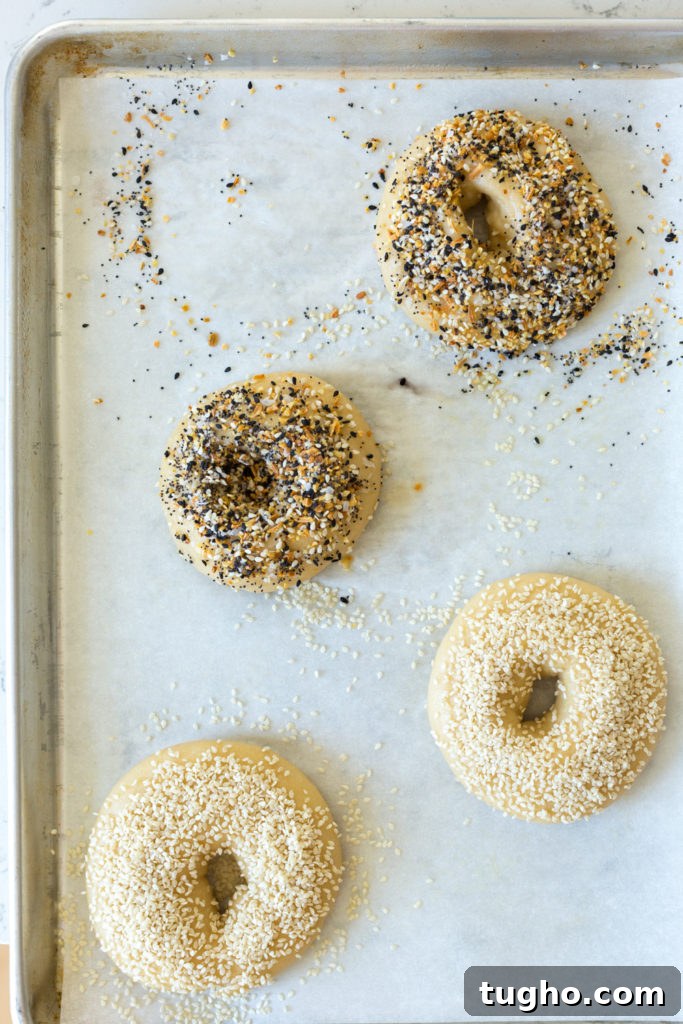
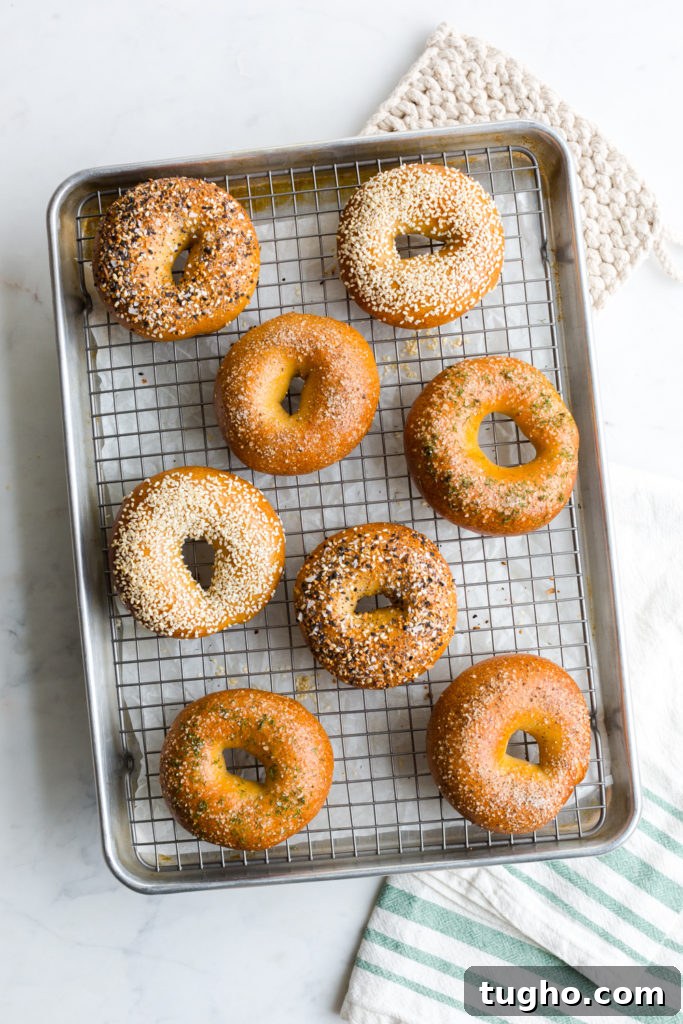
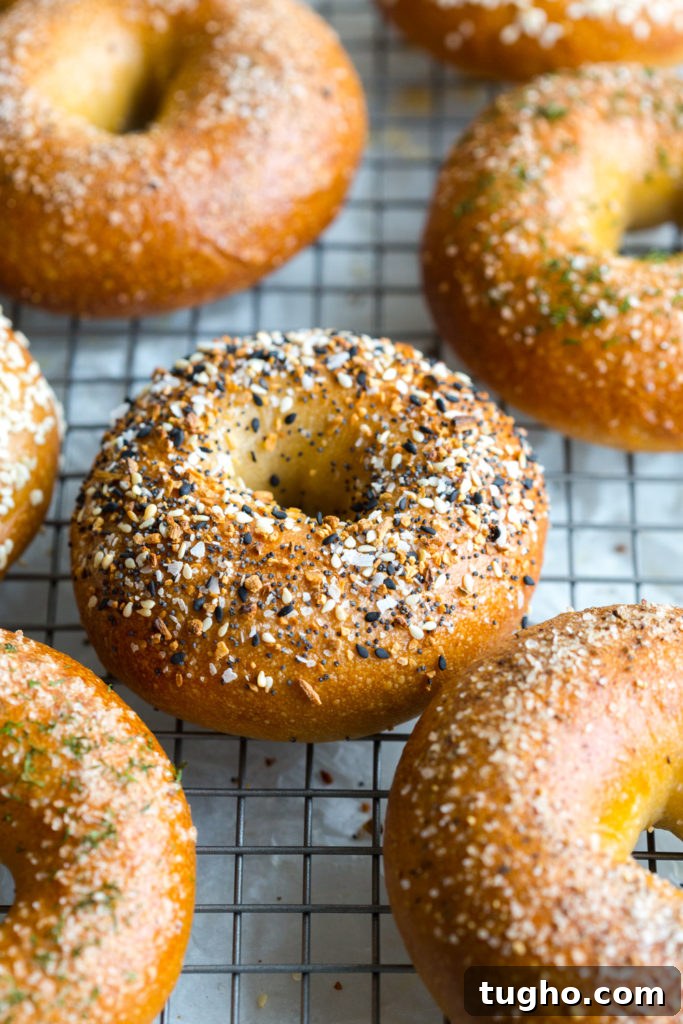
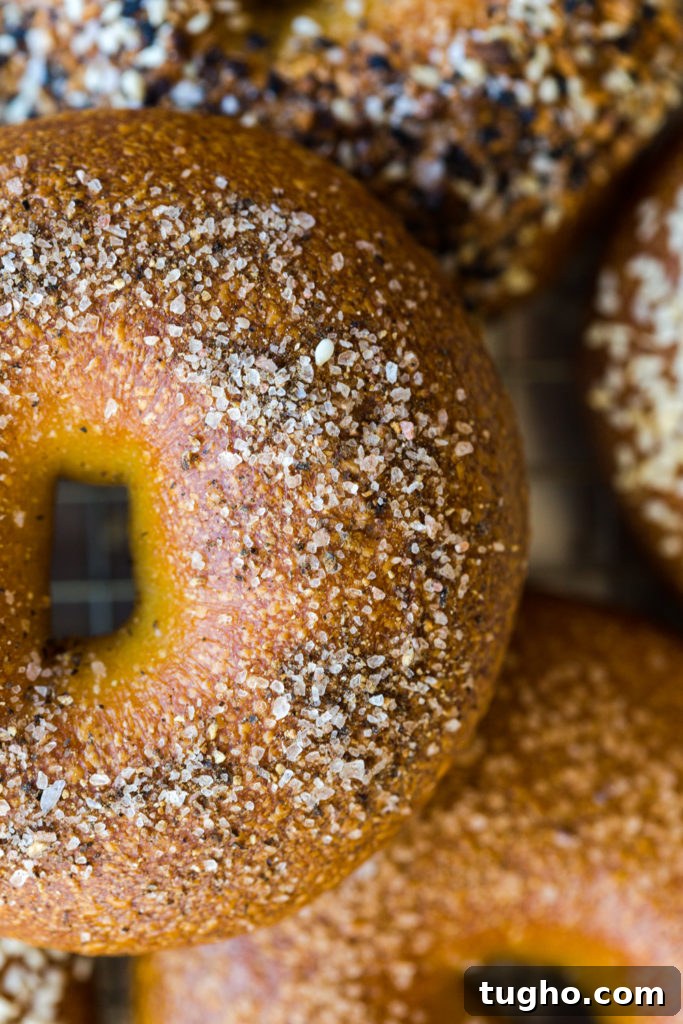
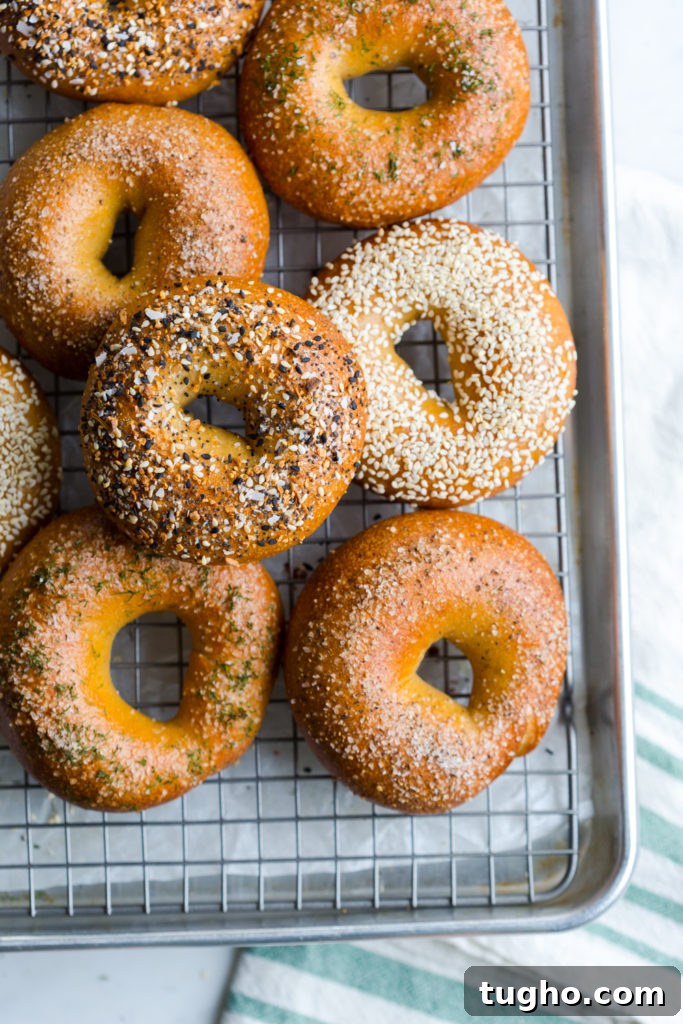
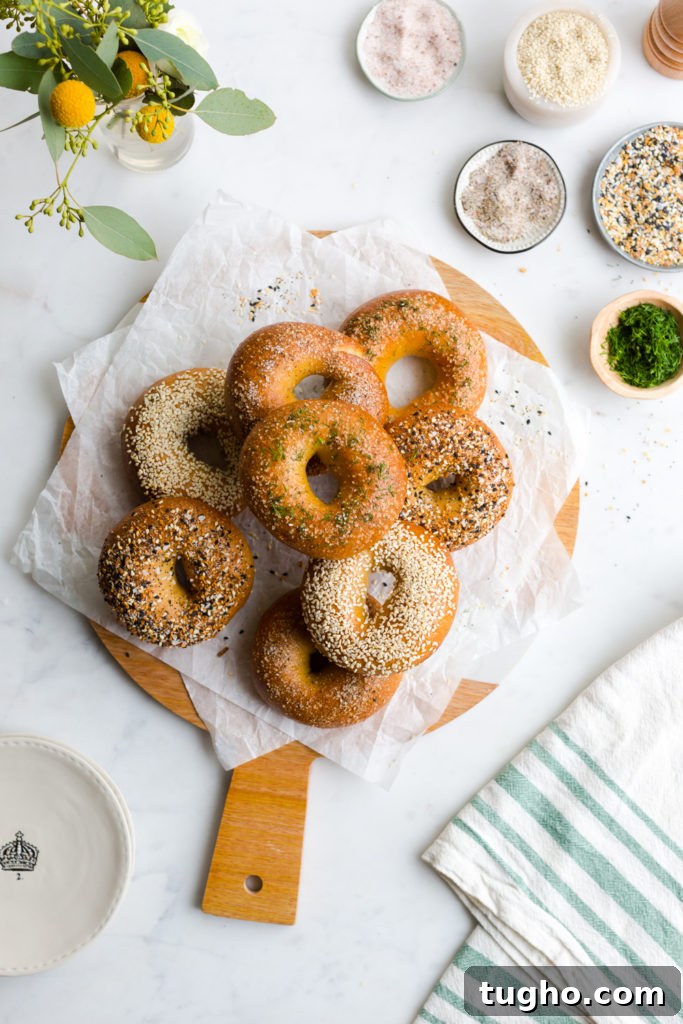
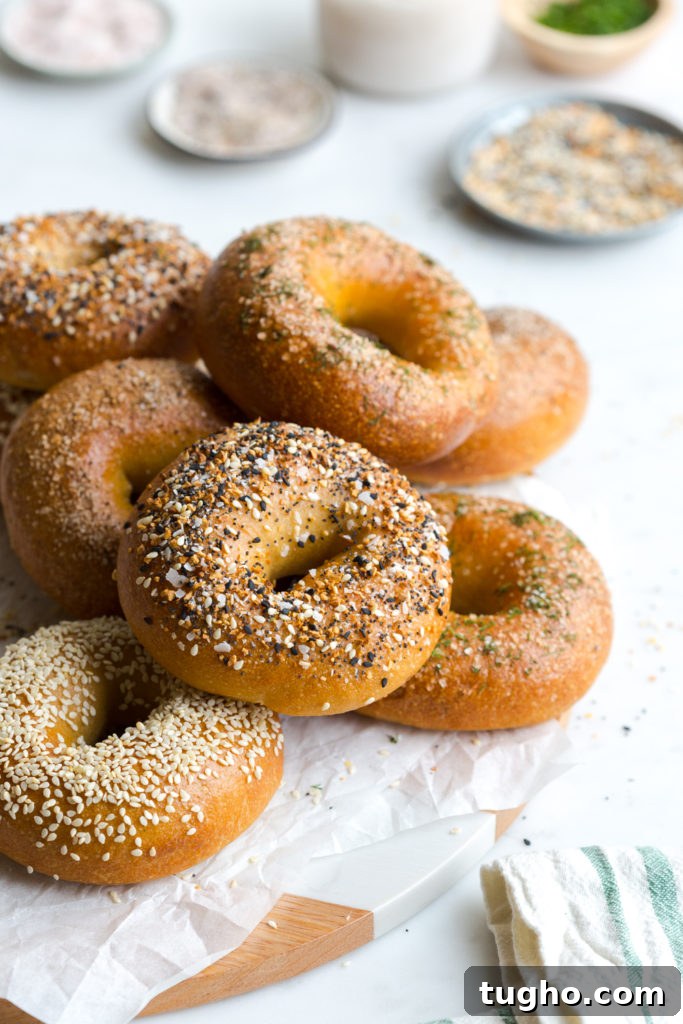
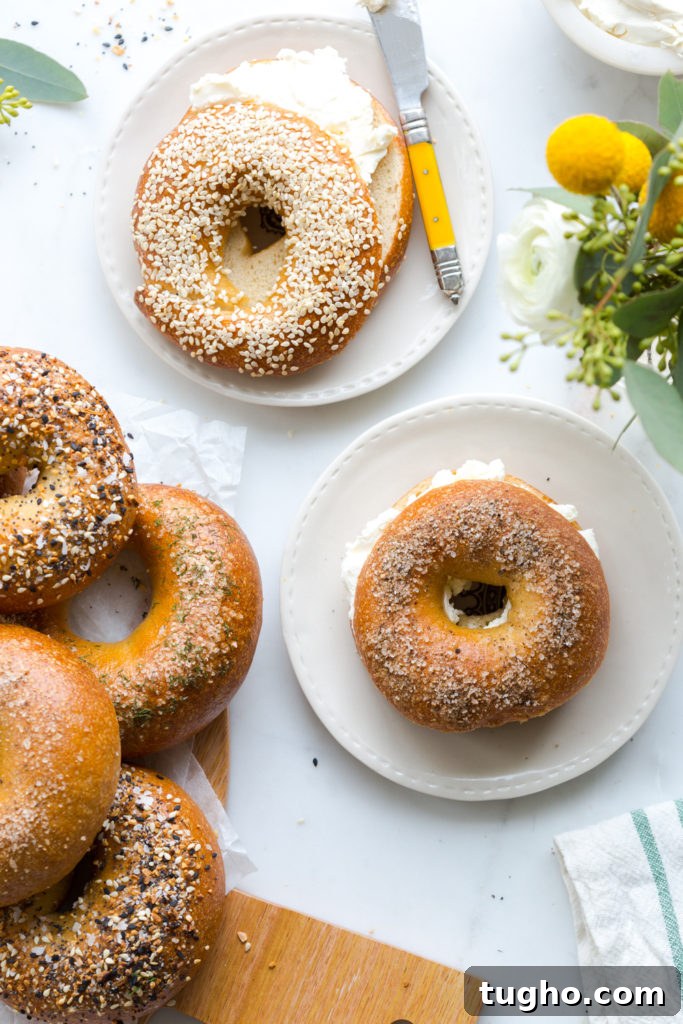
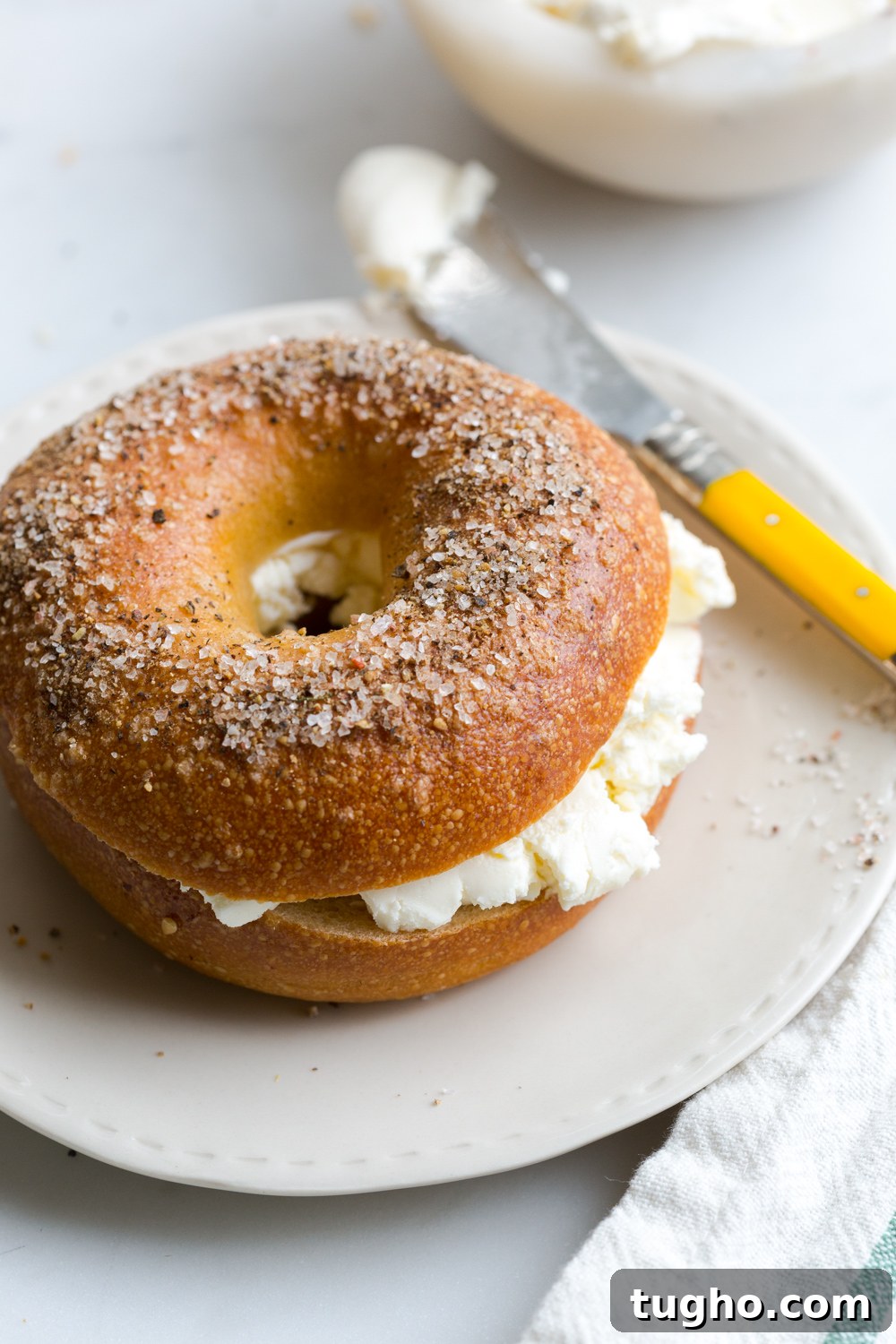
Once shaped and chilled, the bagels are briefly simmered in a poaching liquid made with water, sweetener, salt, and baking soda. This boiling step is what gives homemade bagels their distinctive chew. After poaching, the bagels are topped right away so the toppings stick to the damp surface. Sesame seeds, everything seasoning, salt and pepper, or salted herbs are all excellent choices.
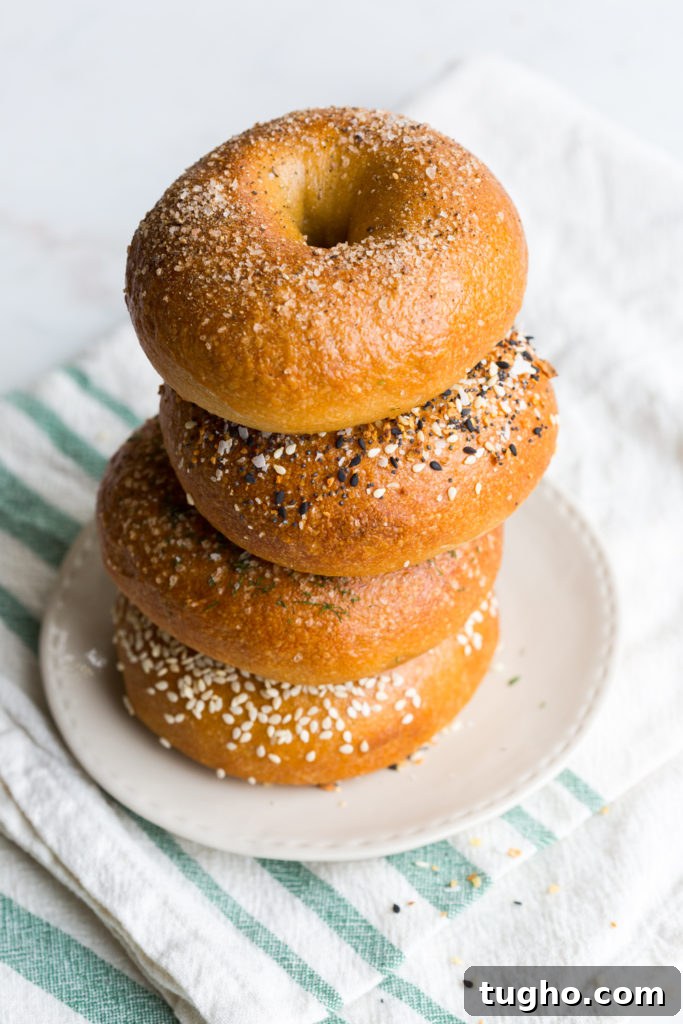
The result is a batch of golden, chewy homemade bagels that are ideal for breakfast, brunch, sandwiches, or a generous spread of cream cheese. They are simple enough to make at home but special enough to feel like they came from a favorite bagel shop.
Key Bagel Ingredients
- Bread flour gives the bagels their sturdy structure and chewy texture.
- Active dry yeast helps the dough rise and develop flavor.
- Lukewarm water hydrates the dough and activates the yeast.
- Date syrup, barley malt syrup, honey, or sugar helps create a golden, chewy exterior.
- Baking soda is added to the poaching liquid for better color and texture.
- Salt seasons the dough and the boiling water.
- Toppings can be classic or creative, depending on your taste.
Making bagels is a satisfying baking project. The recipe may look long because the steps are detailed, but the method is straightforward. With a little patience and practice, shaping, boiling, and baking homemade bagels becomes an enjoyable kitchen routine.
- Method 1 – Poke & Spin
- Method 2 – Tuck & Roll
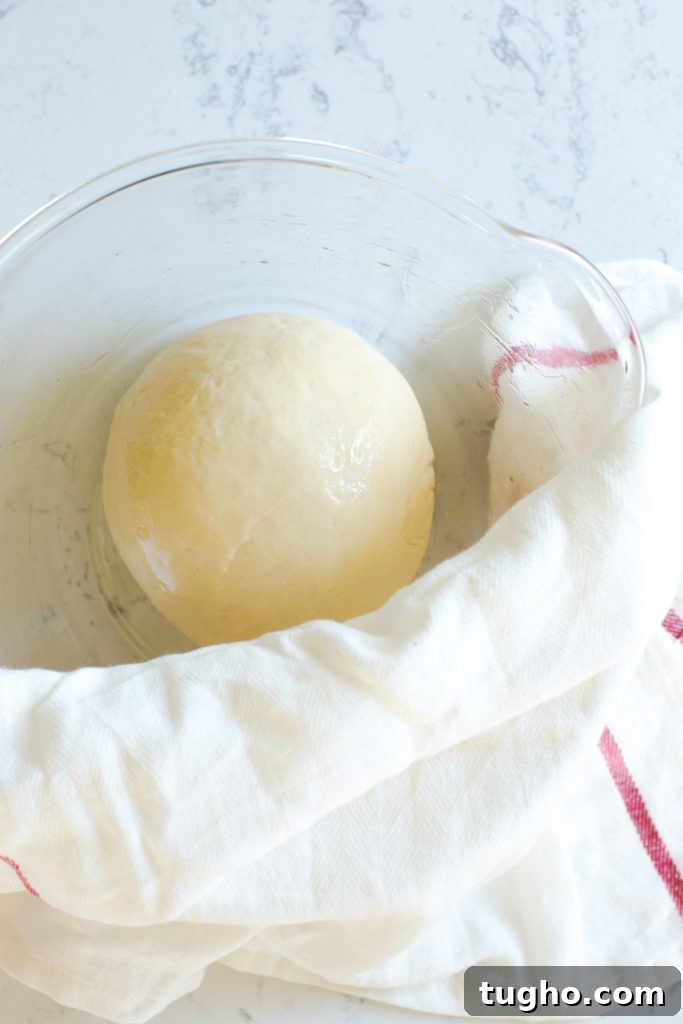
Mixing the Bagel Ingredients
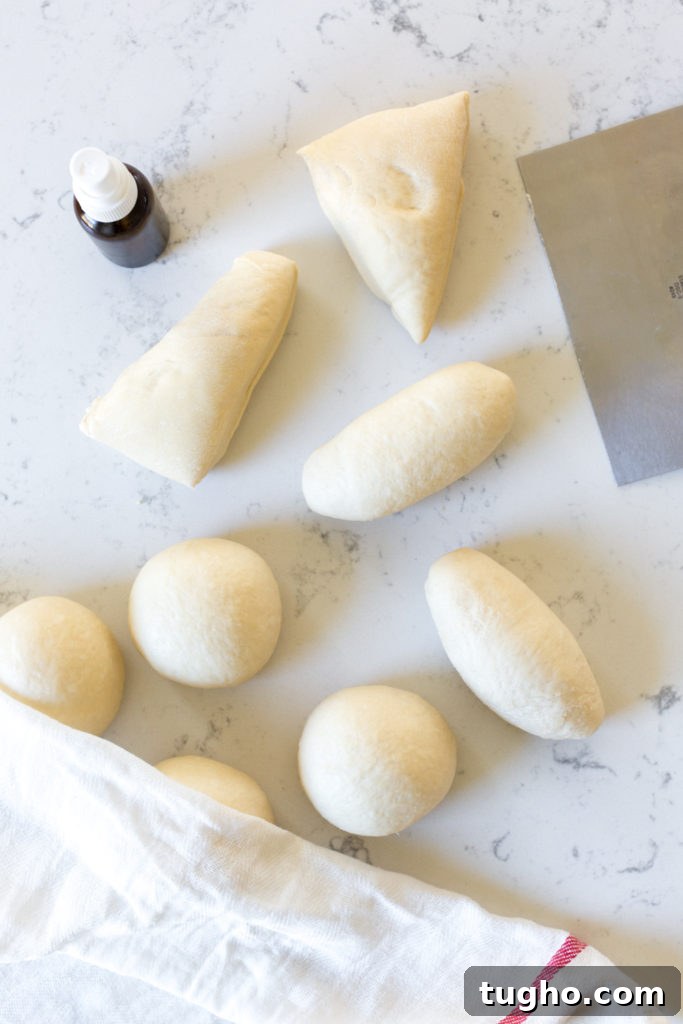
Bagel Shaping Method 1 – Poke & Spin
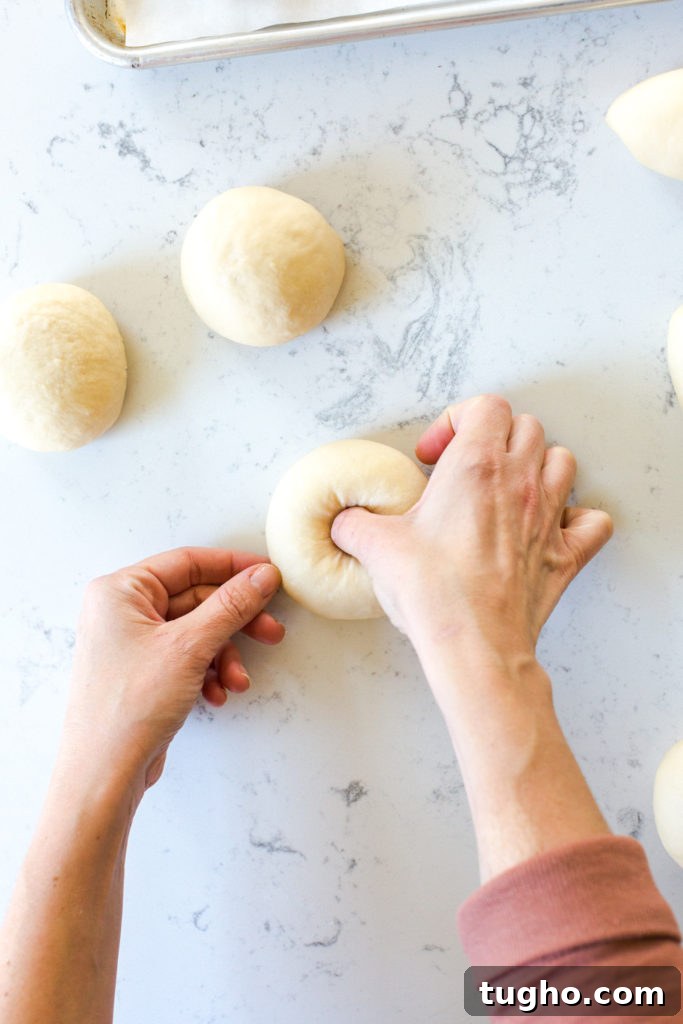
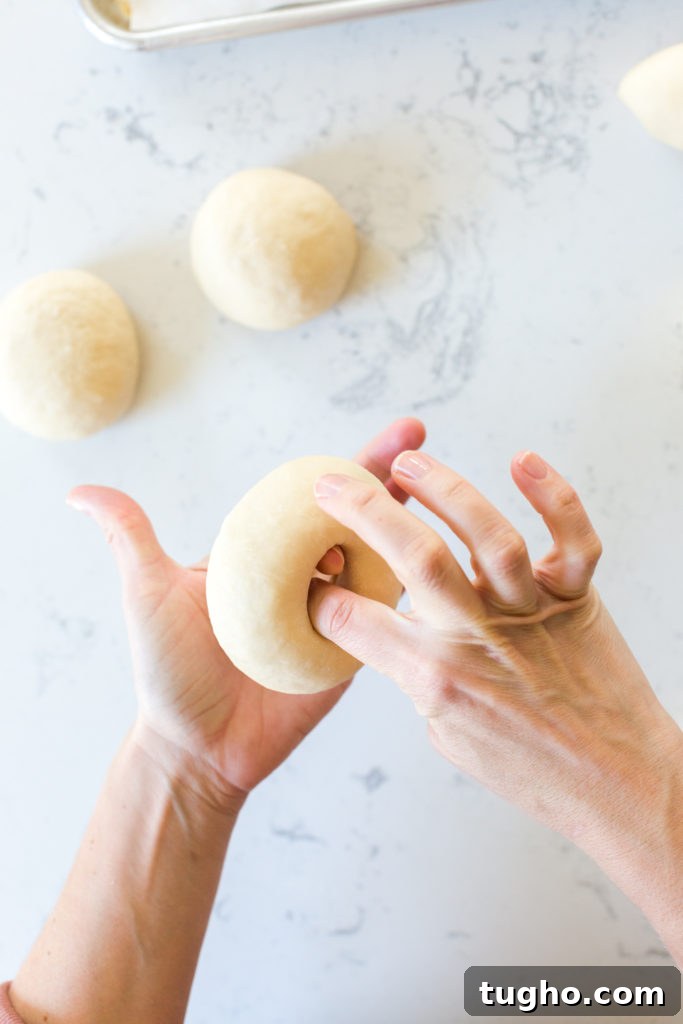
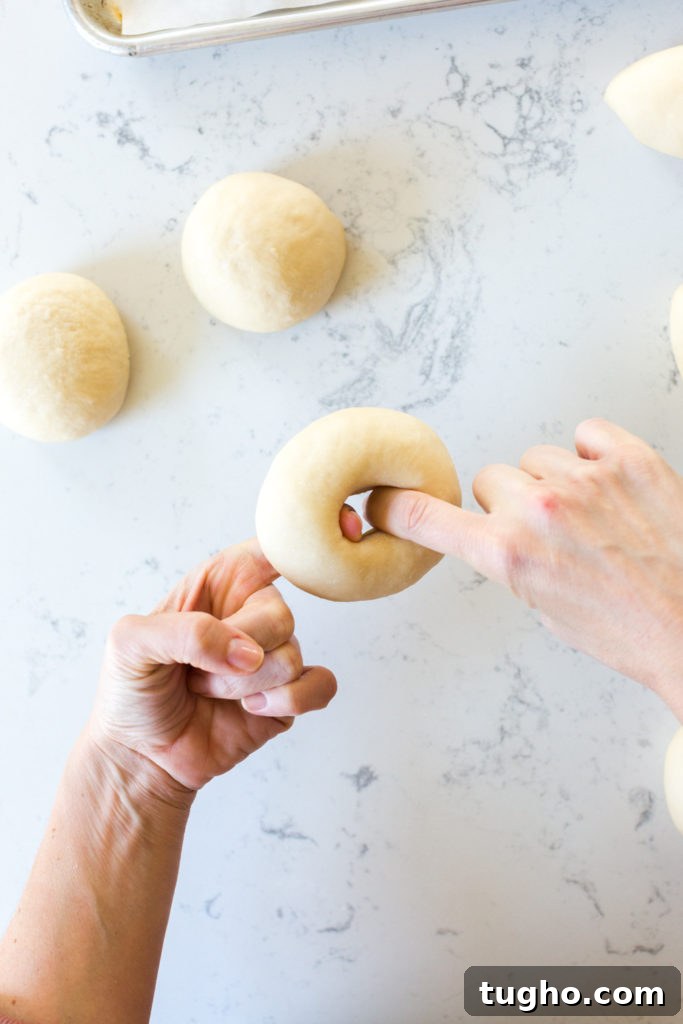
Bagel Shaping Method 2 – Tuck & Roll
Recipe
Best Basic Bagels
- Author: Becky Sue of Baking The Goods
- Yield: 8 bagels
Description
These homemade basic bagels have a deep golden crust, a chewy bite, and a soft interior. Finish them with sesame seeds, everything seasoning, salt and pepper, or any topping you love.
Ingredients
Bagel Dough
- 1 tablespoon date syrup, barley malt syrup, honey, or sugar
- 1 ¼ teaspoons active dry yeast
- 2 teaspoons fine sea salt
- 1 ¼ cups lukewarm water, about 95°F to 105°F
- 4 cups bread flour or high-gluten flour
Poaching Liquid
- 8 to 10 cups water
- 1 ½ tablespoons date syrup, barley malt syrup, or honey
- 1 tablespoon baking soda
- 1 teaspoon salt
Instructions
Mixing the Bagel Dough
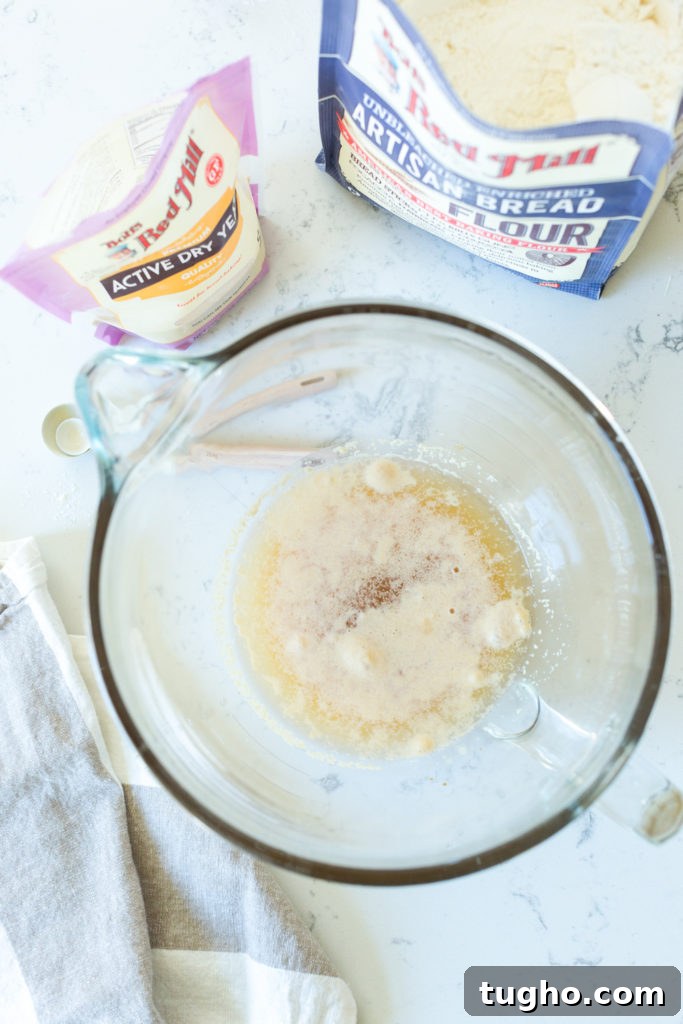
- In the bowl of a stand mixer or a large mixing bowl, stir together the sweetener, active dry yeast, and lukewarm water. Let the mixture sit for 5 to 7 minutes, until the yeast looks foamy and active.
- Add the flour and salt. If using a stand mixer, attach the dough hook and mix on the lowest speed for 3 minutes. If mixing by hand, stir firmly with a sturdy wooden spoon for at least 3 minutes. The dough should come together into a stiff ball and the flour should be fully hydrated. If it seems too dry, add a small splash of water. Let the dough rest for 5 minutes.
- Continue mixing with the dough hook on the lowest speed for another 5 minutes. If kneading by hand, transfer the dough to a clean work surface and knead for 6 to 8 minutes. The dough should be firm, smooth, supple, and only slightly tacky. If it feels too soft or sticky, knead in a little more flour.
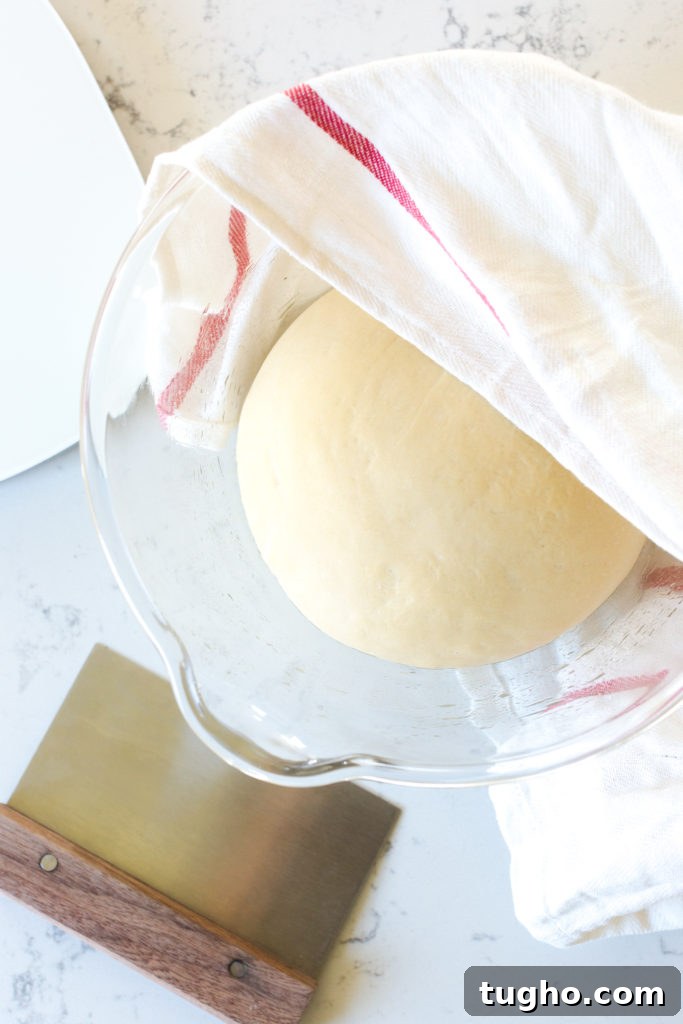
- Place the dough in a clean, lightly oiled bowl. Cover with plastic wrap or a clean kitchen towel and let it rise at room temperature for about 1 hour, or until doubled in size.
Shaping the Bagels
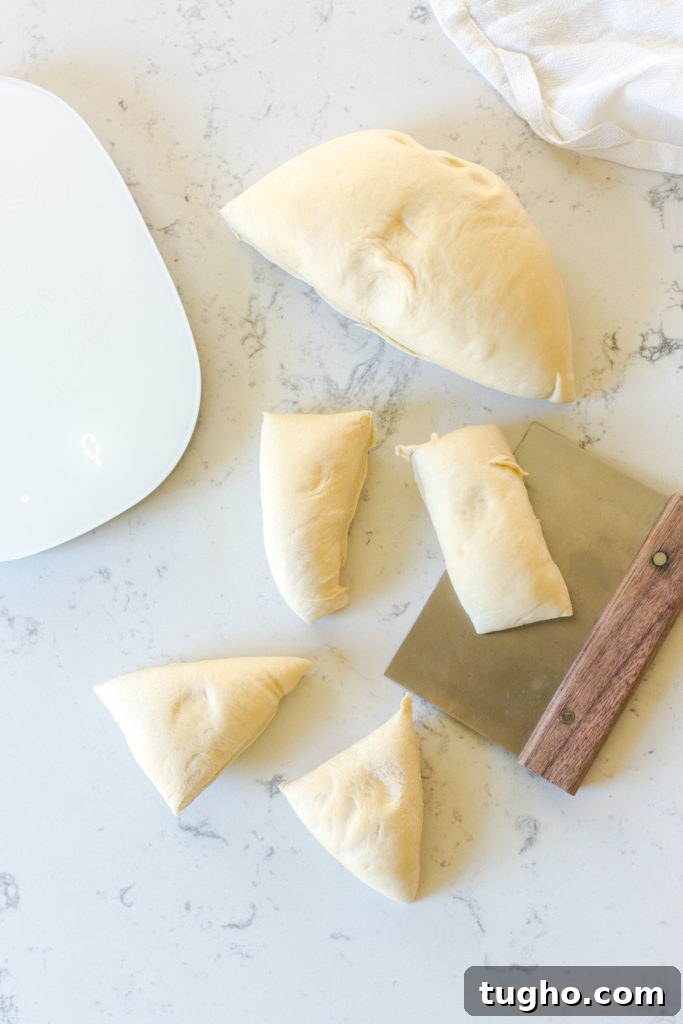
- Line a sheet pan with parchment paper or a silicone baking mat. Lightly oil the surface. Divide the dough into 8 equal pieces. A kitchen scale is helpful, but you can also divide the dough by eye.
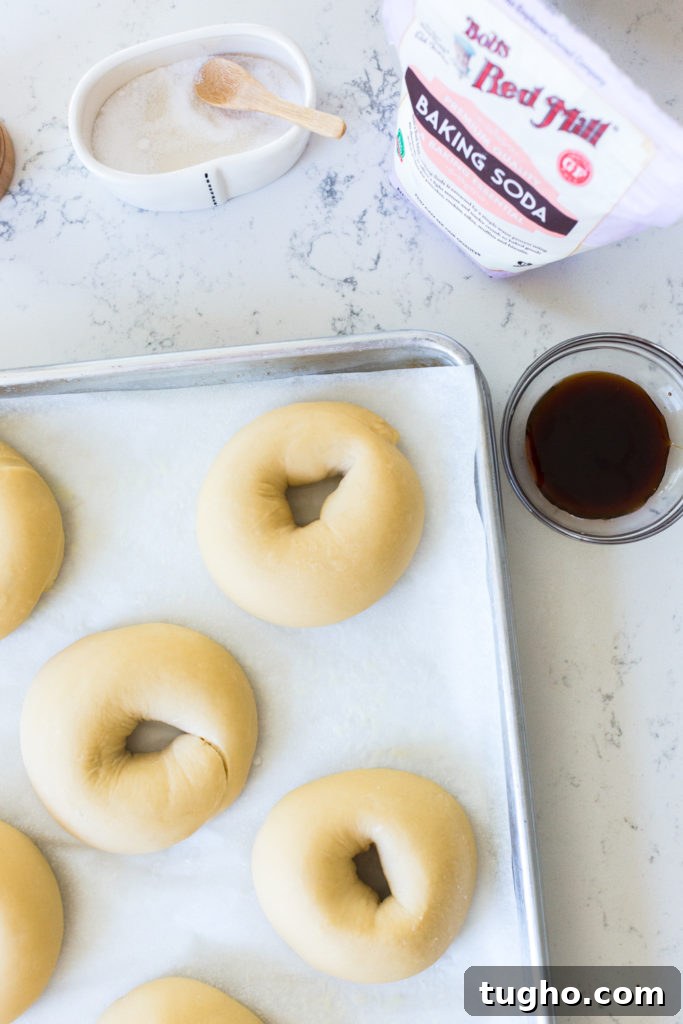
- Pre-shaping Method 1 – Poke & Spin: Gently pat each piece of dough to deflate it. Pull the sides toward the center, pinch them together, and turn the dough seam side down. Cup your hand around the dough and roll it in small circles on the counter until it forms a tight ball. Cover the dough balls with a damp towel and rest for about 15 minutes.
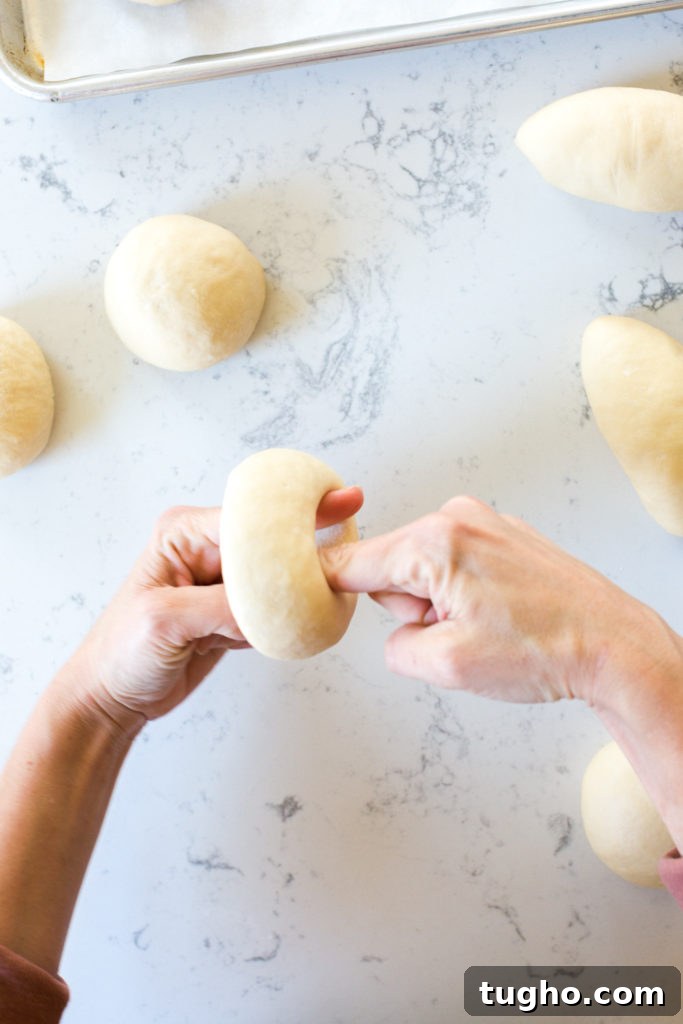
- Bagel Shaping Method 1 – Poke & Spin: Push your thumb through the center of each dough ball. Place your fingers in the hole and gently spin and stretch the dough until the center opening is about 2 inches wide.
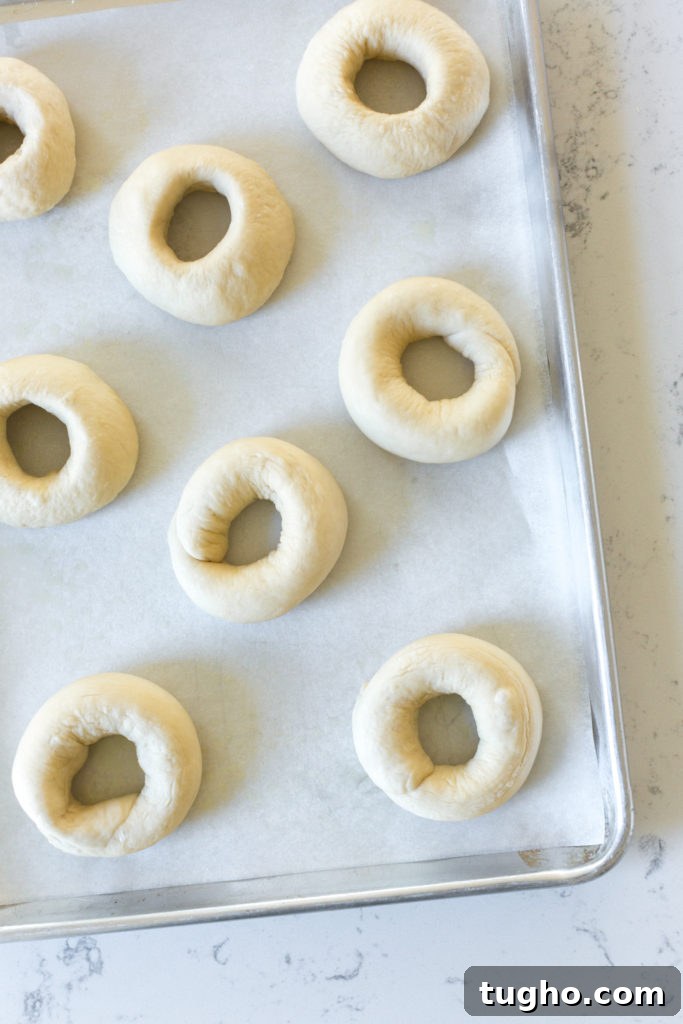
- Place each shaped bagel on the prepared sheet pan. Lightly mist or brush the tops with oil. Cover the pan and refrigerate for at least 4 hours or up to 24 hours.
- Pre-shaping Method 2 – Tuck & Roll: Gently pat each piece of dough to deflate it. Fold the top portion toward the center and press to create surface tension. Repeat until a short log forms, then roll lightly until the dough looks like a small, rounded log. Cover with a damp towel and rest for about 15 minutes.
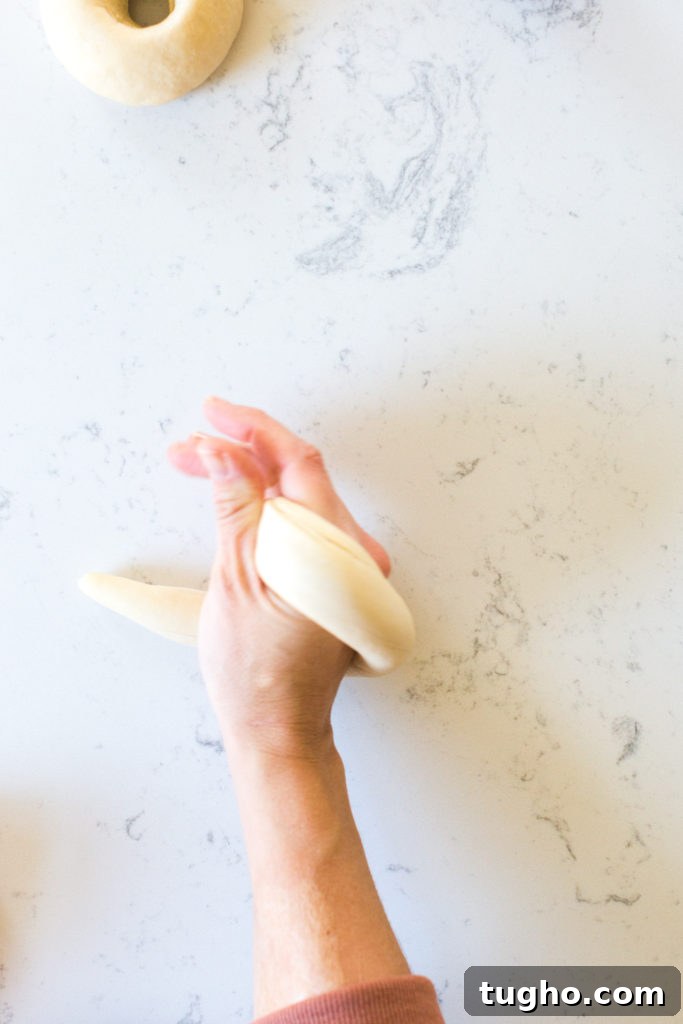
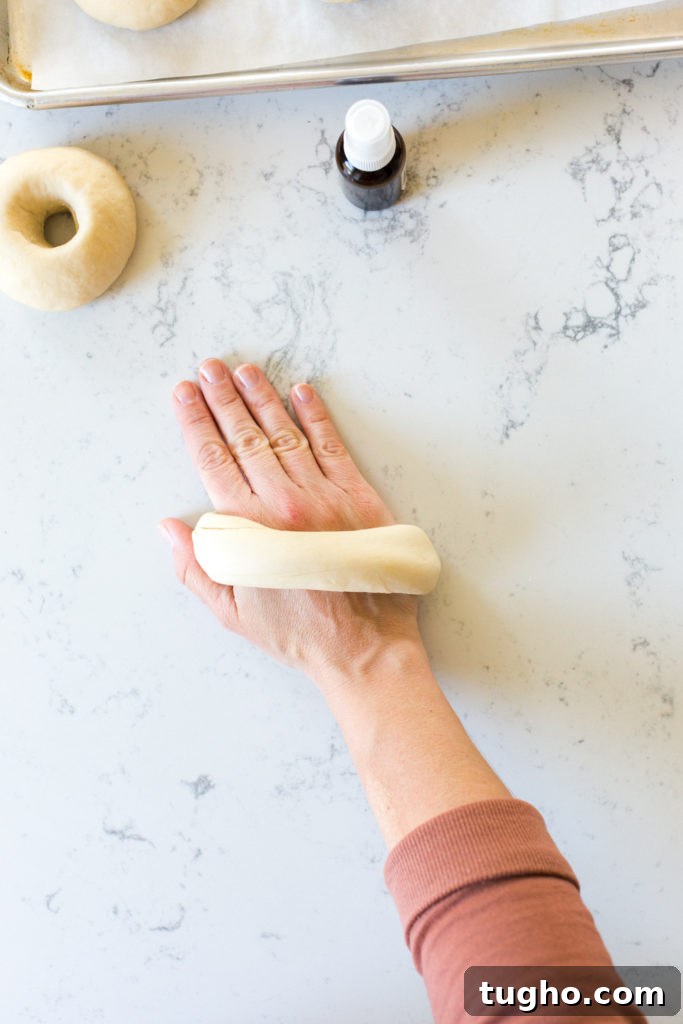
- Bagel Shaping Method 2 – Tuck & Roll: Roll each log into an even rope about 8 to 10 inches long. Wrap the rope around your hand, overlap the ends by about 2 inches, then press and roll the seam against the work surface to seal. Adjust the dough so the ring is even and the hole is about 2 inches wide.
- Arrange the shaped bagels on the prepared sheet pan. Lightly coat the tops with oil, cover the pan, and refrigerate for at least 4 hours or up to 24 hours.
Poaching and Baking the Bagels
- Remove the bagels from the refrigerator 60 to 90 minutes before baking. To check readiness, place one bagel in a bowl of cold water. If it floats, the bagels are ready to boil. If it sinks, return it to the pan and test again after 15 to 20 minutes. About 30 minutes before baking, preheat the oven to 500°F and prepare your toppings.
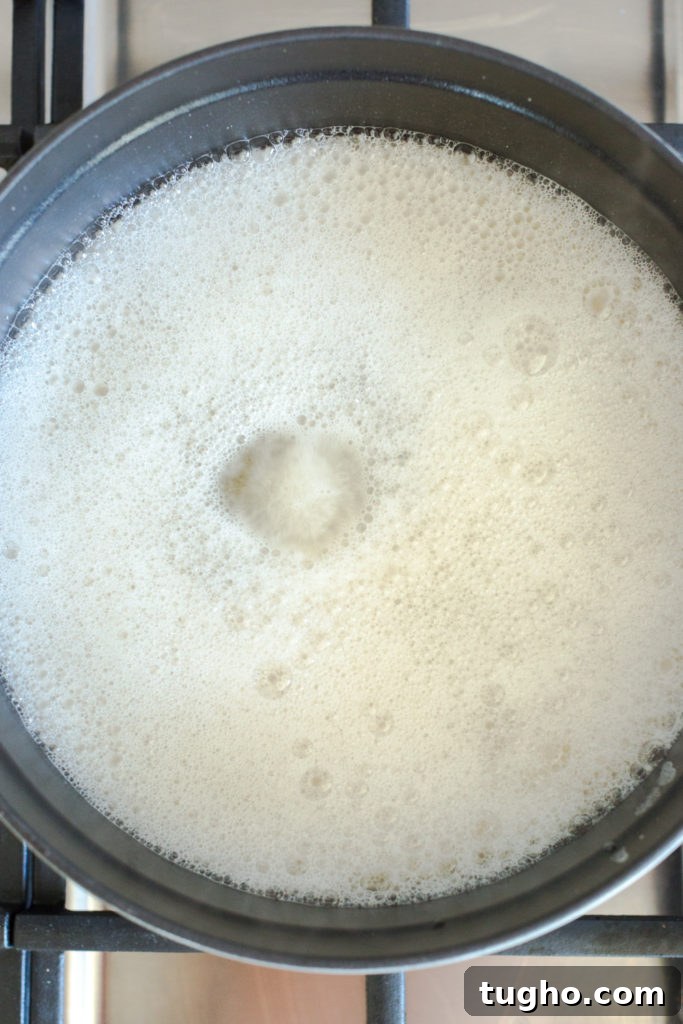
- Fill a pot with 8 to 10 cups of water, making sure the water is at least 4 inches deep. Bring it to a boil, then reduce to a simmer. Stir in the sweetener, baking soda, and salt.
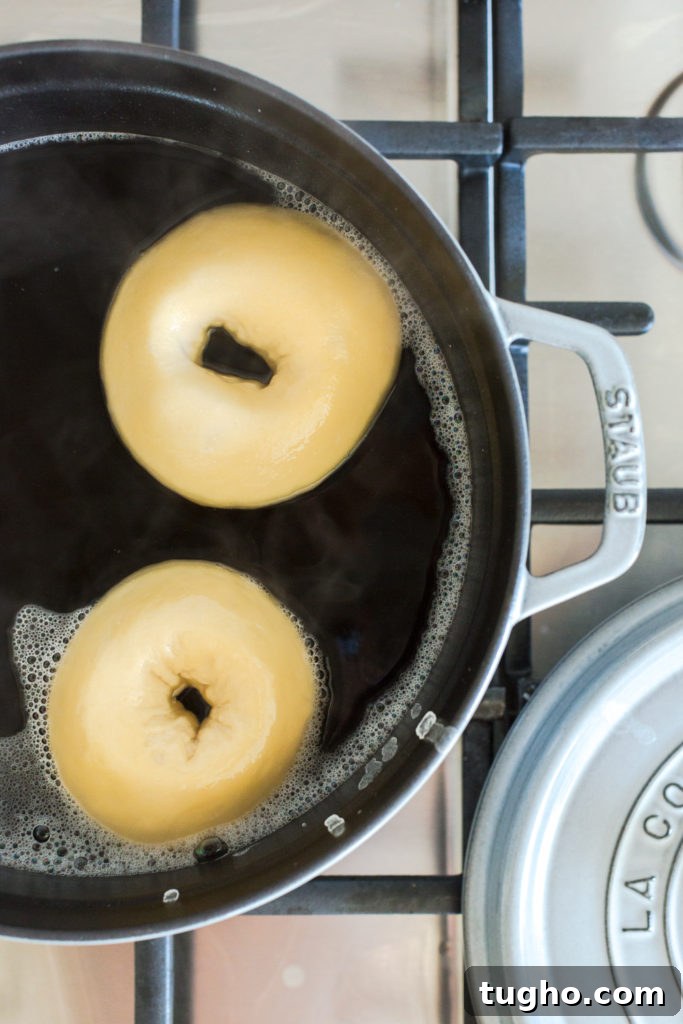
- Gently lower 2 to 3 bagels at a time into the simmering liquid. They should float within a few seconds. Poach for 1 minute, turn with a slotted spoon, and poach for another 30 to 60 seconds. Transfer the bagels back to the prepared baking sheet, domed side up, leaving space between each one.
- Sprinkle the bagels generously with your chosen toppings as soon as they come out of the water.
- Reduce the oven temperature to 450°F and place the baking sheet in the oven.
- Bake for 8 minutes, rotate the baking sheet, and continue baking for 8 to 12 minutes more, until the bagels are deeply golden brown.
- Transfer the bagels to a wire rack and cool for at least 30 minutes before slicing. Serve with plenty of cream cheese.