This simple chilli jelly recipe is a classic and versatile condiment. It’s excellent served with cheese and crackers, spread on toast or sandwiches, or used to add sweet heat to a stew or grilled meat. Once you make a batch you’ll find yourself reaching for a jar in the fridge again and again.
This version relies on the natural pectin in cooking or crab apples to help the jelly set. If you prefer, commercial pectin can be used instead and the apples omitted, but using whole apples is a straightforward, natural approach that produces excellent texture and flavour.
Chilli Jelly Ingredients
1 kg cooking or crab apples (washed and roughly chopped, cores and peels included)
500 ml water
500 ml cider vinegar
Sugar — roughly 500 g (about 1 lb) per pint (570 ml) of strained juice (see method for guidance)
A handful of fresh chillies (variety and heat level to taste; approximately 10–15 chillies for medium heat)
Method
1. Place the chopped apples, water and cider vinegar in a large pan. The peel and cores contain most of the natural pectin, so include them. Add about half of the chillies, chopped roughly (seeds left in or removed to control heat).
2. Bring the mixture to a gentle boil, then reduce the heat and simmer for about 20–30 minutes, until the apples are very soft and the liquid has absorbed the apple flavour. Stir occasionally to prevent sticking.
3. Line a sieve with a thick piece of muslin or use a jelly bag and pour the contents of the pan in. Do not press or force the pulp through the cloth — letting it drip naturally produces a clearer jelly. Leave to drain for several hours or overnight until you have all the strained juice you can collect.
4. Measure the strained juice. For every pint (about 570 ml) of juice, add roughly 500 g (about 1 lb) of granulated sugar. Place the juice and the appropriate amount of sugar into a clean pan over a low heat and stir until the sugar has dissolved. Increase the heat and boil the mixture, stirring frequently to prevent scorching.
5. As the jelly begins to thicken and you approach the setting point, taste and add the remaining finely chopped chillies to suit your desired heat. A small amount will give a gentle warmth; more will bring a stronger kick. Continue boiling until the jelly reaches the correct set (see the setting test below).
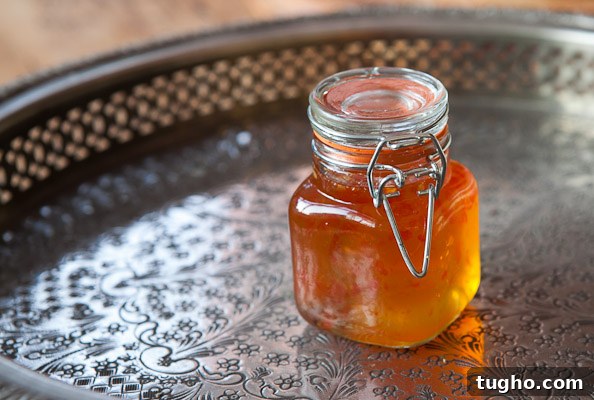
6. While the jelly is cooking, sterilize clean jars and lids by boiling them in water or using a dishwasher on a hot cycle. Once the jelly is ready, ladle it carefully into the hot sterilized jars, leaving a small headspace. Seal and allow to cool completely at room temperature.
7. Label and store sealed jars in a cool, dark place. Once opened, refrigerate and use within a few weeks. Properly sealed jars kept in a cool pantry can keep for many months.
This chilli jelly is superb with cheese and crackers, works beautifully as a glaze for roasted meats, and adds a punch to sandwiches and toasties. Adjust the chilli variety and quantity to create versions ranging from mildly sweet to intensely hot.
Getting The Right Setting Point
To ensure your jelly sets properly, use this simple cold-plate test. Place a small plate in the freezer before you start cooking. When the jelly has been boiling for around 20–30 minutes and appears to be thickening, remove the plate from the freezer and place a teaspoon of the hot jelly onto the chilled plate. Allow it to cool for a few seconds, then run your finger through the sample.
If the surface wrinkles slightly and the jelly forms a skin that separates cleanly, it has reached setting point. If it remains runny and does not wrinkle, continue boiling for a few more minutes and test again. Be careful not to overboil for extended periods, as this can darken the colour and alter the flavour.
For a related variation, try making a chilli chutney using similar ingredients but with added spices and a chunkier texture if you enjoy a more robust condiment.