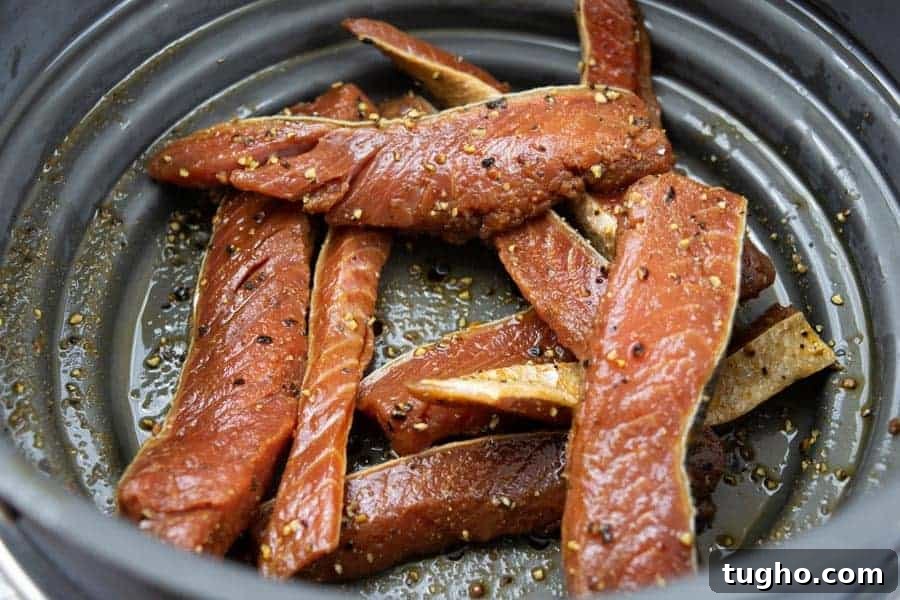
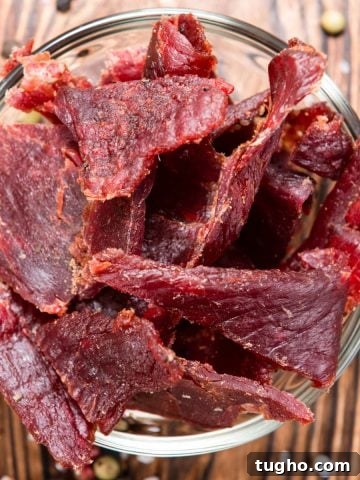
Love salmon? If so, you will enjoy this salmon jerky recipe. It delivers a light, clean fish flavor with a pleasant smoky finish and balanced saltiness. With a few simple steps you can make jerky that tastes fresher and more flavorful than most store-bought versions.
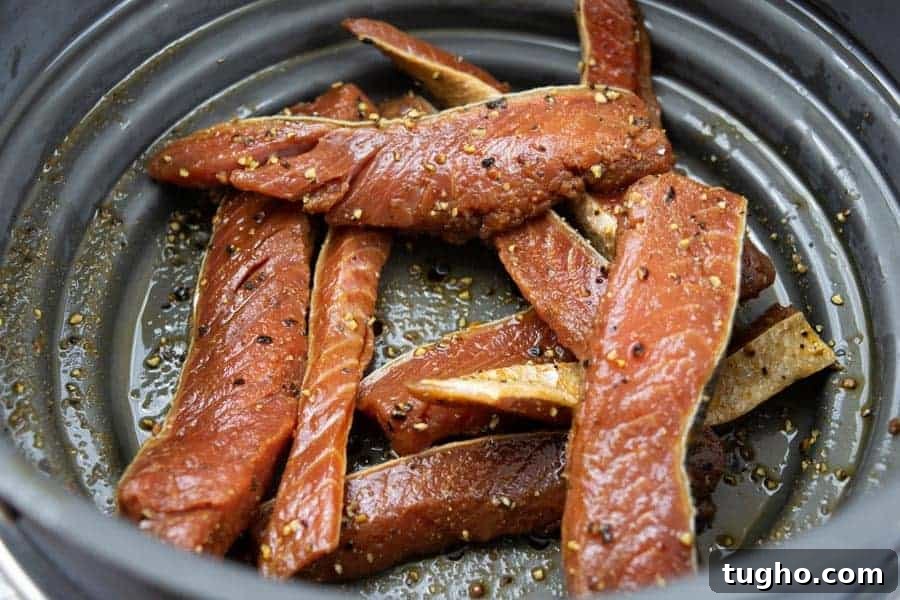
Salmon tends to be higher in fat than many other fish, and that affects how you dry it. Despite the fat content, salmon makes excellent jerky when you use proper slicing, marinating, and drying techniques.
Read on for clear, step-by-step directions to make tender, flavorful salmon jerky at home.
Ingredients
- Wild caught sockeye salmon (about 1 lb)
- 1/2 cup soy sauce
- 1 tablespoon lemon juice
- 1 tablespoon brown sugar
- 2 teaspoons black pepper
- 2 teaspoons liquid smoke
- 1/2 teaspoon garlic powder
- 1/4 teaspoon curing salt (optional)
How to make salmon jerky
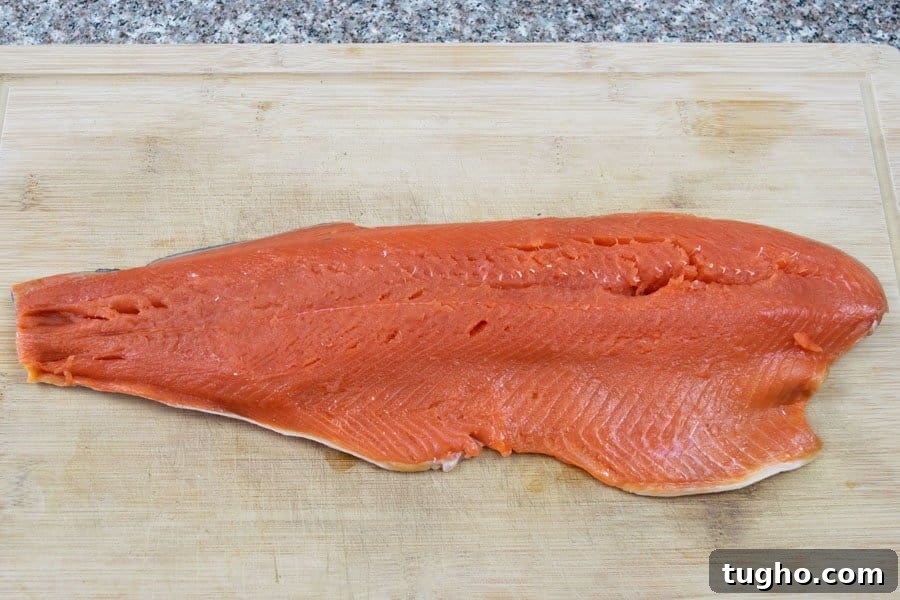
I started with a wild caught sockeye salmon fillet. Wild sockeye has a deeper red color and a more robust flavor than many farmed varieties, which makes it especially good for jerky.
Below are the essential steps: remove any pin bones, slice the fillet into uniform strips, marinate, strain, and dry until the jerky reaches your preferred texture.
Remove bones
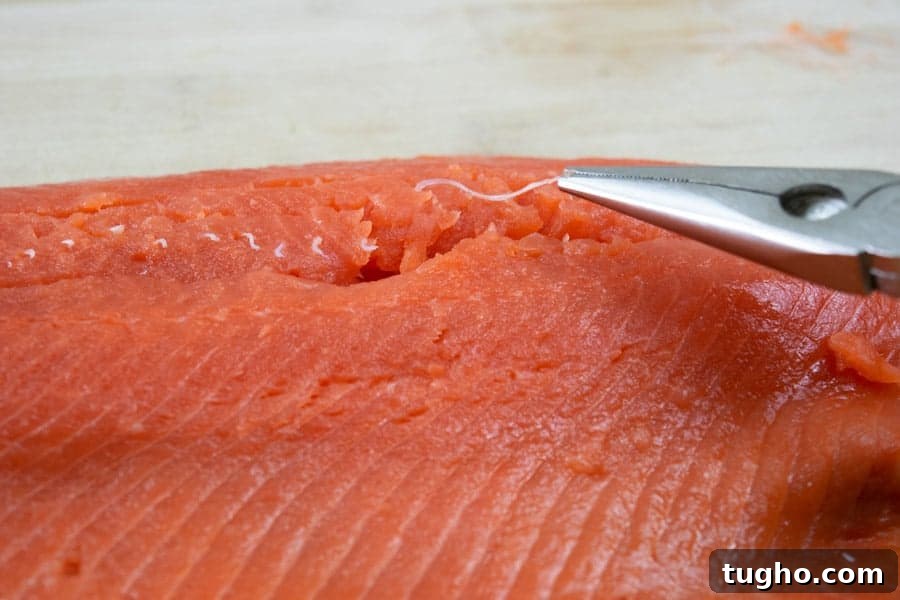
Run your fingers along the fillet to locate pin bones. They feel firm and are usually white. Use needle-nose pliers or fish tweezers to pull them out with a little wiggling. This step is important—no one wants bones in jerky.
Slice into strips
You can leave the skin on while slicing. Leaving the skin attached helps hold the strips together during marinating and drying. After the jerky is finished, the skin peels off easily.
Using a very sharp knife, slice lengthwise from the “head” end to the “tail” end into strips about 1/4″ to 1/2″ thick. Then trim the strips to your desired serving length—3 to 4 inches works well for snacking.
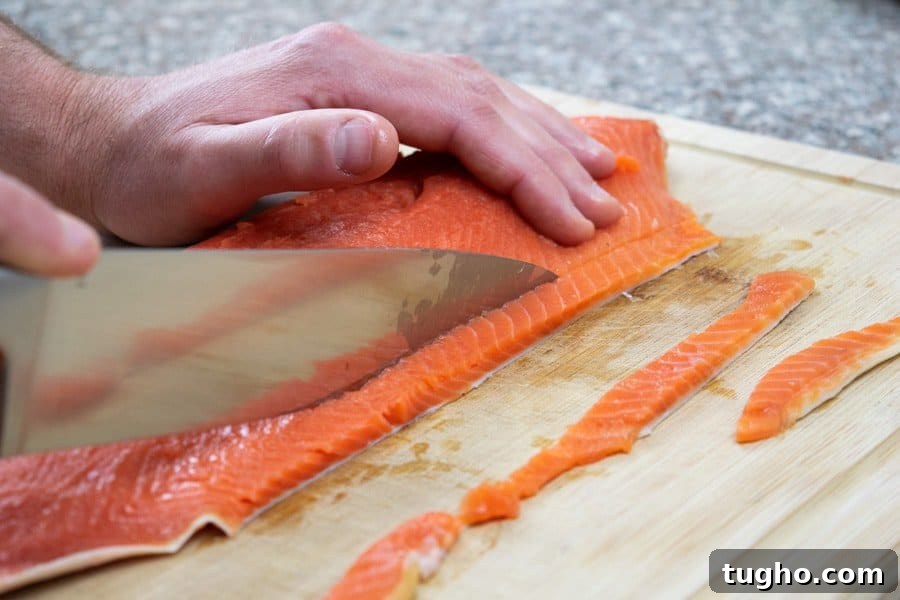
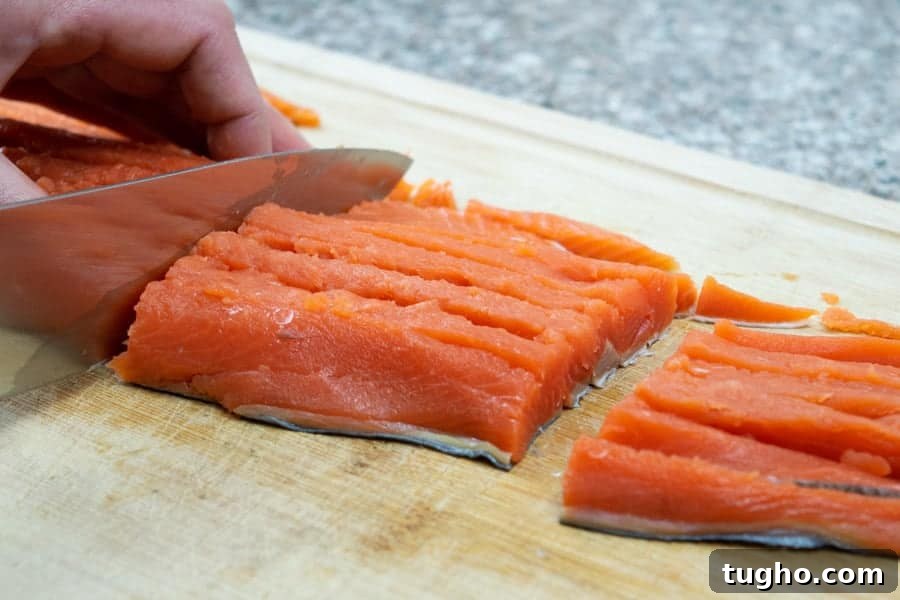
Cut the long strips into pieces approximately 3–4″ long for consistent drying and easy snacking.
Marinate
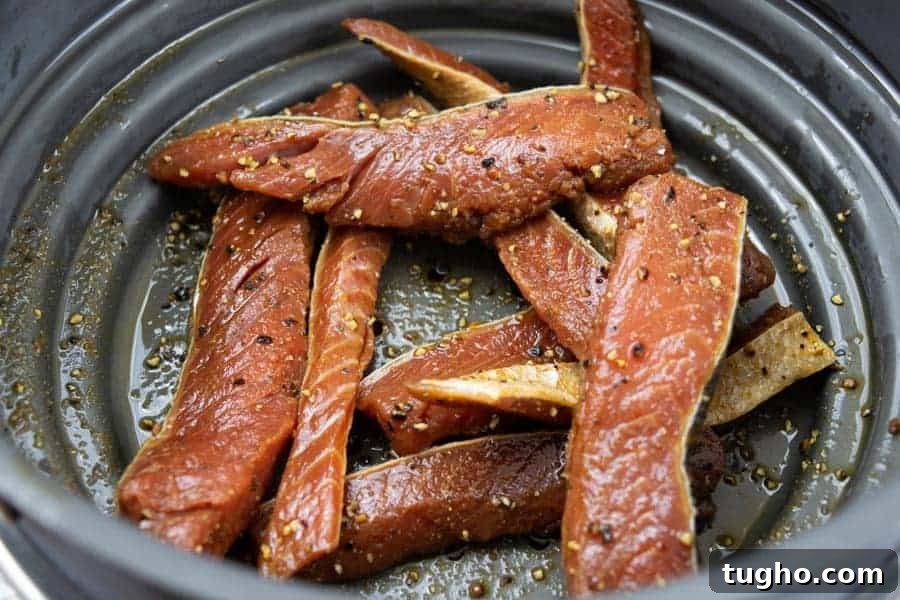
Combine the soy sauce, lemon juice, brown sugar, black pepper, liquid smoke, garlic powder, and curing salt (if using) in a bowl or sealable bag. Mix until the sugar dissolves and the ingredients are well blended.
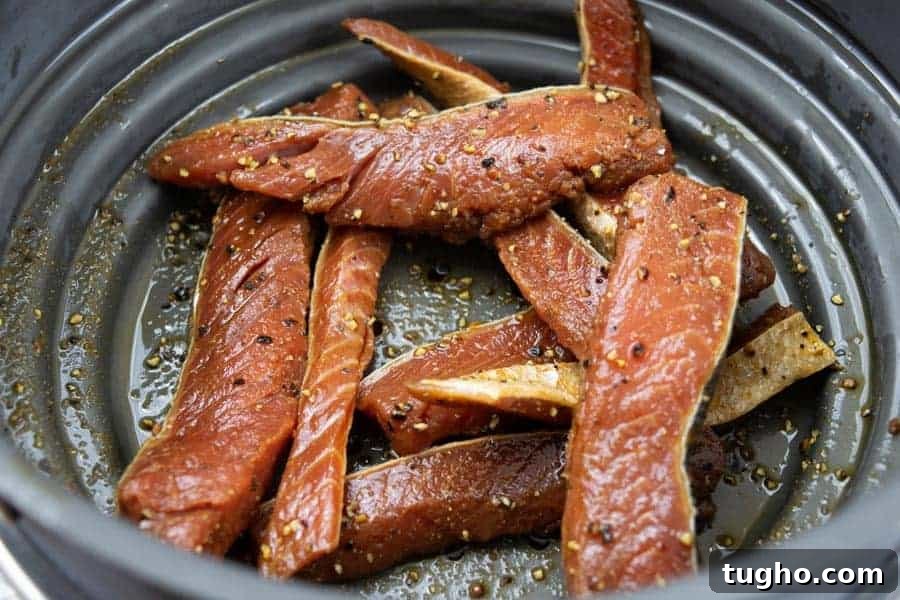
Place the salmon strips in the marinade, seal the bag, and refrigerate. Marinate for 6–24 hours; for this batch I marinated about 18 hours. Turn or gently massage the bag a few times during marinating so all strips marinate evenly.
Strain and dehydrate
After marinating, strain the salmon strips in a colander and pat them dry with paper towels to remove excess marinade. Remove excess surface liquid so the drying process is even.
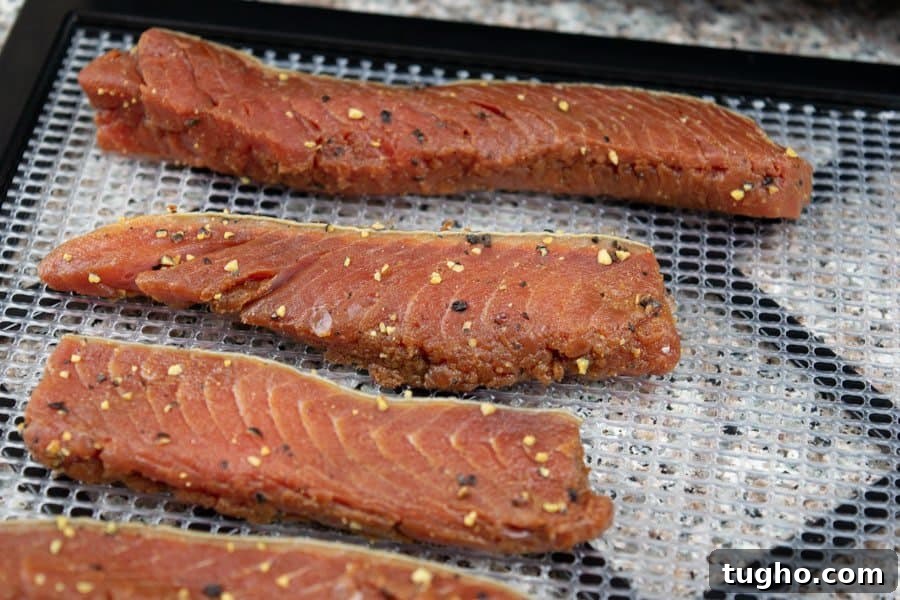
Arrange the strips on dehydrator trays or on an oven cooling rack set over a rimmed pan. Make sure pieces do not touch and air can circulate around each strip.
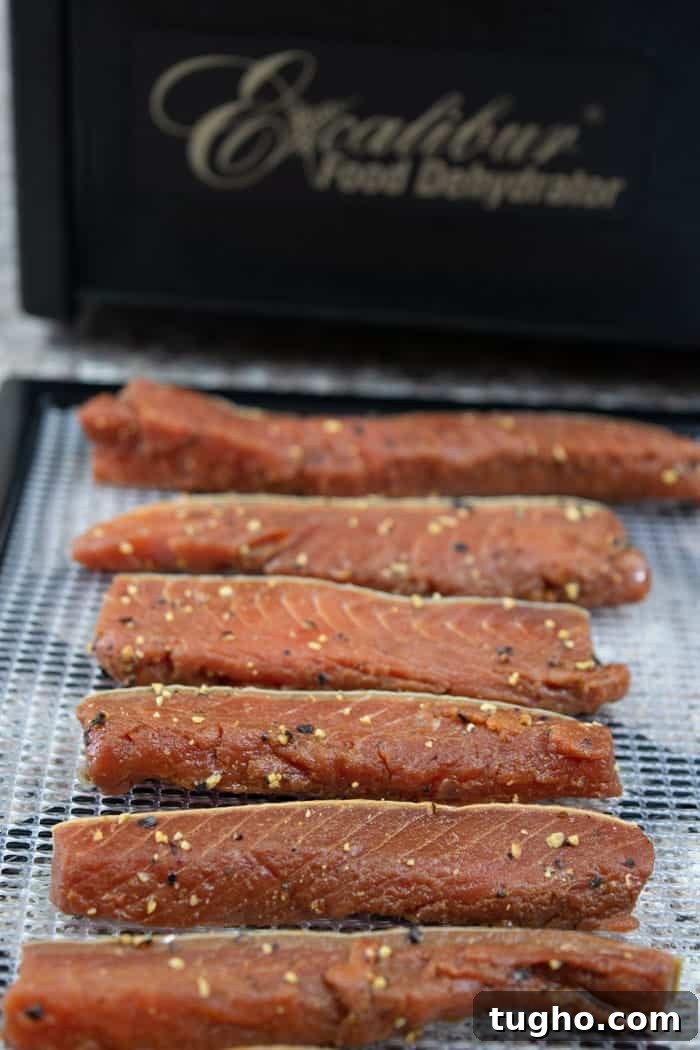
Dry at 150°F if using a dehydrator, or use the lowest safe setting on your oven. Because salmon is relatively fatty, it typically needs longer drying than leaner fish. This batch took about 9 hours to reach the ideal texture.
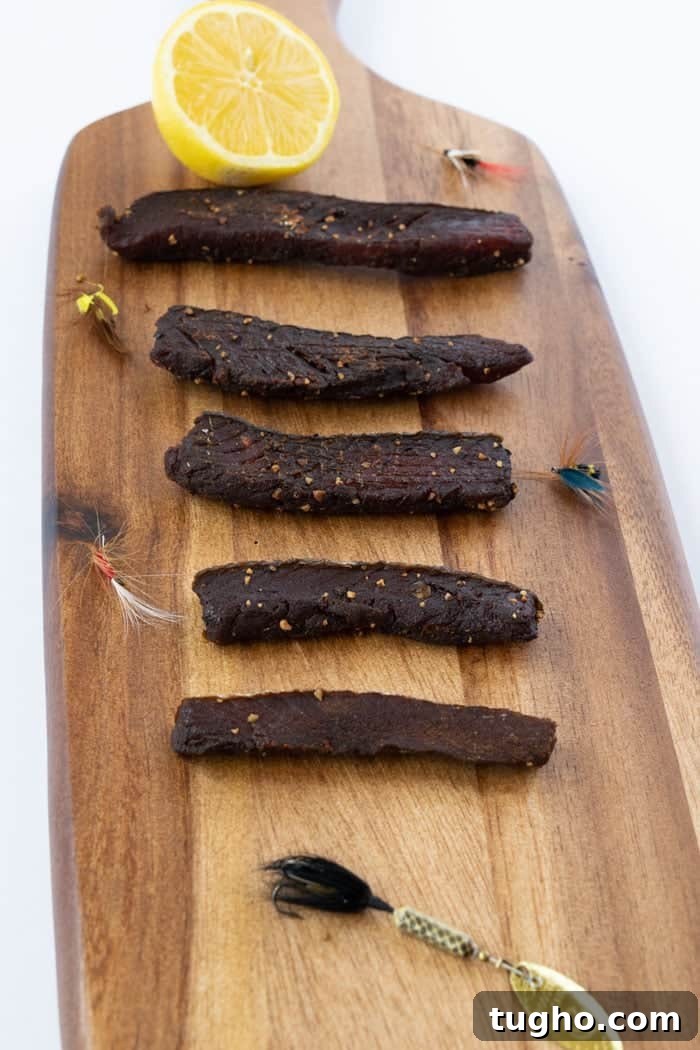
When the strips are dry to your liking, remove them from the trays, peel off the skin if desired, and enjoy.
Other jerky recipes to try
-
 Chicken Jerky
 -
Jumpin’ Trout Jerky
-
The Ultimate Beef Jerky Marinade
-
Original Ground Beef Jerky
Tasty Salmon Jerky
Ingredients
Fish
- 1 lb Wild Caught Sockeye Salmon (can use any salmon)
Marinade
- 1/2 cup soy sauce
- 1 tablespoon lemon juice
- 1 tablespoon brown sugar
- 2 teaspoons black pepper
- 2 teaspoons liquid smoke
- 1/2 teaspoon garlic powder
- 1/4 teaspoon curing salt (optional)
Equipment

Instructions
- Remove pin bones from the fillet with needle-nose pliers or fish tweezers. Leave the skin on to keep strips intact.
- With a sharp knife, slice long strips lengthwise about 1/4″–1/2″ thick, cutting from the head end to the tail end.
- Trim the long strips into 3″–4″ pieces for uniform pieces that dry evenly.
- Combine the marinade ingredients in a bowl or a sealable bag and mix until the sugar dissolves.
- Add the salmon strips to the marinade and refrigerate for 6–24 hours. Turn or gently mix the strips a few times during marinating.
- Drain the strips in a colander and pat dry with paper towels to remove excess marinade.
- Place strips on dehydrator trays or on a rack over a rimmed baking sheet in your oven, ensuring good air circulation.
- Dry at 150°F in a dehydrator or at the lowest safe oven temperature. Drying time will vary; this batch took about 9 hours.
- When the jerky reaches your preferred texture, remove it from the trays, peel off the skin if desired, and enjoy.