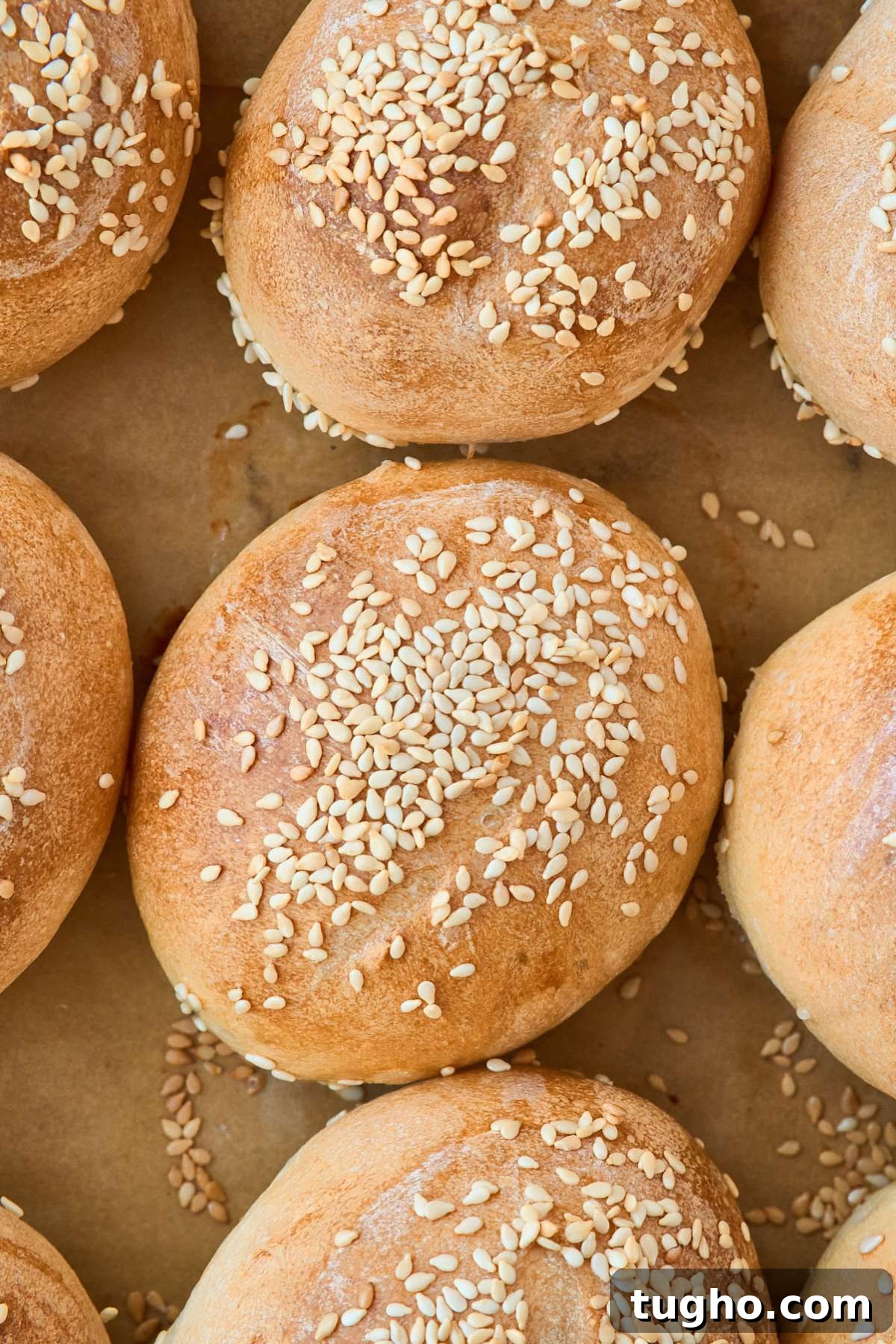
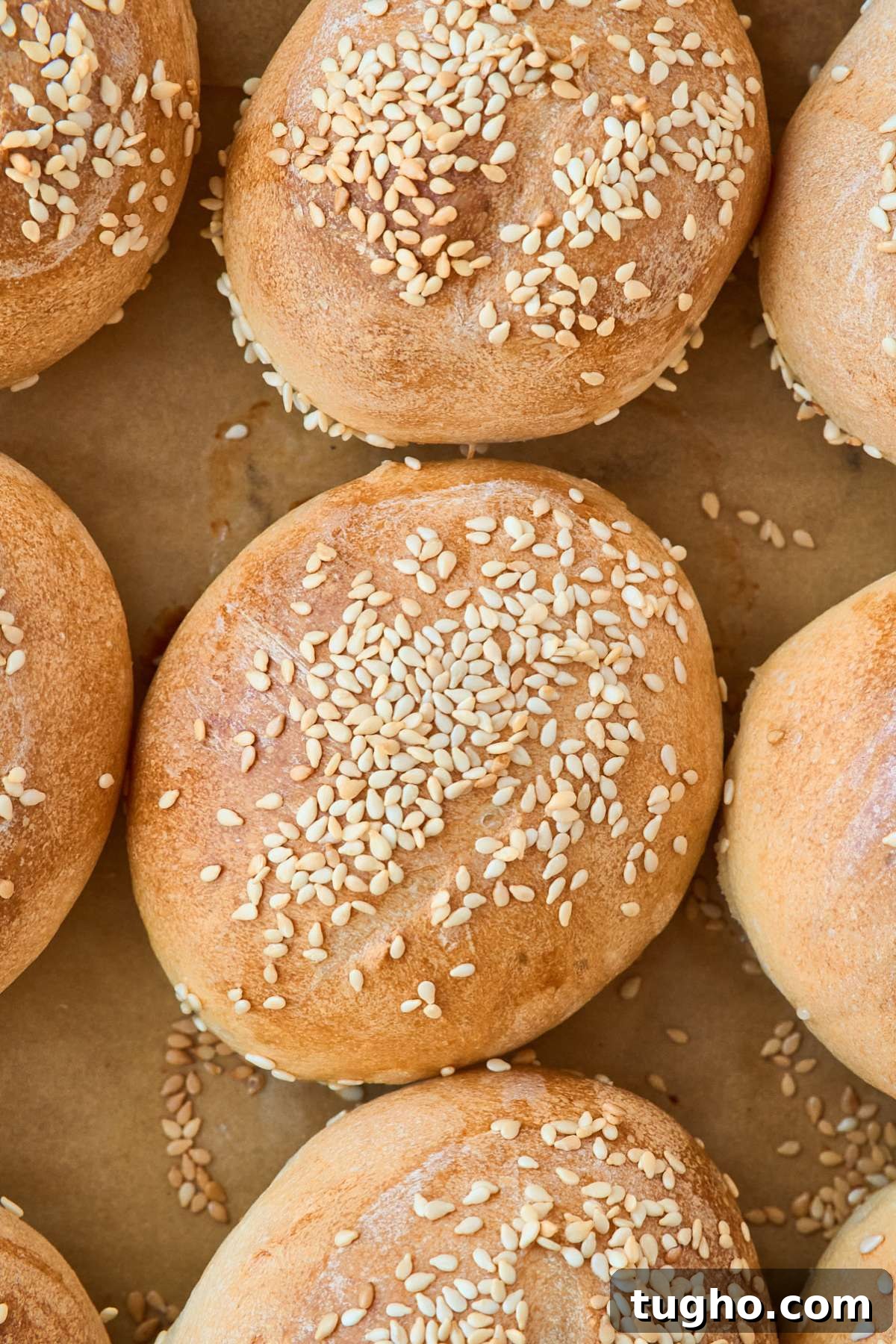
This crusty Italian sourdough rolls recipe combines sourdough flavor with a little instant yeast to give reliably quick rises and a wonderfully crisp exterior. The result is a golden, crunchy crust with a soft, chewy interior — perfect alongside soups, pasta, or split and used for sandwiches. If you love sourdough tang but want a faster timeline, try these before casting judgment.
Ingredients and Tools You’ll Need
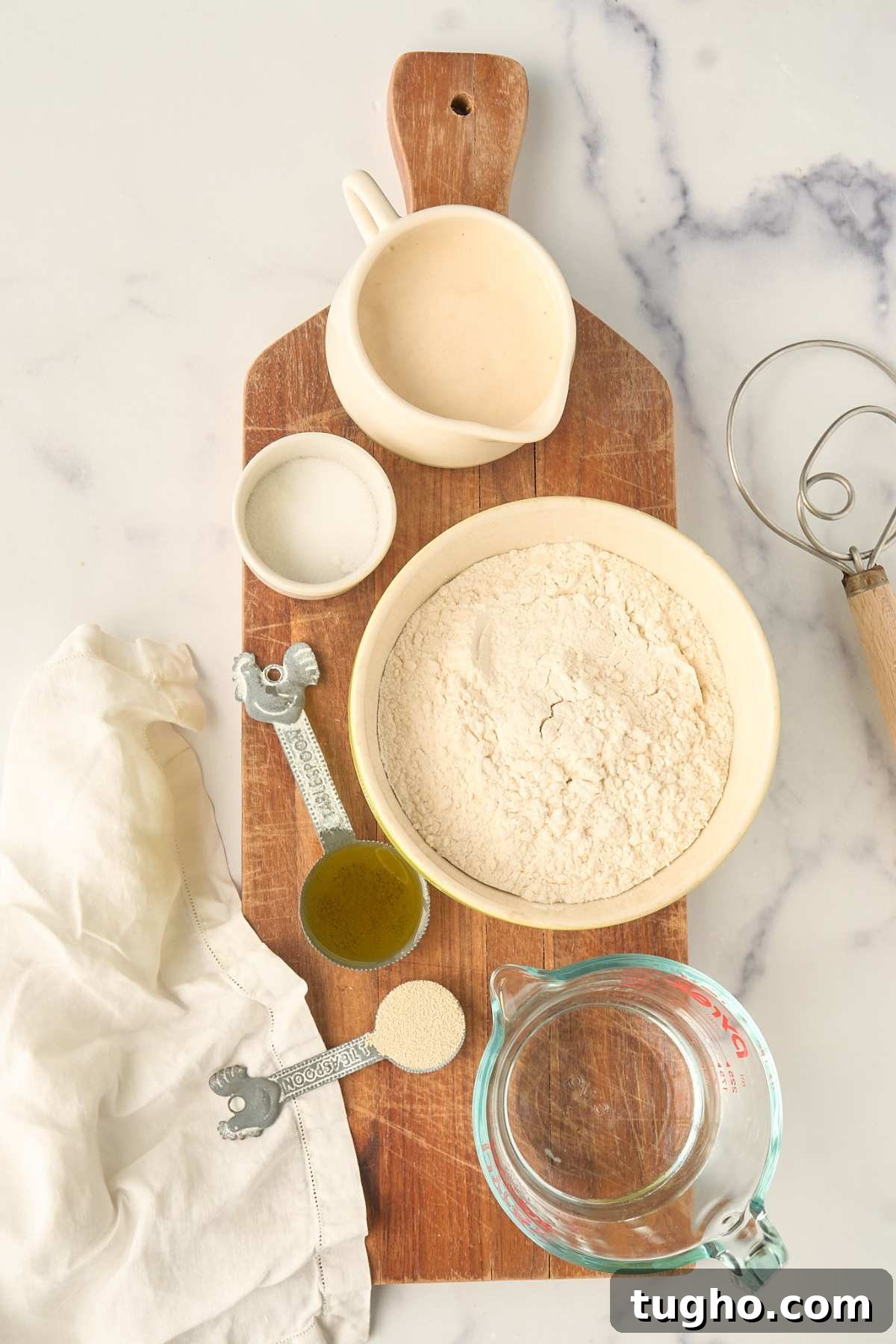
This recipe uses an active sourdough starter plus a small amount of instant yeast to encourage a reliable rise. Bread flour is recommended for the best chew and structure; you can use all-purpose in a pinch, but texture will differ slightly. The flour amount can vary depending on your starter and humidity, so start with the lower amount and add more sparingly if needed.
Ingredients
- 200 grams (about 1¼ cups) active sourdough starter — fed 8–12 hours and bubbly
- 370 grams (2½–3 cups) bread flour — start with the lower amount
- 175 grams (¾ cup plus 1 tablespoon) water
- 1 tablespoon olive oil
- ½ teaspoon sugar
- 1½ teaspoons salt
- ½ teaspoon instant yeast
- 1 egg, beaten (for brushing)
- White sesame seeds for topping
- Cornmeal or semolina for dusting
Essential Equipment
- Large mixing bowl
- Stand mixer with dough hook (optional) or a sturdy surface for hand kneading
- Baking sheet and parchment paper
- Metal pan or cast iron skillet for creating steam in the oven
- Wire cooling rack
- Sharp blade or lame for scoring
If you want to scale the recipe up or convert units, adjust proportionally. This recipe yields about 8 large rolls or 12 smaller ones.
How to Make Crusty Italian Sourdough Rolls
Mix the dough
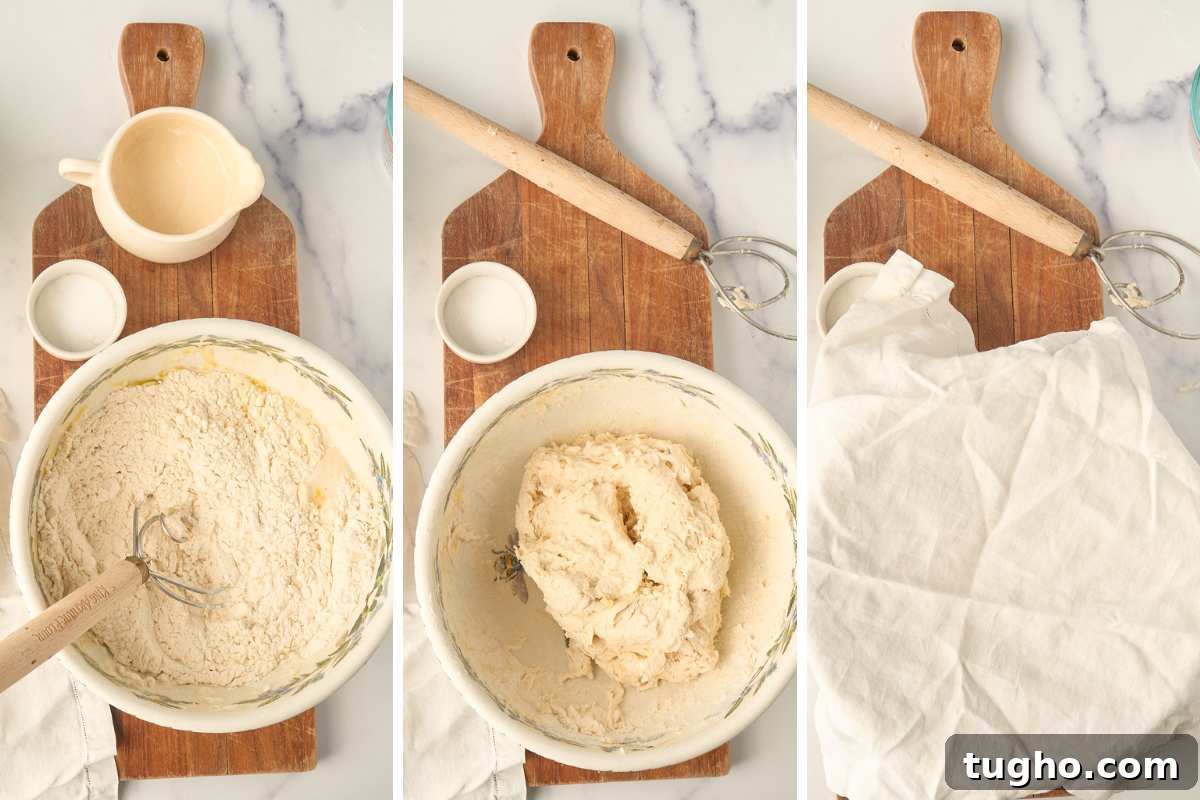
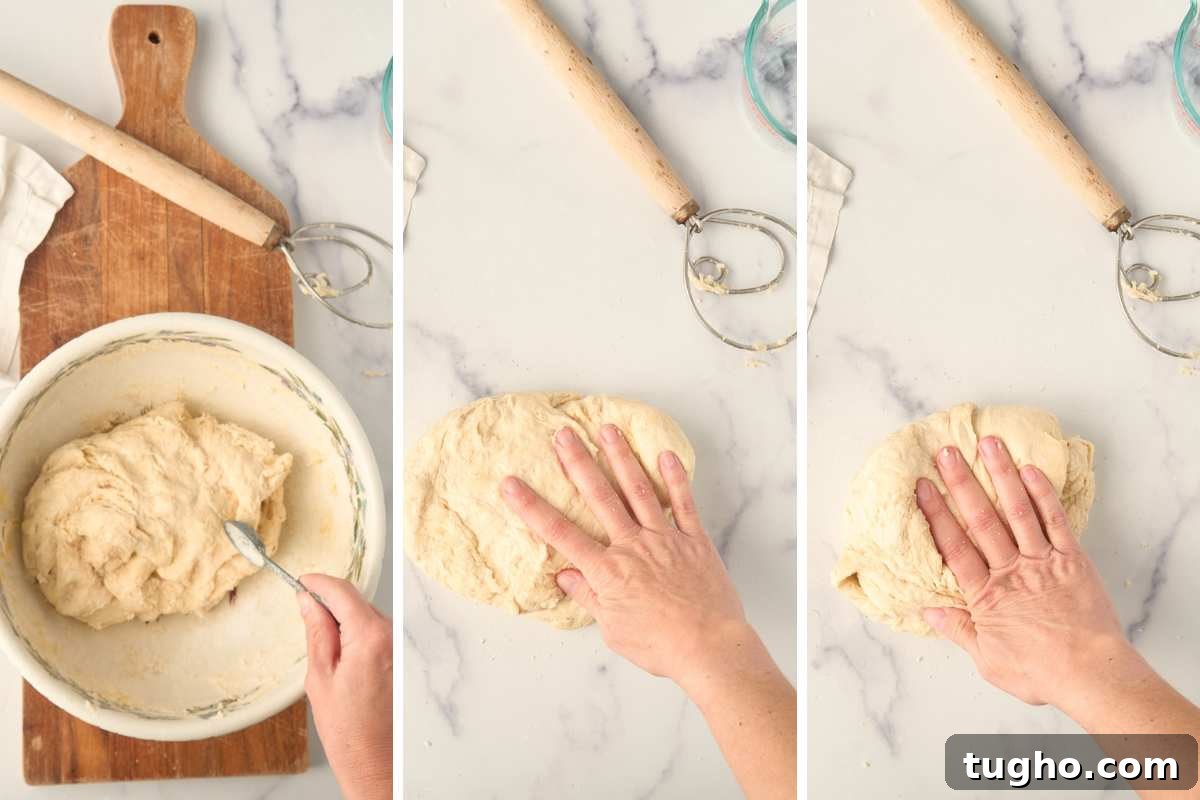
In a large bowl, combine the active sourdough starter, bread flour, water, olive oil, and sugar. Stir until all the flour is incorporated and a shaggy dough forms. Cover with a clean kitchen towel and rest at room temperature for 30 minutes to hydrate the flour — this makes kneading easier and improves the crumb.
Knead in salt and yeast
Sprinkle the salt and instant yeast evenly over the dough. Knead until the dough is smooth and elastic: about 5–6 minutes on low with a stand mixer or 8–10 minutes by hand. For hand kneading, use the heel of your hand to push the dough away, fold it back, rotate, and repeat. The dough should feel slightly tacky but pull away from the bowl or counter; add flour a tablespoon at a time only if the dough is excessively sticky.
First rise
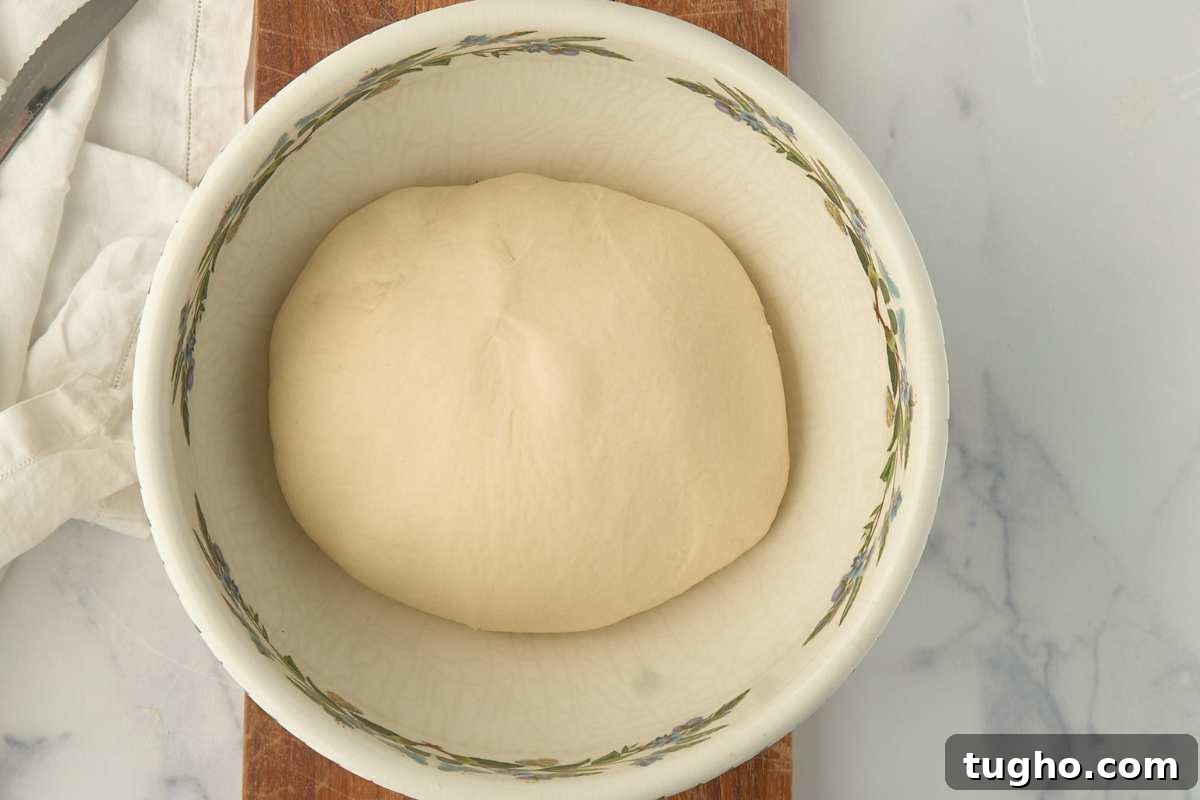
Shape the dough into a ball and place it in a lightly oiled bowl, turning once to coat. Cover with plastic wrap or a damp towel and leave in a warm, draft-free spot for 60–90 minutes, or until nearly doubled. The dough should look puffy and slowly spring back when poked.
Shape the rolls
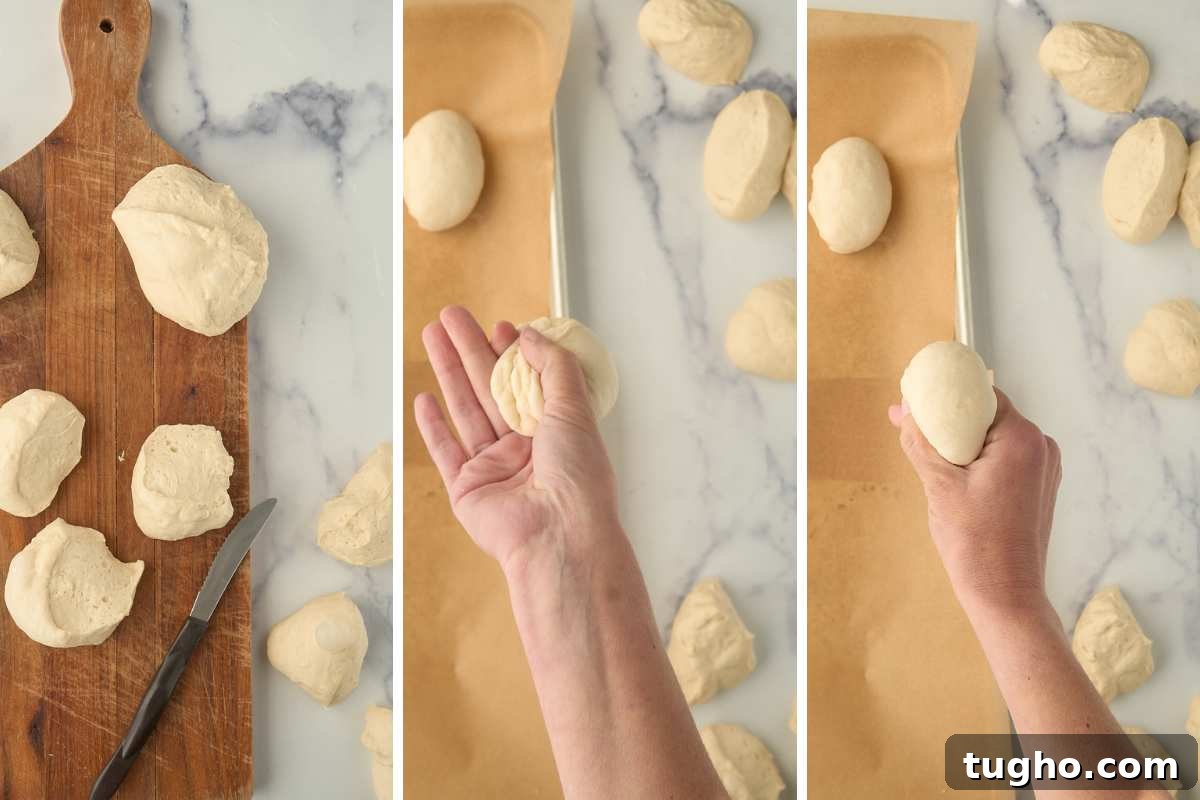
Turn the dough out onto a lightly floured surface, press gently to deflate, and divide into 8 or 12 equal pieces. For uniform rolls, weigh each piece (about 95 g for 8 rolls or 63 g for 12). Pull the edges toward the center to form a smooth top, then flip the ball over and cup your hand to roll in small circles, creating surface tension. Pinch the bottom to seal.
Second rise
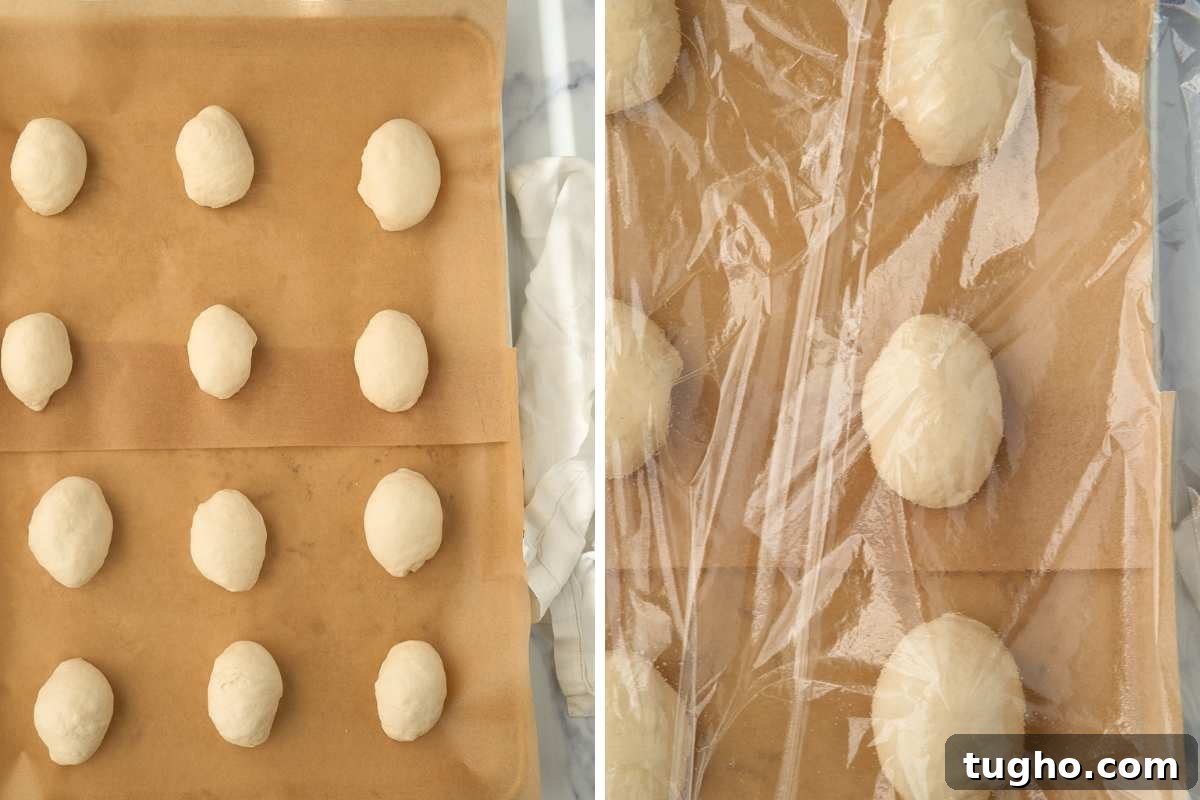
Line a baking sheet with parchment and dust with cornmeal or semolina. Place rolls about 2 inches apart. Cover loosely with lightly greased plastic wrap to prevent sticking and let rise 45–60 minutes until noticeably puffy but not overproofed.
Preheat the oven to 450°F (230°C) with a rack in the center and an empty metal pan on the lower third to heat. A hot metal pan will help generate steam when you add water.
Prepare for baking
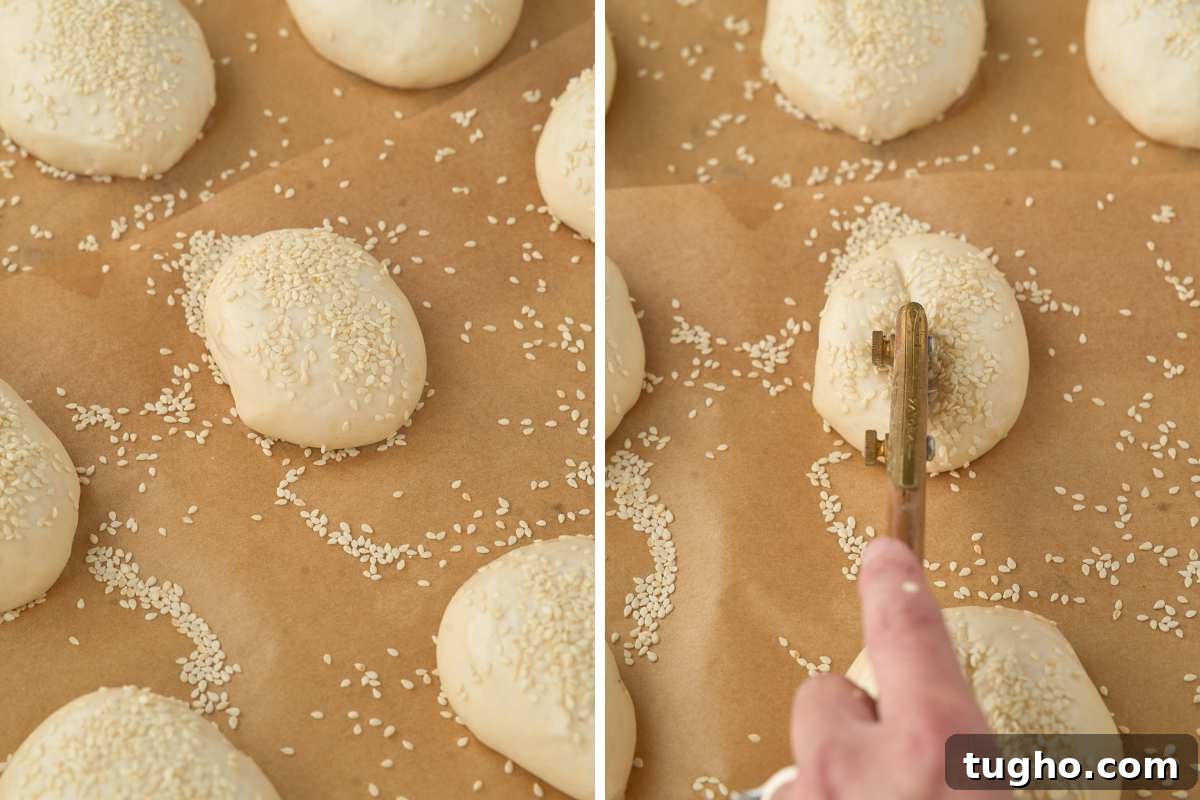
Beat the egg with 1 teaspoon water and brush the tops of the rolls gently so you don’t deflate them. Sprinkle sesame seeds generously. Using a sharp blade, score the tops with a quick ¼-inch cut — an “X” or a single slash works well. Scoring controls expansion and helps produce an attractive crust.
Bake with steam
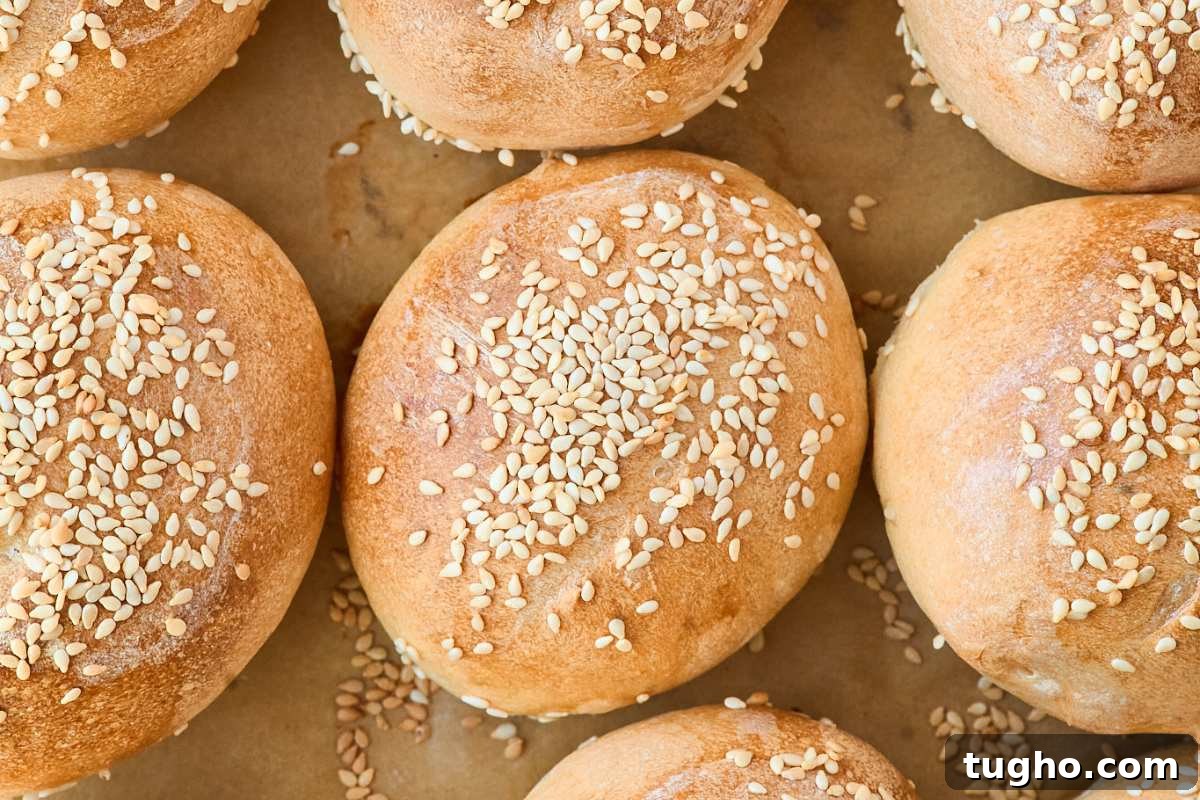
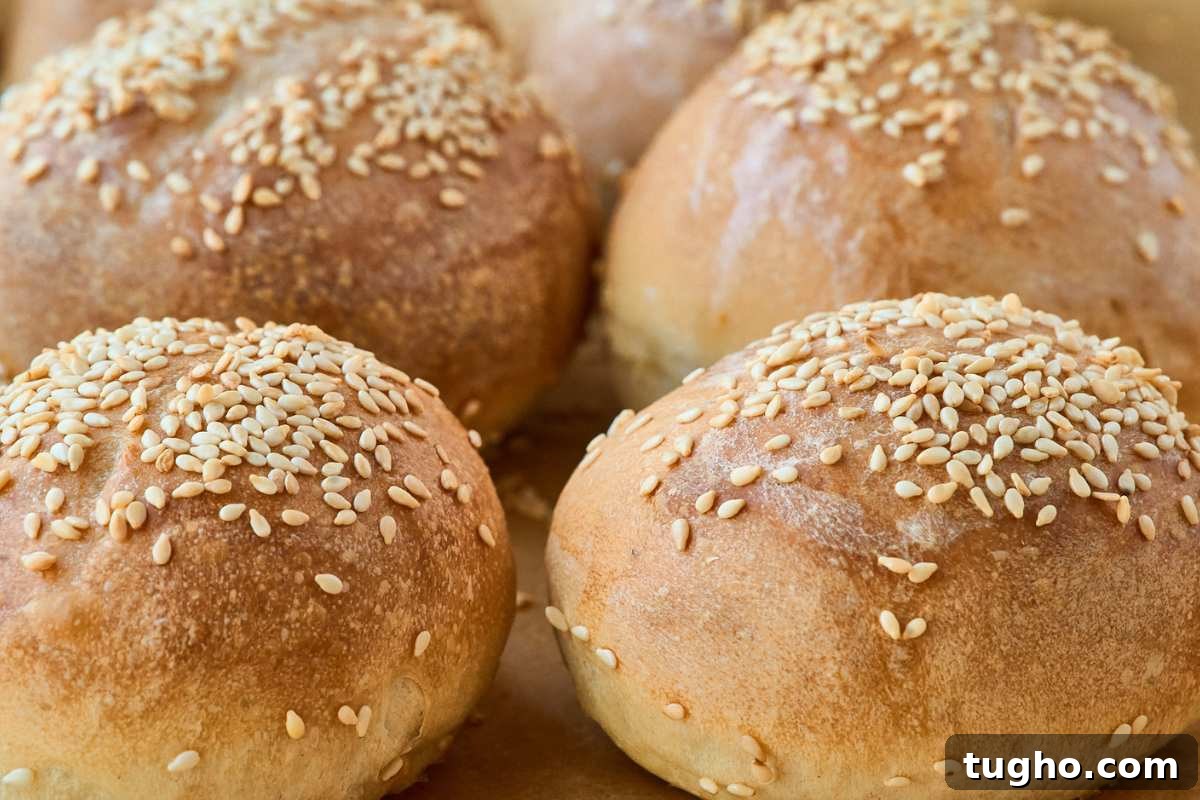
When the oven is fully preheated, carefully pour 1 cup of very hot water into the preheated metal pan to create steam, then quickly place the rolls on the center rack and close the oven door. Bake 18–22 minutes until deep golden and the rolls sound hollow when tapped on the bottom. If you use a thermometer, an internal temperature of about 200°F (93°C) indicates doneness.
Cool properly
Move the rolls to a wire rack immediately after baking to prevent soggy bottoms. Let them cool at least 30 minutes before slicing so the interior can finish setting. Cutting too soon will yield a gummy crumb.
Storage Instructions
Store at room temperature in a paper bag for 2–3 days; the crust will soften with time. For longer storage, freeze cooled rolls in a freezer bag for up to one month. To refresh, thaw at room temperature, sprinkle lightly with water, and warm in a 350°F (175°C) oven for 5–7 minutes (or 10–12 minutes from frozen).
What to Serve With These Rolls
These rolls are ideal for dipping and soaking up brothy soups and saucy pasta dishes. They pair especially well with creamy chicken noodle or tomato soup, hearty meat sauces, or as a side for Italian-style pasta and salads. Split and fill them for sandwiches or use them as dinner rolls for family-style meals.
Make It Your Own
- Swap toppings: try poppy seeds, flaky sea salt, or everything seasoning instead of sesame.
- Add 2 tablespoons dried herbs (oregano, rosemary, or thyme) to the dough for savory herbed rolls.
- Shape into ovals for sandwich rolls or make smaller portions for dinner rolls.
- Omit the sourdough and use a straight-yeast dough if you prefer a purely commercial yeast version.
Questions and Troubleshooting
Using a small amount of instant yeast speeds up and stabilizes the rise while still preserving sourdough flavor. Pure sourdough methods can take many more hours or even days.
Why did my rolls spread instead of rise?
Spreading usually means the dough was too wet or shaping didn’t create enough surface tension. When shaping, pinch the bottom firmly and form a tight skin on top.
What if I don’t have a metal pan for steam?
A cast iron skillet works well. Another option is to spray the oven walls lightly with water right after loading the rolls (avoid spraying the oven light). The goal is added steam in the first few minutes of baking to promote oven spring and a crisp crust.
Printable Recipe Summary
Crusty Italian Sourdough Rolls
Author: Katie Shaw
Yields: 8 large or 12 small rolls
Prep time: ~17 minutes | Cook time: 18–22 minutes | Rise time: about 2–2½ hours | Total time: ~3 hours
Ingredients (summary)
- 1¼ cups active sourdough starter
- 2½–3 cups bread flour
- ¾ cup + 1 tbsp water
- 1 tbsp olive oil
- ½ tsp sugar, 1½ tsp salt, ½ tsp instant yeast
- 1 egg (for brushing), sesame seeds, cornmeal/semolina
Instructions (summary)
- Mix starter, flour, water, oil, and sugar into a shaggy dough; rest 30 minutes.
- Add salt and yeast; knead until smooth and elastic.
- First rise: 60–90 minutes until nearly doubled.
- Shape into rolls, place on parchment dusted with cornmeal; second rise 45–60 minutes.
- Brush with egg, top with sesame seeds, score, and bake at 450°F with steam for 18–22 minutes.
- Cool on a wire rack at least 30 minutes before serving.
Notes
Start with the lower flour amount; add more only if the dough feels too wet. Bread flour gives the best structure. Rolls freeze well; reheat in a 350°F oven.
Nutrition (approx. per small roll)
Calories: 154 kcal | Carbohydrates: 28 g | Protein: 5 g | Fat: 2 g