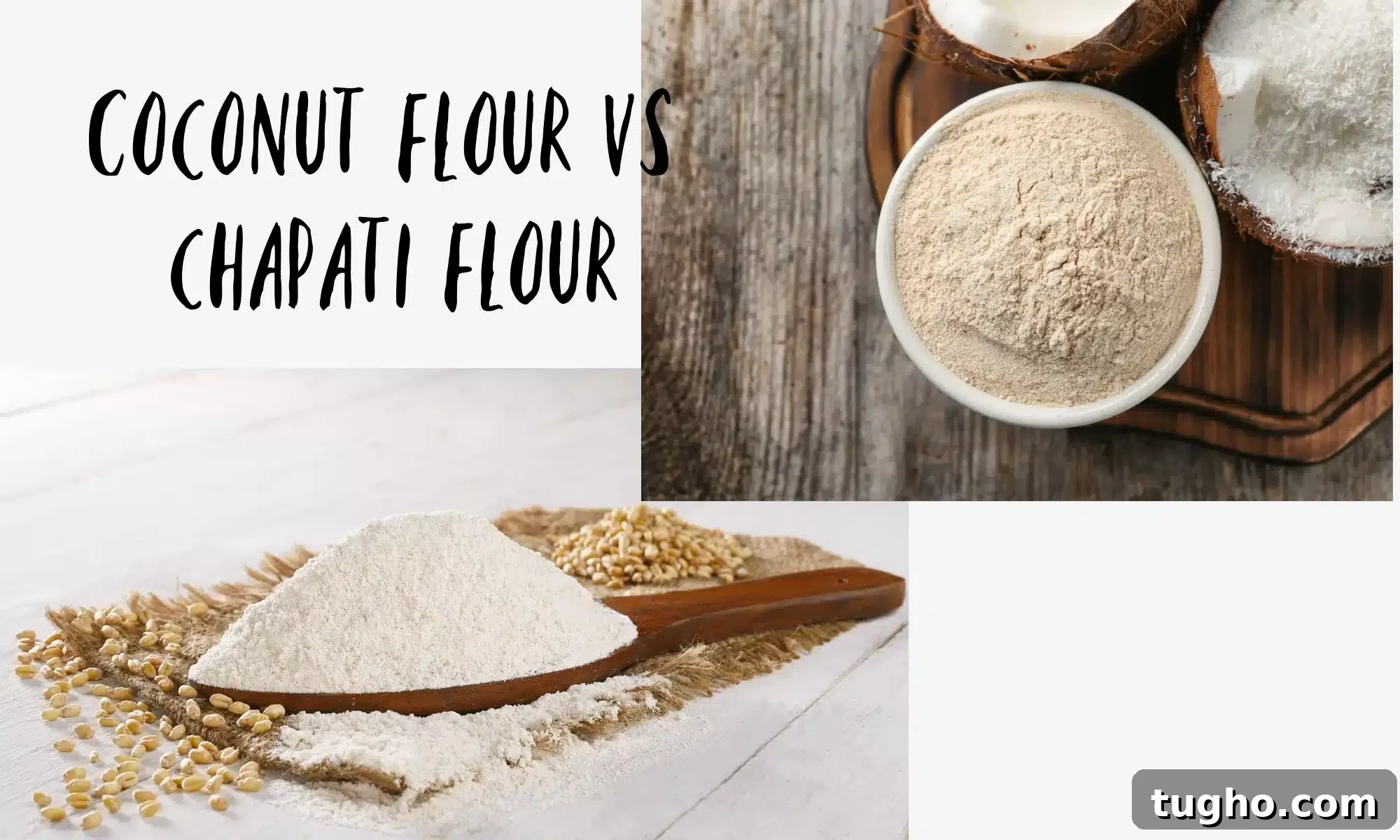
Do you often get into debates at the dinner table about which flour works best for a recipe? It’s easy to assume two similarly named flours will behave the same way—take coconut flour and chapati (atta) flour, for example. Both appear in South Asian cooking, but they serve very different purposes in the kitchen.
Below we compare these two popular flours side by side: their textures, nutritional profiles, typical uses, and storage tips. If you’ve been wondering what makes them distinct and how to use each one well, this guide will help you decide which is best for your next recipe.
Comparing coconut flour vs chapati flour
| Chapati flour | Coconut flour | All-purpose flour | |
| Substitution Ratio | 1:1 | 1:4 | N/A |
| Gluten-free? | No | Yes | No |
| Keto-friendly? | No | Somewhat | No |
| Paleo-friendly | No | Yes | No |
| Allergens | Wheat, gluten | Coconut (tree nuts) | Wheat, gluten |
| Liquid absorbency | Medium – high | High | Medium |
| Pantry shelf life (unopened/sealed) | 6-8 months | Up to 2 years | 6-8 months |
| Best for baking | Unleavened flatbreads, roti, paratha, chapati and any recipes that call for whole wheat flour | Most desserts – especially cakes, cookies, and pie crusts, muffins. | Non-yeast recipes such as cookies, biscuits, and some breads |
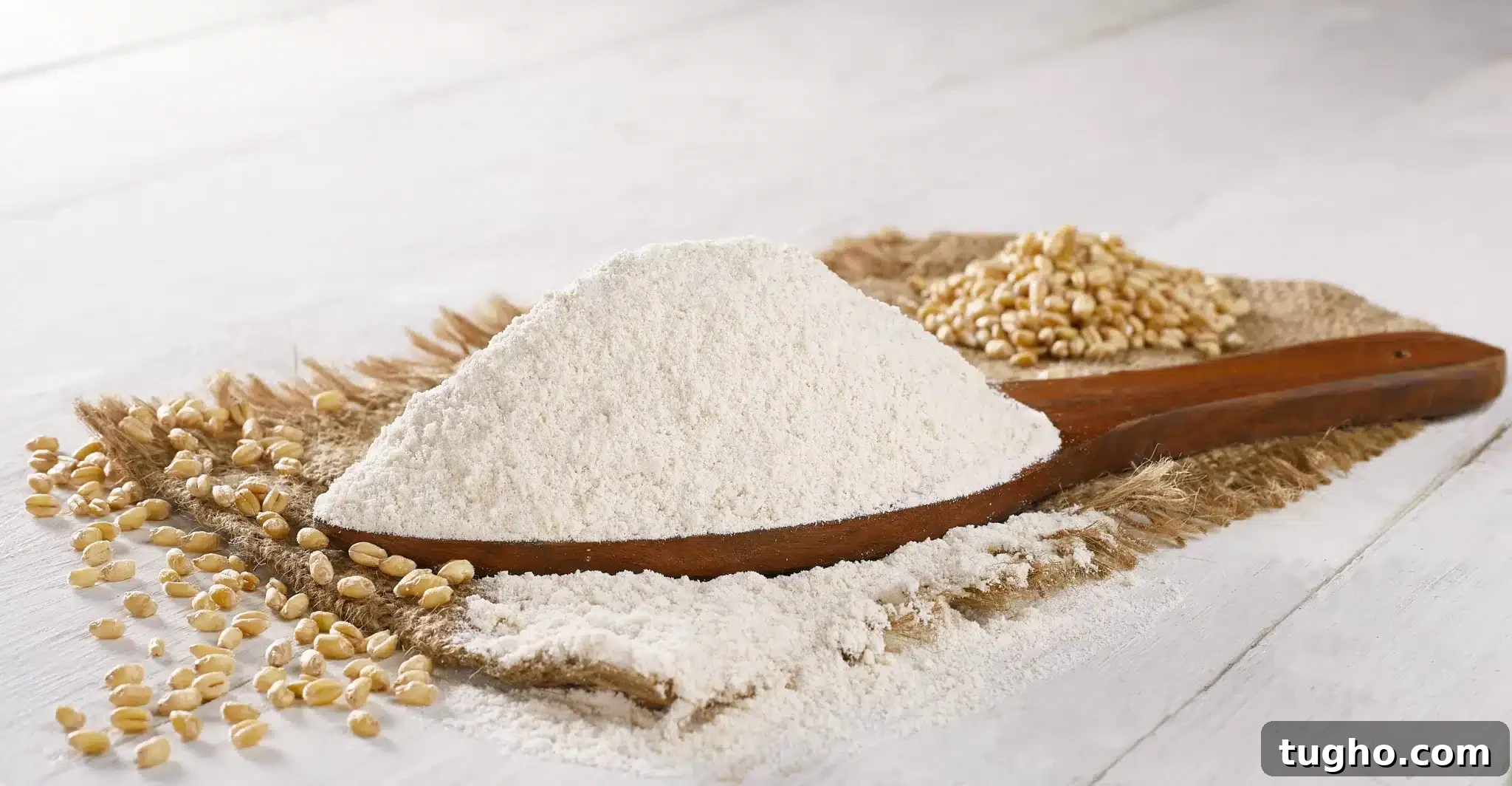
Chapati flour, commonly called atta, is a type of wholemeal wheat flour made from the entire wheat kernel, including the bran. Unlike some other whole wheat flours, atta is milled differently—often using traditional, high-friction mills called chakkis. That milling method alters the grain’s starch and produces a slightly roasted aroma and a touch of natural sweetness.
Because of how it’s ground, atta absorbs more water than many Western wheat flours and develops a soft, pliable dough ideal for flatbreads such as chapati, roti, and paratha. Those same milling traits make it less suitable for classic yeast-leavened sandwich loaves, where a different gluten and starch behavior is needed.
Differences between chapati flour and coconut flour
Both flours share mild nutty and slightly sweet flavor notes, but their culinary roles are distinct. Chapati flour is relatively neutral and performs best in savory flatbreads. Coconut flour has a pronounced coconut aroma that pairs exceptionally well with sweet baked goods and many dessert recipes.
From a dietary perspective, coconut flour is gluten-free and generally fits paleo and low-carb approaches better than chapati flour. It also has a notably higher fiber content and different macronutrient balance, which affects how it behaves in recipes.
Baking with coconut flour vs chapati flour
Cooking or baking with these flours is a different experience. Coconut flour tends to produce dense, moist results and soaks up a lot of liquid. It’s often used in small amounts and combined with eggs, psyllium, or other binders to create structure. Chapati flour, by contrast, yields soft, stretchy dough that puffs slightly when cooked on a hot pan.
Techniques don’t always transfer between them. For example, whisking and folding are common with coconut flour batters, while chapati dough benefits from kneading to develop the right texture. If you replace one flour with the other, expect to adjust binding ingredients and liquids.
Because chapati flour absorbs more moisture than typical all-purpose flour, a straight 1:1 swap is not recommended in recipes that call for all-purpose. A practical approach is to mix about half chapati flour with all-purpose to maintain a workable dough. If you want a gluten-free flatbread, coconut flour—often blended with psyllium husk or other binders—can produce an excellent result that complements South Asian dishes.
On the other hand, using chapati flour for yeast bread loaves usually leads to gummy or crumbly results, so it’s best reserved for flatbreads and other unleavened preparations.
Ingredients in chapati flour vs coconut flour
Atta is commonly sold in Indian grocery stores and is sometimes freshly milled at local mills in regions where it’s a staple. You’ll encounter varieties labeled regular atta or medium atta; medium atta can be a blend of white chapati flour and wholemeal flour. Ideally, regular chapati flour is 100% stone-ground whole wheat.
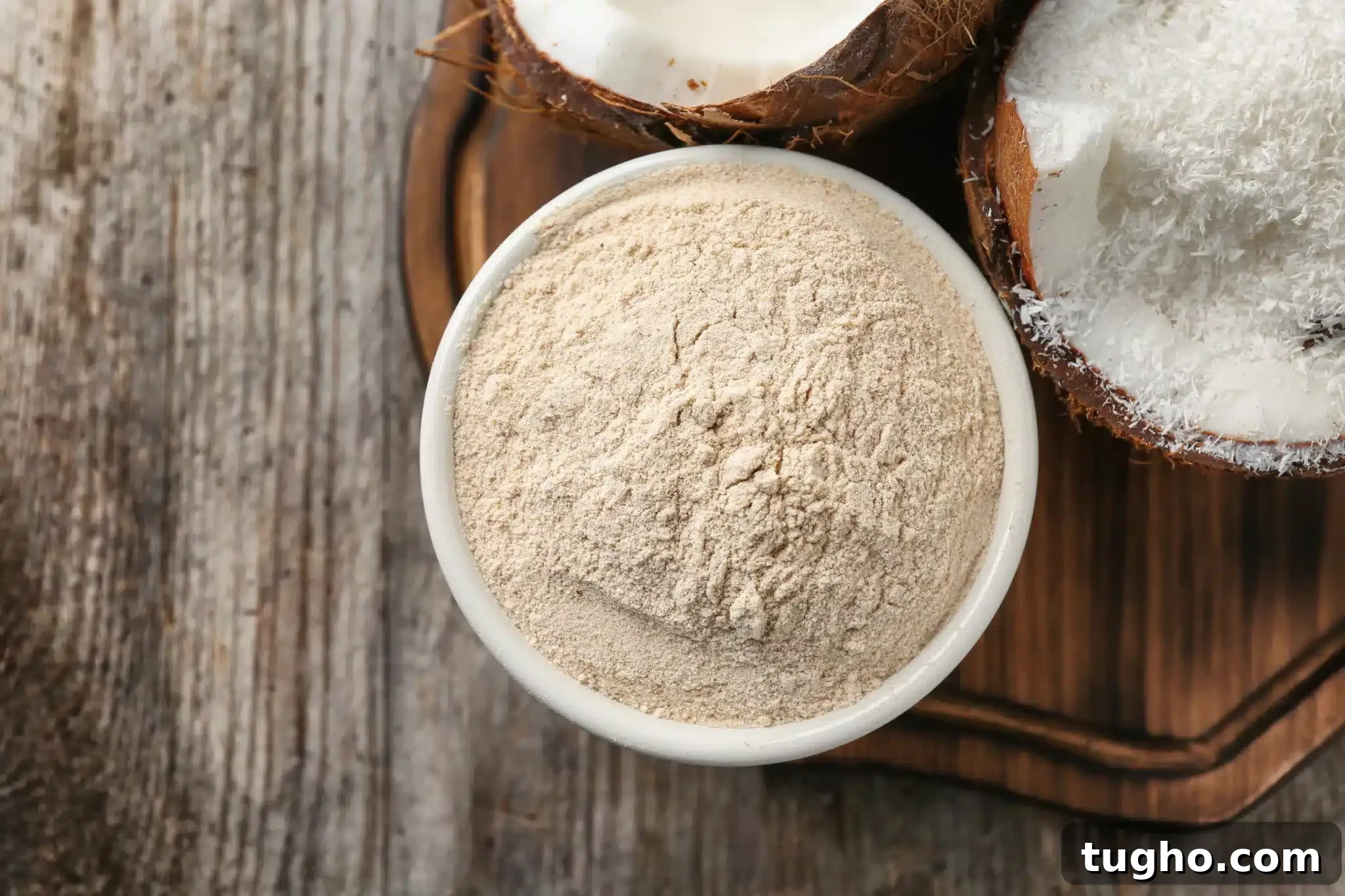
Coconut flour should be made from dried and finely ground coconut meat or flakes. When shopping, check labels to confirm there are no added ingredients if you want a pure product.
Chapati flour + coconut flour nutritional facts
| Per ¼ Cup Serving | Chapati flour | Coconut flour | All-purpose flour |
| Calories | 110 | 120 | 110 |
| Carbs | 23g | 18g | 23g |
| Fiber | 3.2g | 10g | 1g |
| Fat | 0.8g | 3g | 1g |
| Protein | 4g | 6g | 4g |
| Glycemic index score | 62 | 45 | 85 |
Chapati flour vs coconut flour storage
Proper storage extends the freshness of both flours. Keep chapati flour in an airtight container in a cool, dry place. Coconut flour also prefers an airtight container and benefits from refrigeration or storing in a cool area away from sunlight and heat to prevent any off flavors.
In both cases, seal the package or container tightly after each use to minimize exposure to air and moisture, which preserves taste and shelf life.
Chapati flour vs coconut flour: The ultimate verdict
Both flours have distinct strengths. For traditional flatbreads, chapati flour remains the best choice because of its water absorption and texture. Coconut flour shines in gluten-free and low-carb baking, and its natural sweetness pairs well with many dishes. If you’re looking for a healthier or gluten-free option that still complements South Asian flavors, coconut flour is a strong contender—especially when combined with suitable binders.
FAQ
You can blend wholemeal flour and white flour, use white whole wheat, or experiment with a coconut flour flatbread if you need a gluten-free alternative (remember to include a binder such as psyllium or eggs).
Atta is a form of whole wheat flour, but it behaves differently because of how it is milled. Atta tends to be finer, absorb more water, and have different gluten characteristics compared with some other whole wheat flours.
Atta is generally more nutritious than refined all-purpose flour because it includes the whole grain. It retains bran and germ, which contribute fiber and nutrients that are reduced in refined flours.