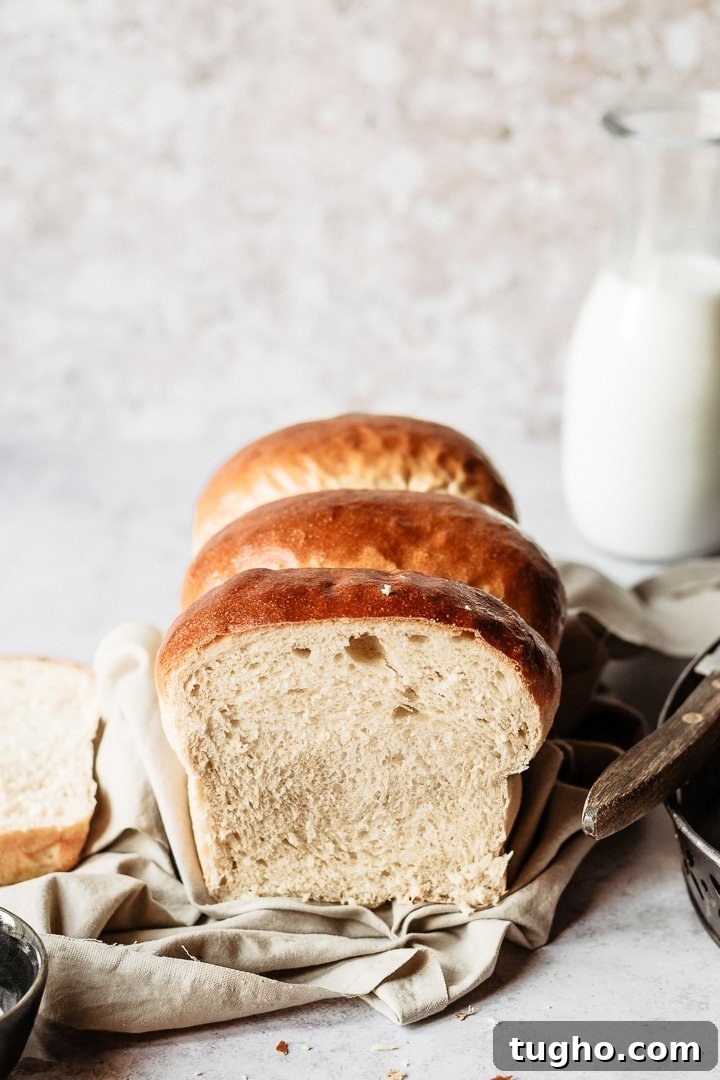
This is the recipe you’ve been waiting for if you follow me on Instagram.
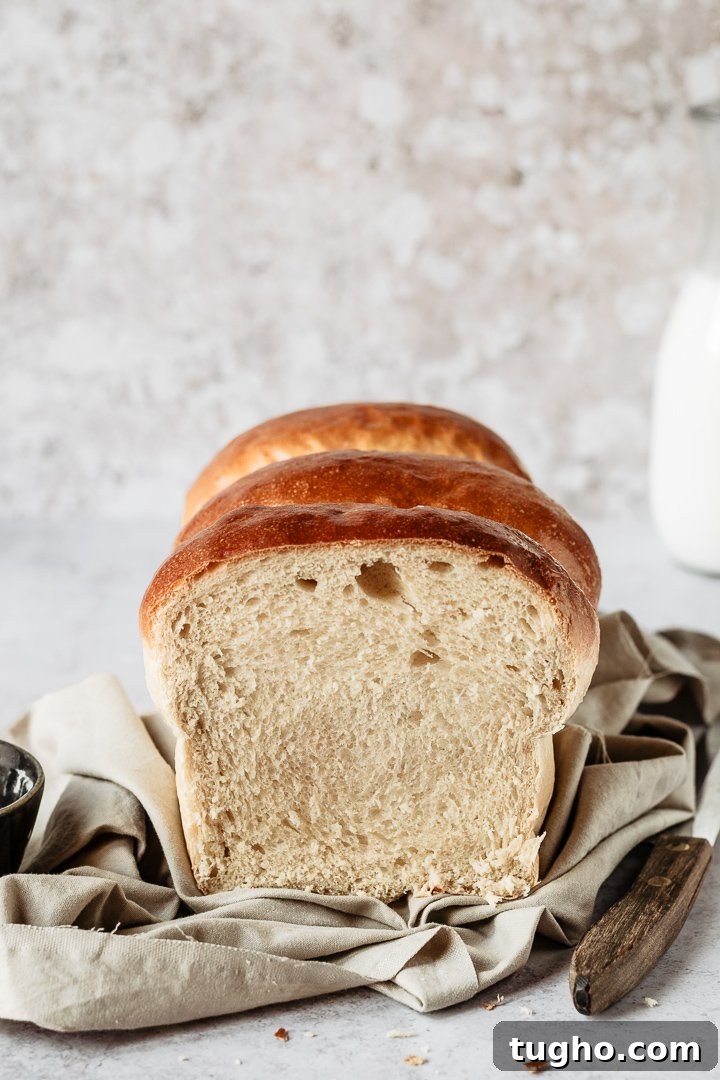
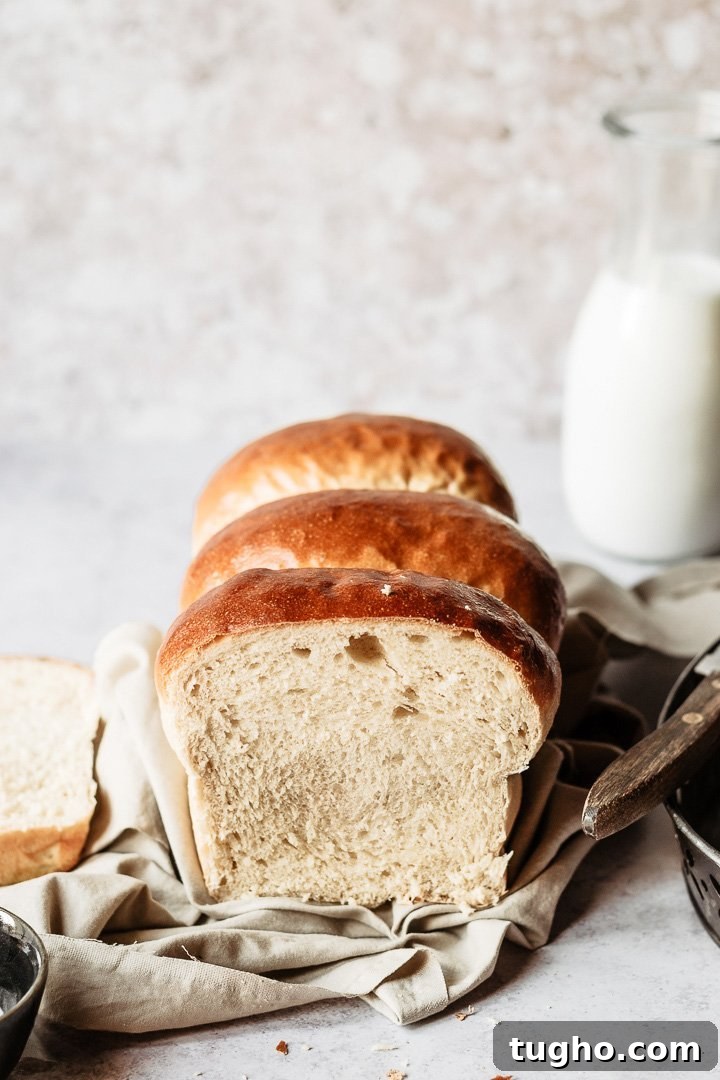
It’s the softest bread there is.
If you want to be swept away by fluffiness, try my Hokkaido milk bread. I promise it will amaze you!
[See my Instagram stories to watch the process and understand the dough’s texture]
Let’s give a big thanks to Mr. MILK for the extra softness.
Milk works wonders here, and if you read the whole post you’ll see why.
If you were looking for a slightly sweet idea for breakfast or a snack, this might quickly become your favourite.
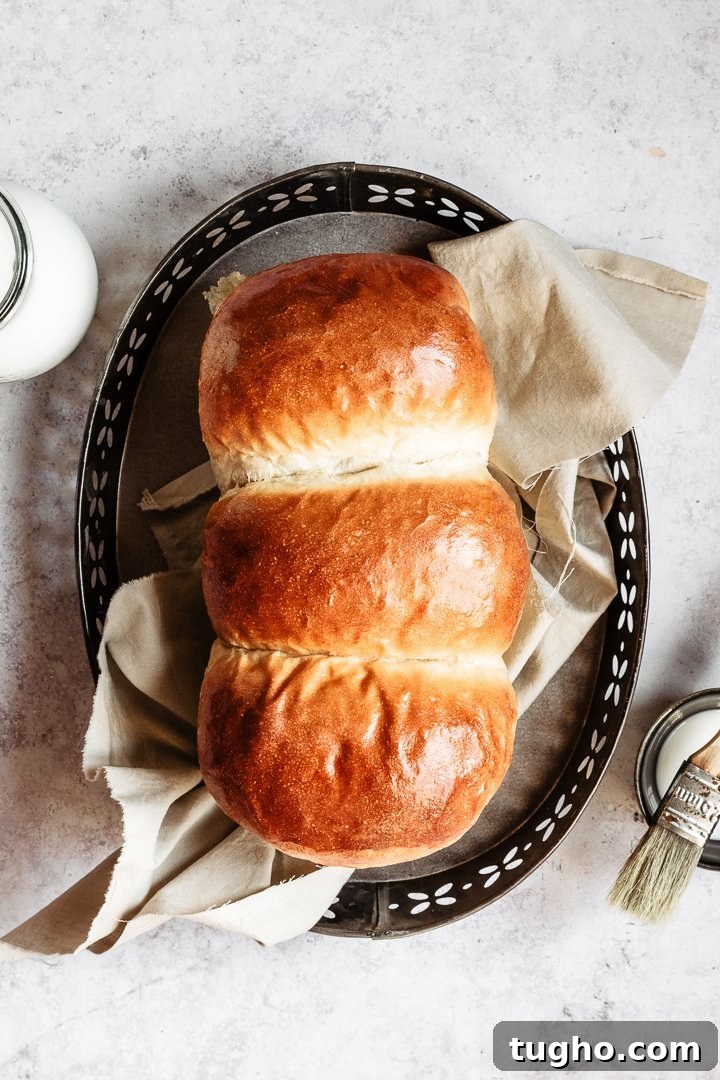
Hokkaido Milk Bread — soft as a pillow
I first discovered this style of bread early in 2019 while scrolling through videos. A short Japanese baking clip caught my eye and in the first five seconds I thought, “Oh my, that looks like a pillow!” The incredible softness stayed with me and I had to try it.
As a lover of carbs and leavened breads, seeing that video was irresistible. I immediately searched for variations online and compared recipes.
One common ingredient in many versions is powdered milk. I searched everywhere and couldn’t find it at first, so I tested the recipe without it — and it was already very good. Then I had an idea: why not try condensed milk? It worked wonderfully. The aroma filling the kitchen was irresistible. Condensed milk is essentially milk and sugar, so it amplified the milky sweetness and helped achieve that classic Hokkaido flavour.
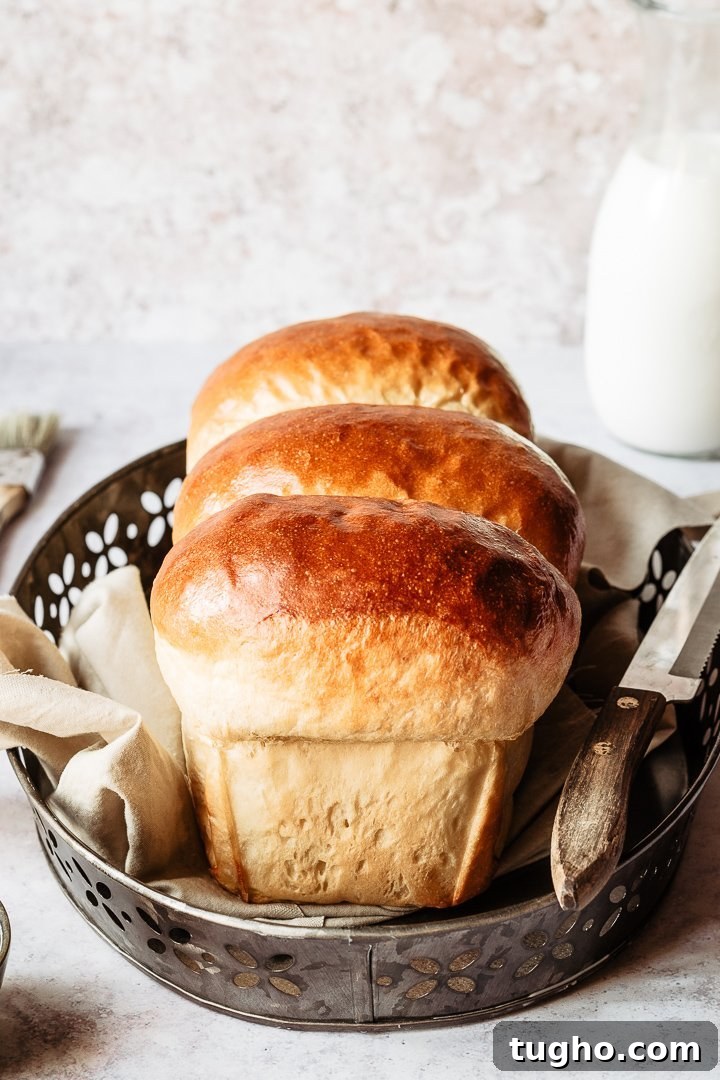
Even a small amount of powdered milk or condensed milk (about 5 g) makes a noticeable difference in aroma and taste. Ready to make the softest milk bread you’ve ever tried?
About the flavour
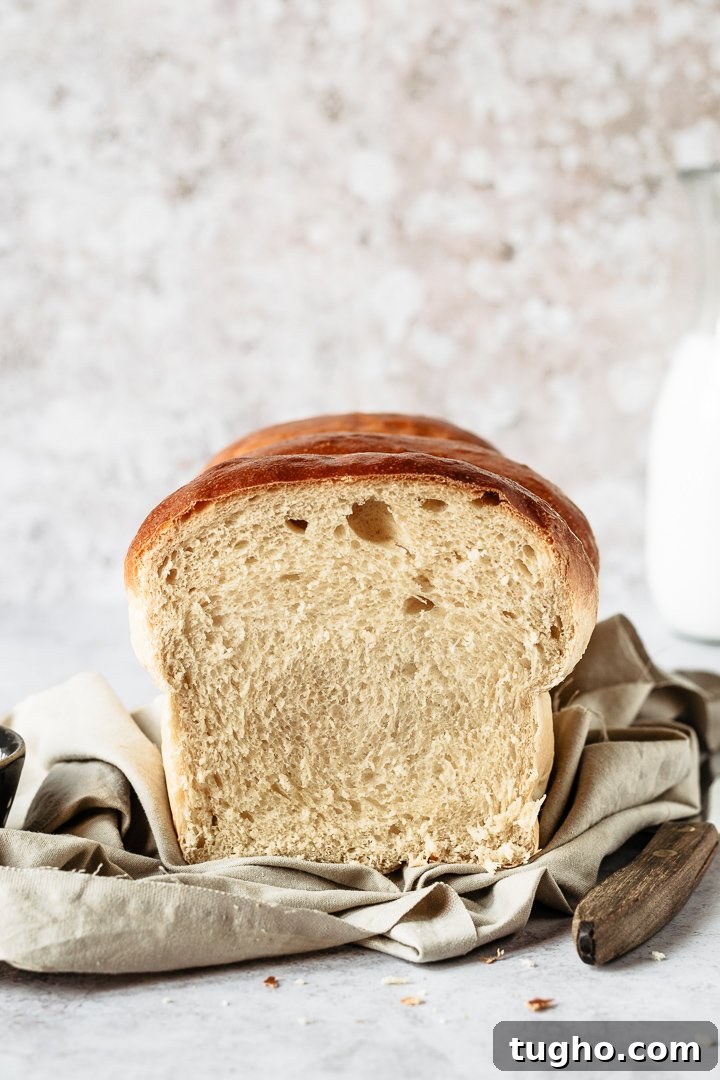
I’ll admit I’m impatient with baked goods — often I slice them too soon. But the first time I tried this bread straight from the oven, the first bite took me back to childhood memories of milk buns my mother used to buy. The crumb is milky and slightly sweet, perfect for breakfast or as a sandwich bread.
Since then I eventually found milk powder at a nearby store and sometimes use it for a deeper milky note. I’ve also tested versions with chocolate chips to make small sweet rolls — they were a hit with family and especially the kids.
What is the Tangzhong method (water roux)?
The Tangzhong, or water roux, is a simple cooked paste made from flour and water (or milk and flour). By gently heating these together until the mixture thickens — ideally reaching around 65°C — the starches gelatinize and form a gel.
Adding this gel to the dough helps retain moisture, resulting in an exceptionally soft crumb that stays tender for longer than bread made without a roux.
Why Tangzhong makes the bread so soft
In plain terms: the roux traps moisture. Because more water is retained in the crumb during baking, the bread remains more hydrated and soft. During baking, internal moisture helps the loaf expand and contributes to a light, pillowy texture.
What does milk (or condensed milk) do?
Milk, milk powder, or condensed milk adds tenderness, a rich milky flavour, and a slightly sweet note. It also encourages a golden, slightly caramelized crust that looks and tastes wonderful.
Two crucial steps for ultra-soft milk bread
After making this bread many times, I found two essential steps that consistently produce a pillow-soft loaf:
- Make the Tangzhong: this is the secret to lasting softness. Don’t skip it.
- Brush with milk after baking: as soon as the bread is out of the oven, brushing the surface with a little milk adds extra milky flavour and helps keep the crust tender.
Recipe — Hokkaido Milk Bread
HOKKAIDO MILK BREAD
An incredibly soft milk bread, ideal for breakfast, snacks or sandwiches. The Tangzhong method gives it that pillowy texture.
Prep: 30 minutes | Bake: 20 minutes | Rise: 1 hour 45 minutes
Servings: 1 loaf (about 9 slices)
Author: Roberta
Equipment
- Loaf pan (plumcake tin)
Ingredients
For the Tangzhong (water roux):
- 25 g all-purpose flour (type 0)
- 100 g water
For the dough:
- 320 g all-purpose flour (or 50/50 with whole wheat)
- 30 g brown sugar
- 5 g salt
- 5 g active dry yeast
- 120 g warm milk (about 35–40°C)
- 5 g condensed milk or milk powder (optional but recommended)
- 25 g egg (about half an egg, roughly 25 g)
- 25 g high-quality butter, softened (not melted)
To brush:
- Milk
- Remaining half egg (for egg wash)
Instructions
Make the Tangzhong:
- In a small saucepan, whisk together the water and flour until smooth. Cook over low heat, stirring constantly with a spatula, until the mixture thickens into a gel. Heat until it reaches about 65°C if you have a thermometer.
- Transfer the roux to a plate, cover it with plastic wrap so the film touches the surface (this prevents a skin from forming), and let it cool.
Make the dough:
- In the bowl of a stand mixer (or a mixing bowl if working by hand), combine flour, salt and sugar. Start mixing on medium speed.
- Add the yeast and warm milk (35–40°C). Mix to incorporate.
- Gradually add the beaten half egg, condensed milk (or milk powder if using), and the cooled Tangzhong. Mix until combined.
- Add the softened butter and continue kneading for about 15 minutes, or until the dough is smooth and elastic (you should see the dough pull into a slightly stretchy network).
- Shape the dough into a ball, place it back in the bowl, cover with plastic wrap and let it rise in a warm place for about 50 minutes, until doubled.
- Punch down gently, divide the dough into 3 or 4 equal portions, and shape each portion into a ball. Cover and rest for 15 minutes.
- After resting, roll each ball out as shown in traditional shaping methods, then place the shaped pieces in a greased or lined loaf pan. Let them rise until nearly doubled, about 40 minutes.
- If you prefer rolls instead of one loaf, divide into 8 pieces, let rise for about 45 minutes and then bake.
- Preheat the oven to 180°C (350°F).
- Combine the remaining egg with a splash of milk to make an egg wash. Brush the loaf, then bake for about 20 minutes or until golden brown.
- As soon as the bread comes out of the oven, brush again lightly with milk to soften the crust.
- Remove gently from the pan and cool on a wire rack. Store in an airtight container; it will keep for several days. You can also freeze it.
Notes
You can knead by hand, but be sure to develop the gluten well — that elastic network is what gives the loaf structure and the classic soft crumb. The original recipe inspiration comes from Umi’s Baking; this is a slightly adapted version.
Nutrition (per slice)
Calories: 219 | Fat: 5 g | Carbohydrates: 36 g | Protein: 8 g (values are estimates)
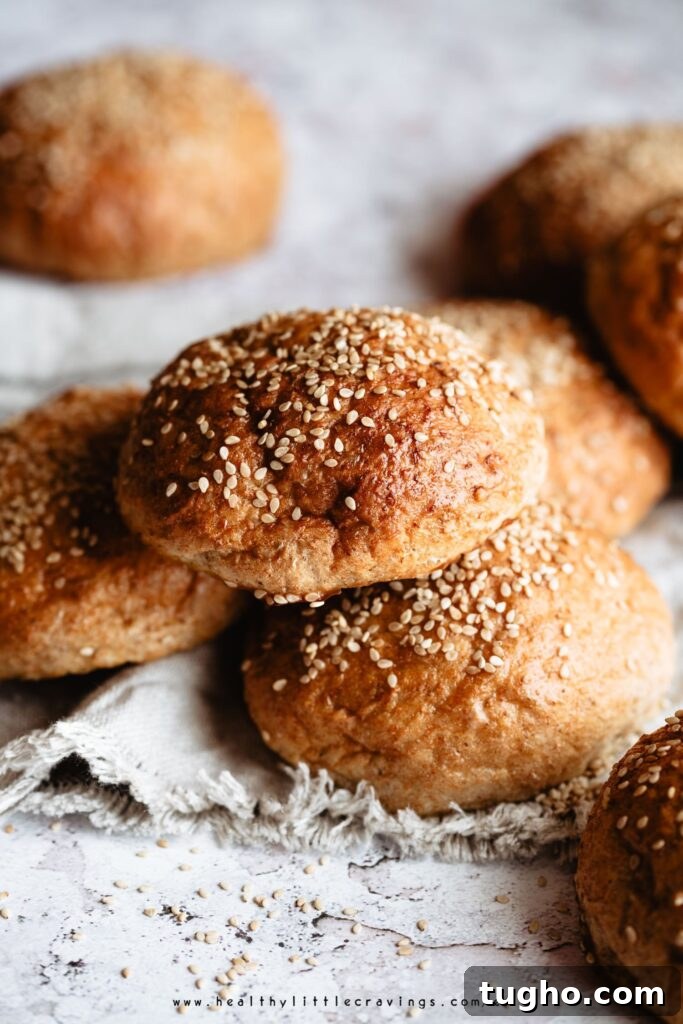
If you enjoyed this recipe, you might also like whole wheat burger buns made with the Tangzhong method.
© Healthy Little Cravings – Roberta Dall’Alba. All content, images and design on this site are owned by the author and protected by copyright. If you wish to reuse any content, please contact the author for permission. If you republish a recipe, please rewrite the text and credit this post.