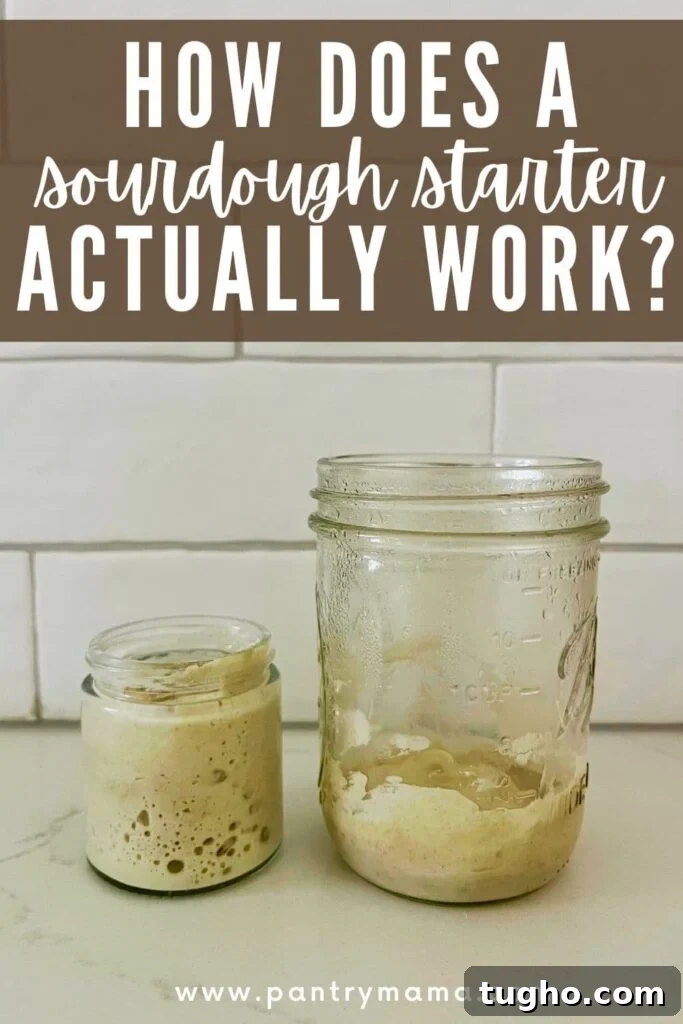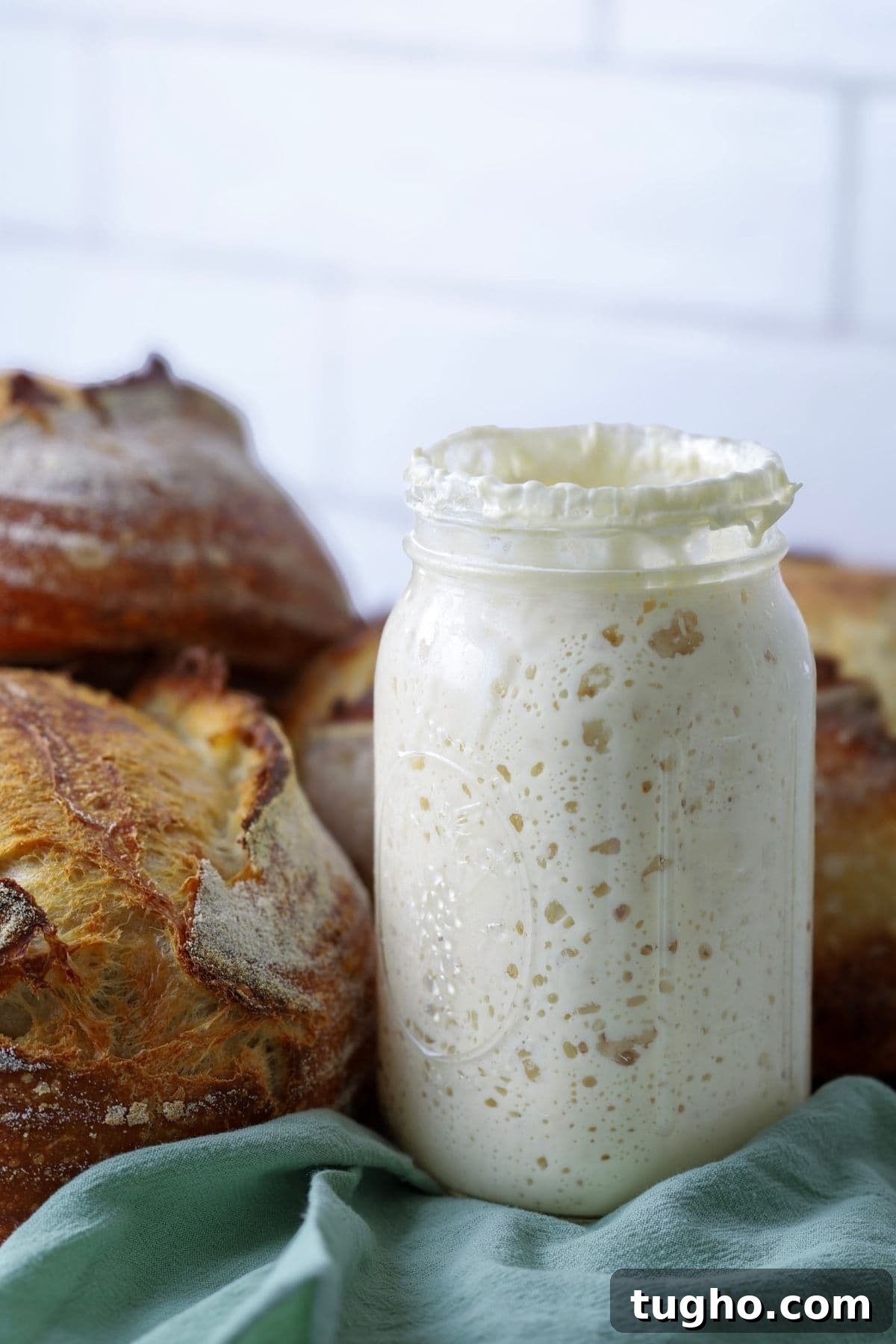
How does a sourdough starter work? That jar of flour and water on your counter is a living culture that leavens bread, flavors it, and changes the way our bodies interact with the grain. If you’ve ever wondered what’s happening inside that cloudy, bubbly mix, this article explains the science in clear, practical terms.
I wasn’t a science kid at school, but today my family’s meals revolve around the colony of wild yeasts and bacteria that live in a jar on the kitchen bench. Because sourdough starter plays such a central role in our routine, I dug into how it works so I understand what I’m feeding, why it behaves the way it does, and how to use it best.
Quick Summary of the Science Behind a Sourdough Starter
If you want the short version about how a sourdough starter works:
- A sourdough starter is a symbiotic culture of wild yeast and bacteria that acts as a natural leavening agent.
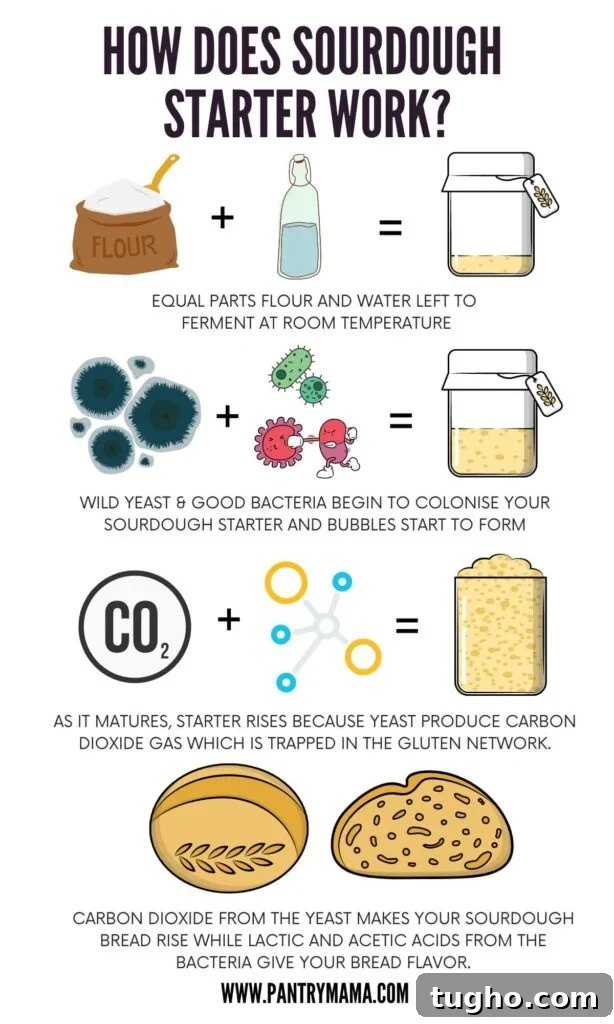
- Combine equal parts flour and water and leave the mixture at room temperature. Wild microbes from the flour and the air colonize the mix and begin to ferment the flour’s sugars.
- The microbes convert sugars into carbon dioxide, ethanol, and organic acids. Carbon dioxide creates rise; acids contribute sour flavor and help preserve the dough; microbial enzymes partially break down flour components.
- The result is more than leavening: flavor, shelf life improvements, and changes to how the dough digests for some people.
So … What Is a Sourdough Starter?
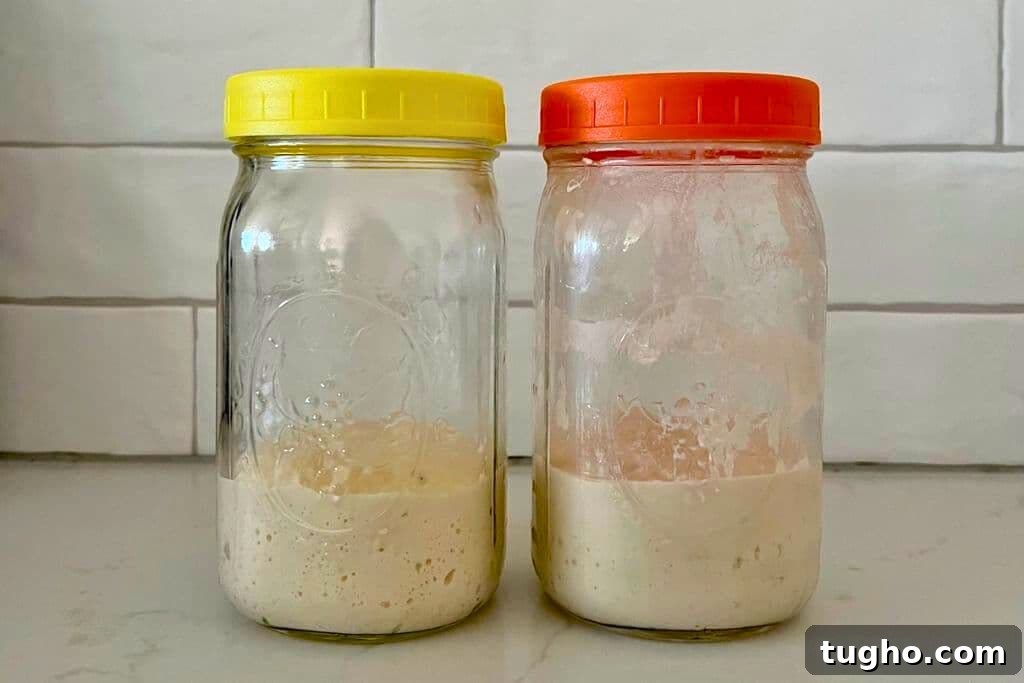
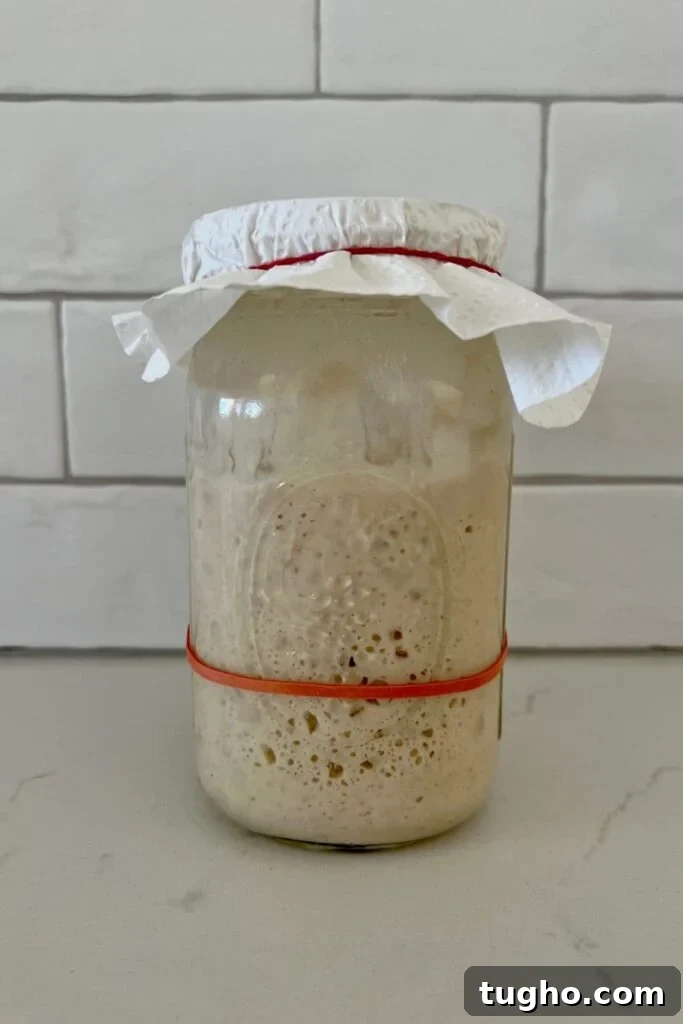
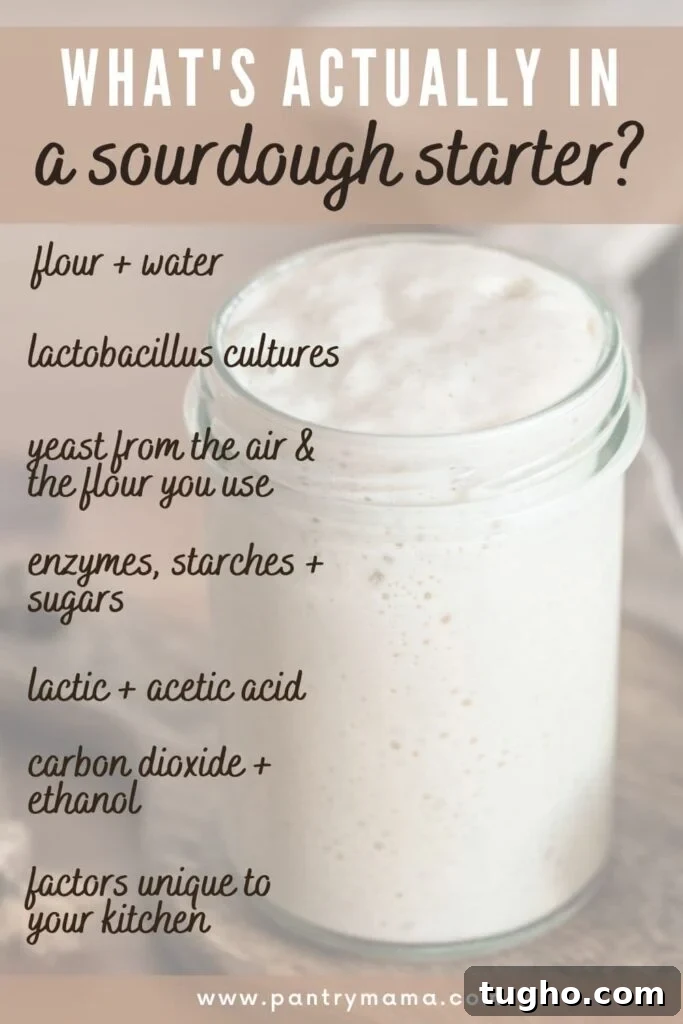
A sourdough starter is simply flour and water left to ferment at room temperature. Naturally occurring yeasts and bacteria from the flour and the surrounding air begin feeding on the starches and sugars in the flour. Over days, the culture becomes dominated by strains adapted to that environment and contributes the leavening and flavor we associate with sourdough.
During fermentation the microbes convert simple carbohydrates into carbon dioxide, ethanol, and acids such as lactic and acetic acid. Carbon dioxide expands the dough, while the acids give the characteristic tang and help slow staling. Microbial enzymes also start breaking down proteins and starches, which influences texture and digestibility.
Because the starter consumes the nutrients in flour, you should regularly discard part of the culture and feed it fresh flour and water to keep the microbial population healthy and active. Feeding schedules vary but frequent feeding during establishment stabilizes the community. Using a kitchen scale to feed by weight ensures consistent results.
Discarded starter can be used in pancakes, cookies, pie crusts and other recipes, while an active, refreshed starter is what you use to make traditional sourdough bread and pizza dough.
Let’s Explore the Science of Sourdough Starter
The Sourdough Microbiome
Every starter is unique. While many starters share common wild yeast species and lactic acid bacteria, local conditions — the type of flour, room temperature, humidity, and even the baker’s hands — shape each culture. Those differences influence flavor, acidity, and fermentation speed, making every starter a small micro-ecosystem.
Some wild yeasts and bacteria are present on flour itself; others may come from the baker or the environment. Over time, species that thrive under your kitchen conditions become dominant and create the stable community that becomes your starter.
How Do Sourdough Starters Work?
When you mix active starter into dough, you introduce a thriving population of microorganisms. As the dough rests, those microbes ferment available sugars and produce carbon dioxide. The gas is trapped in the dough’s gluten network formed by mixing and folding, creating the airy crumb typical of good sourdough.
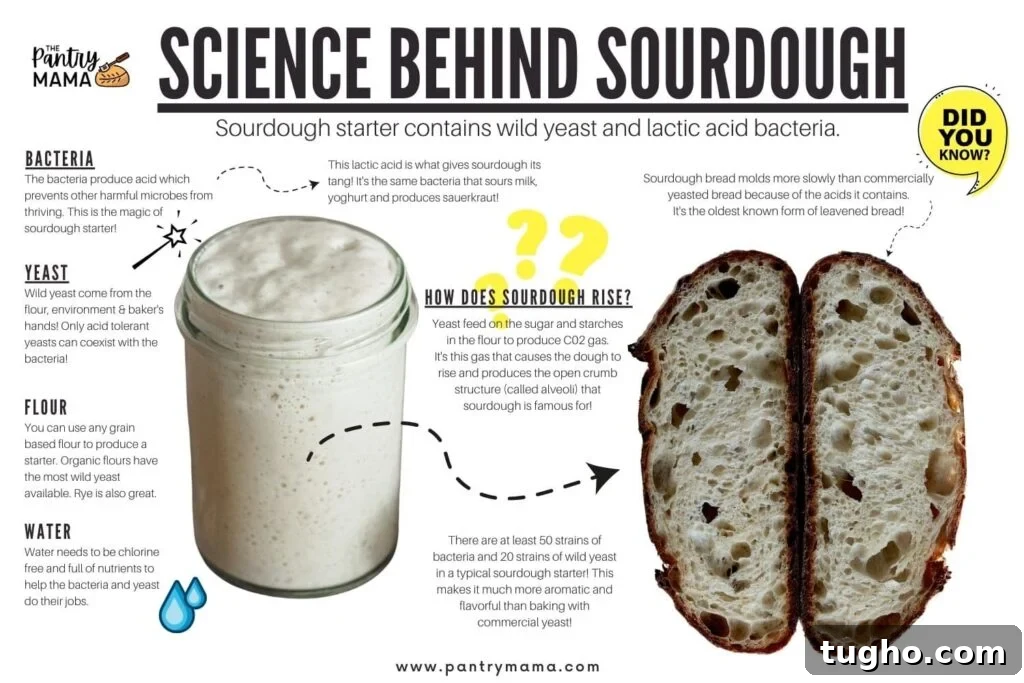
Lactic acid bacteria contribute acids that shape the flavor and produce enzymes that break down some proteins and carbohydrates in the flour. This enzymatic activity can reduce certain complex components, making the bread easier to digest for some people, although sourdough is not suitable for those with celiac disease or true gluten allergy.
In short: yeast produces gas that leavens; bacteria produce acids and enzymes that develop flavor, texture, and preservation qualities. Together they create the loaf you enjoy.
How Do Yeast and Bacteria Coexist?
Yeasts and bacteria coexist in a starter because they favor different nutrients and create an environment that suits both. Some microbes prefer simple sugars like glucose, others use maltose or other breakdown products of starch. Yeasts produce ethanol as they ferment; many lactic acid bacteria tolerate ethanol and thrive. Bacteria produce acids that most microbes find hostile, but the wild yeasts common in sourdough tolerate lower pH levels.
This balance is dynamic: as microbes grow they alter the environment, which changes which strains flourish. Regular feeding maintains a healthy balance, preventing the culture from becoming overly acidic or depleted of nutrients.
The result is a robust, self-sustaining community that transforms flour and water into a versatile starter for baking.
Want More?
If you’d like to dive deeper into the microbiology and baking science behind sourdough, consult reputable research reviews and university articles that cover starter ecology, baking practice, and sensory outcomes. Titles worth searching for include reviews of sourdough starter ecology, studies on microbial diversity in starters, and articles on how microbes affect shelf life and flavor.