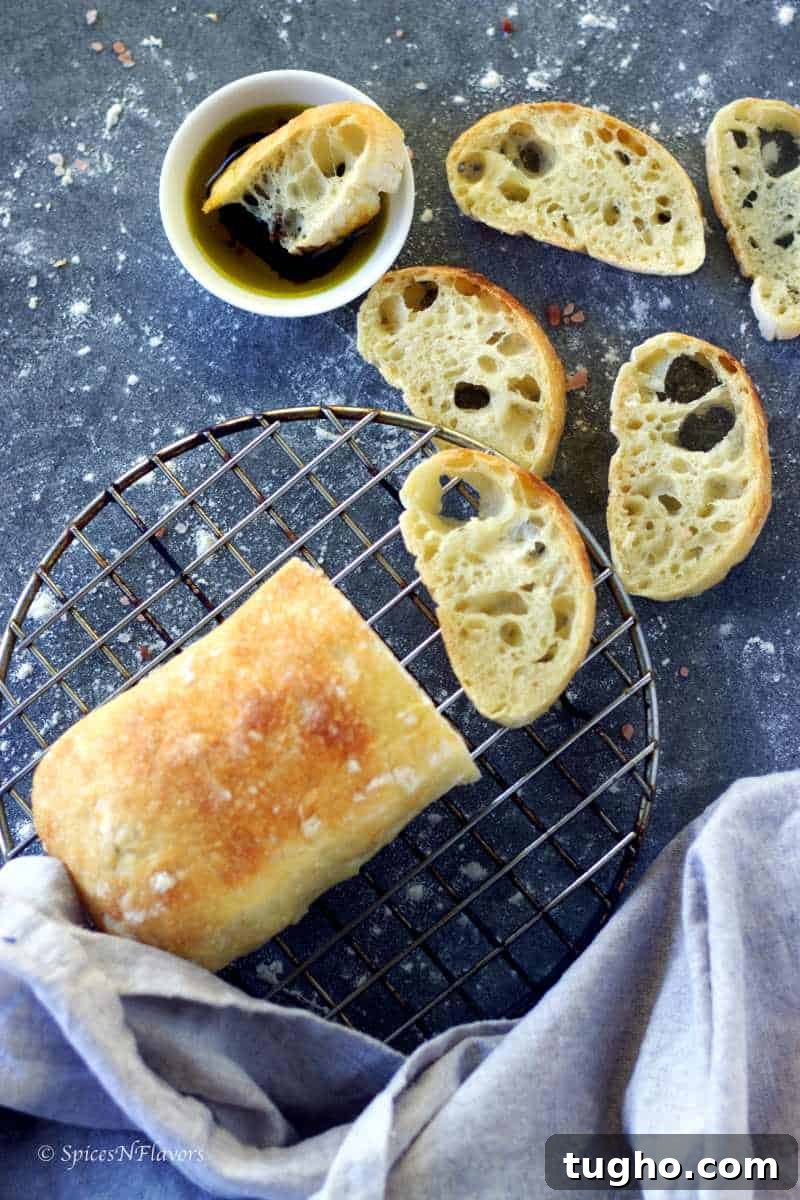
Who doesn’t love a good ciabatta?
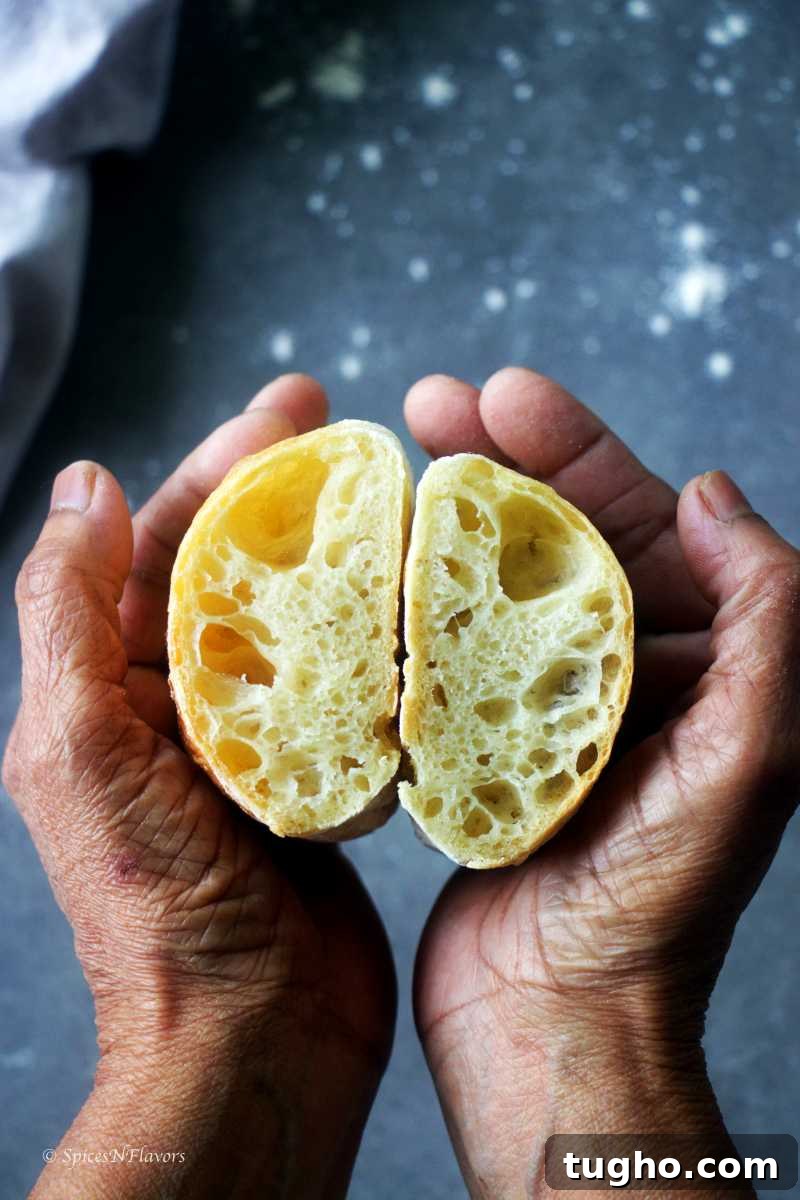
Light, chewy, porous with those irresistible large holes inside and a crisp, golden crust outside, ciabatta is prized for its rustic texture and flavor. This clear, step-by-step ciabatta bread recipe will guide you through everything you need to make an authentic homemade loaf.
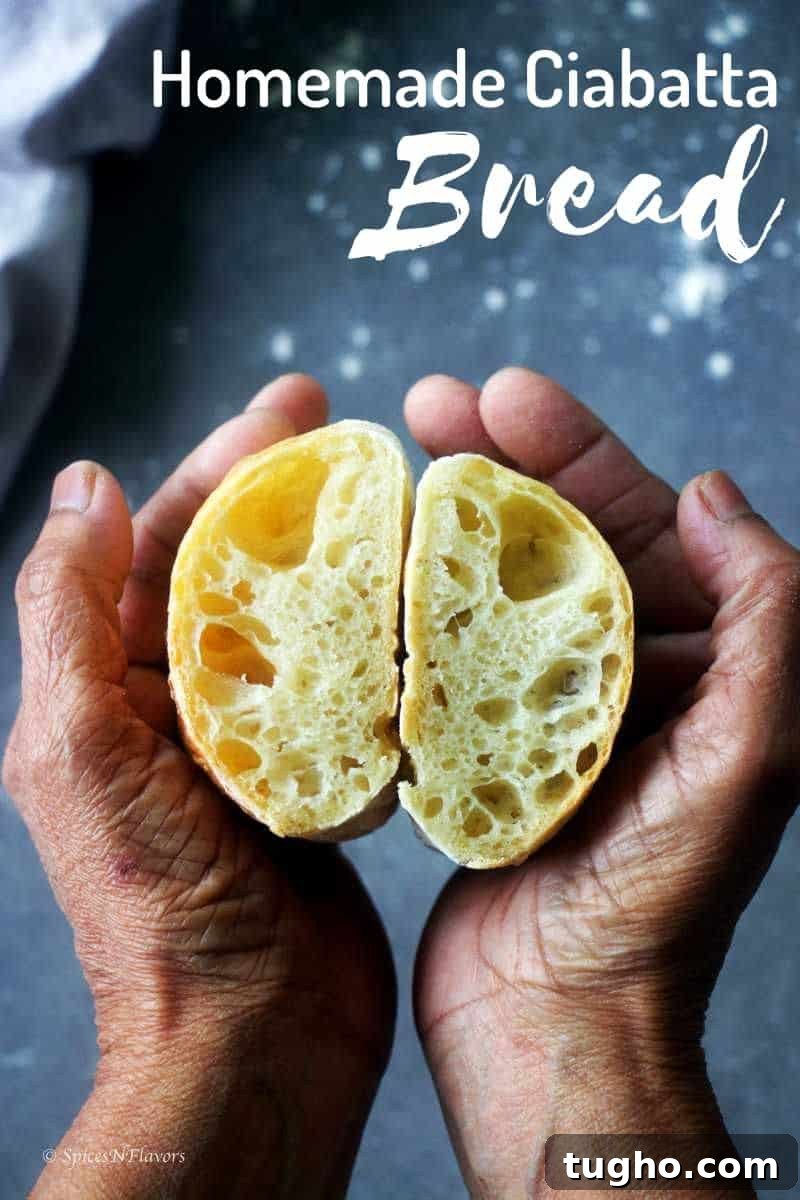
Homemade Ciabatta Bread
This artisanal ciabatta is surprisingly approachable. With a few simple ingredients—flour, water, yeast, salt and a touch of olive oil—you’ll produce a loaf that’s perfect for dipping, sandwiches, bruschetta or panini. Most of the work is hands-off, with time spent on fermentation rather than kneading.
What makes this ciabatta special?
Ciabatta uses a high-hydration dough—around 80%—which is much wetter than a typical kneaded loaf (usually ~60%). That high water content creates the open, honeycombed crumb characteristic of ciabatta. Although the dough feels sticky and slack, the method relies on gentle stretch-and-folds and long fermentation rather than aggressive kneading.
The advantages: no special equipment, minimal hands-on time, and a rustic, irregular shape that’s part of the charm.

Ciabatta Bread Ingredients
- Bread flour: Preferred for gluten development, but all-purpose flour will work if that’s all you have.
- Water: The only liquid in this recipe—there’s a lot of it, which gives the open crumb.
- Yeast: Instant or active dry yeast both work.
- Salt: Adds flavor and helps control fermentation.
- Olive oil (optional): A small amount softens the crumb and adds flavor but can be omitted.
This recipe requires a few steps, but most of the time is passive fermentation. Follow the times and gentle handling tips for the best results.
How to make ciabatta — step by step
Step 1: Prepare the wet dough
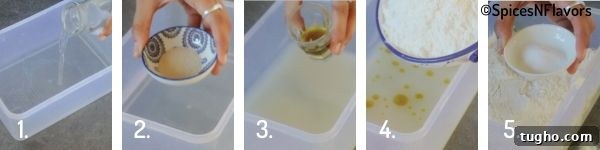
In a large container, combine water and yeast and stir to dissolve. Add the olive oil (if using), flour and salt, and mix with a wooden spoon or spatula until all the flour is hydrated and a shaggy dough forms. The dough will be wet and sticky—that’s expected.
Step 2: Bulk fermentation
Cover the container and let the dough ferment. At room temperature on the counter, allow about 3 hours for the first rise.
Shortcut with a warm appliance: If you prefer a faster, controlled rise, you can bulk ferment in a warm appliance or proofing function at a lower temperature for about 1.5 hours. The goal is a noticeable rise, not doubling to a dense volume.
Step 3: Stretch and fold
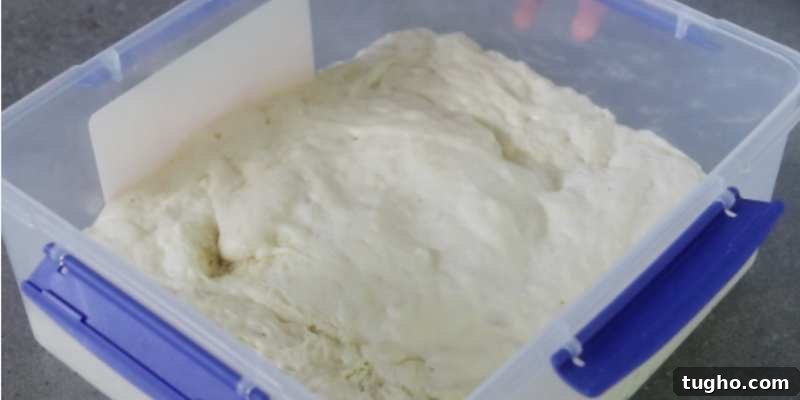
After the initial rise, perform a series of gentle stretch-and-folds to develop strength. Wet your hands to prevent sticking. Lift one side of the dough, stretch gently until it resists but doesn’t tear, and fold it over the center. Rotate the bowl and repeat on all four sides (north, south, east, west).
Repeat this full sequence three times at 30-minute intervals, allowing the dough to rest between folds. With each set the dough will become more elastic and airy.
Step 4: Shaping
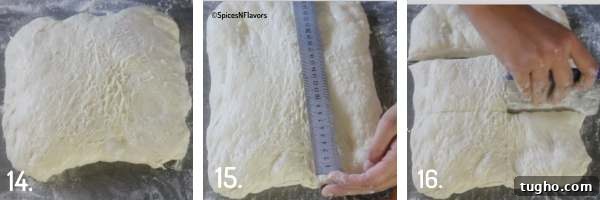
Generously dust a large tea towel or couche with flour. Gently invert the dough onto a well-floured surface; it should release slowly from the container. Avoid knocking out the air pockets—those large bubbles create the open crumb.
Gently spread the dough into a rough rectangle about 27–30 cm long, then divide into three portions. Use two bench scrapers to lift each portion and place it seam-side down on the floured towel. Cover loosely with greased cling film and let proof for 45 minutes.
Step 5: Baking
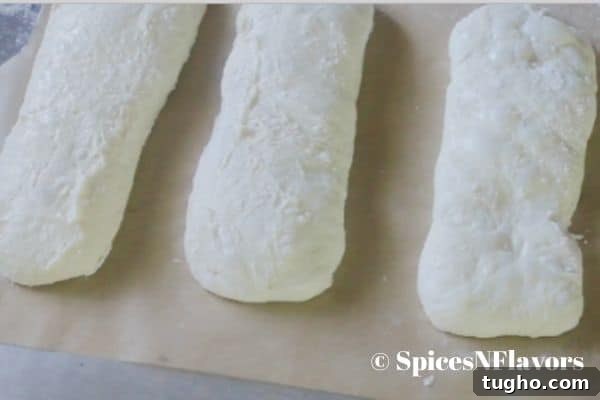
Preheat the oven to 250°C (500°F). Place an inverted cookie sheet on the middle rack and a baking tray above it. Prepare a greased cardboard or foam board covered in foil to transfer the loaves quickly.
Carefully slide the loaves, on parchment or greased board, onto the hot baking tray. Add steam to the oven by either spraying water on the loaves immediately and closing the door, or placing a pan of boiling water or a few ice cubes on the bottom rack to generate steam.
Bake at 250°C (500°F) for about 10–15 minutes, then reduce to 230°C (440°F) and bake another 12–15 minutes until the crust is golden and crackling and the bottom sounds hollow when tapped. Cool completely before slicing.
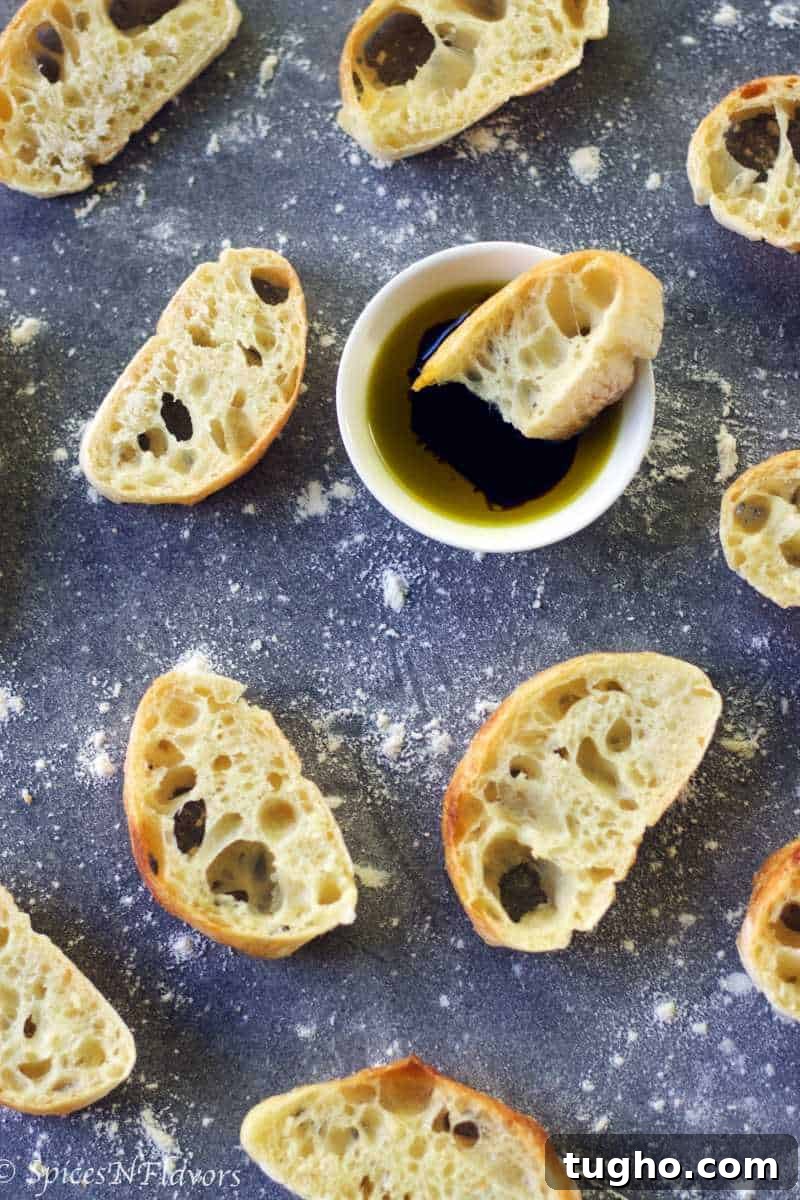
Ways to enjoy ciabatta
- Serve warm with soups and stews.
- Dip in olive oil and balsamic vinegar, seasoned with sea salt, garlic or chili flakes.
- Slice for panini or sandwiches—ciabatta makes excellent pressed sandwiches.
- Turn into garlic bread by brushing with garlic butter or oil and toasting.
- Cube and toast as croutons.
- Use for cheese fondue or bruschetta with fresh tomatoes and basil.
- Include on a breakfast platter with eggs, sautéed mushrooms and tomatoes.
Tips for success
- Don’t be intimidated—the hands-on time is short; most time is for fermentation.
- Don’t skip the stretch-and-folds; they build structure in this no-knead dough.
- If the dough is too sticky to handle, wet your hands—wet hands reduce sticking.
- Handle the dough gently when transferring to avoid deflating the air pockets.
Storage and freezing
Store ciabatta at room temperature in a bread bag, bread box or airtight container for 2–3 days. Do not refrigerate, as refrigeration speeds up staling. To freeze, wrap the cooled loaf tightly in foil, place in a zip-top bag, and freeze for up to two months. Thaw at room temperature and refresh in a hot oven if desired.
Conclusion
Ciabatta is an approachable artisan loaf with dramatic texture and flavor. With basic ingredients and five straightforward steps—mixing, bulk ferment, stretch-and-fold, shaping and baking—you can make bakery-quality ciabatta at home. The process rewards patience and gentle handling with light, chewy crumb and a crackling crust. Enjoy experimenting with toppings, sandwiches and dips—ciabatta shines in many ways.
Happy baking,
— Sushma