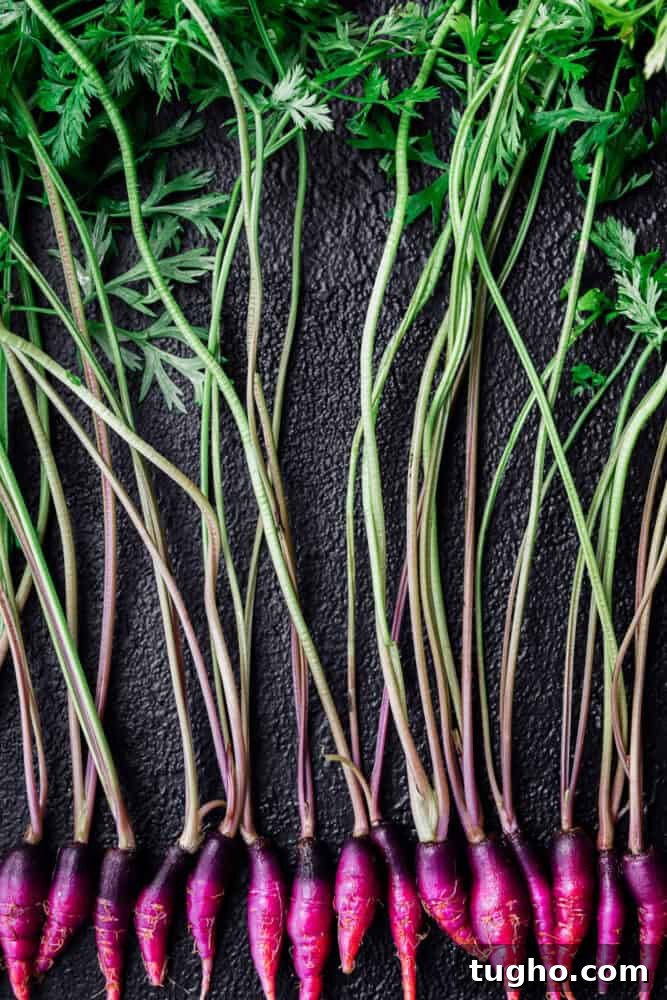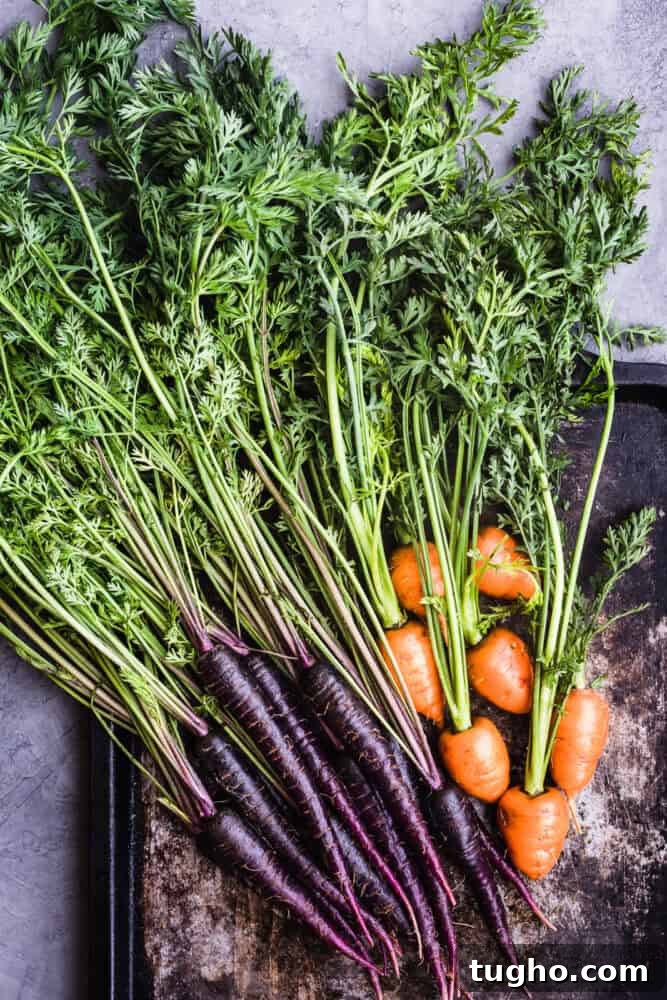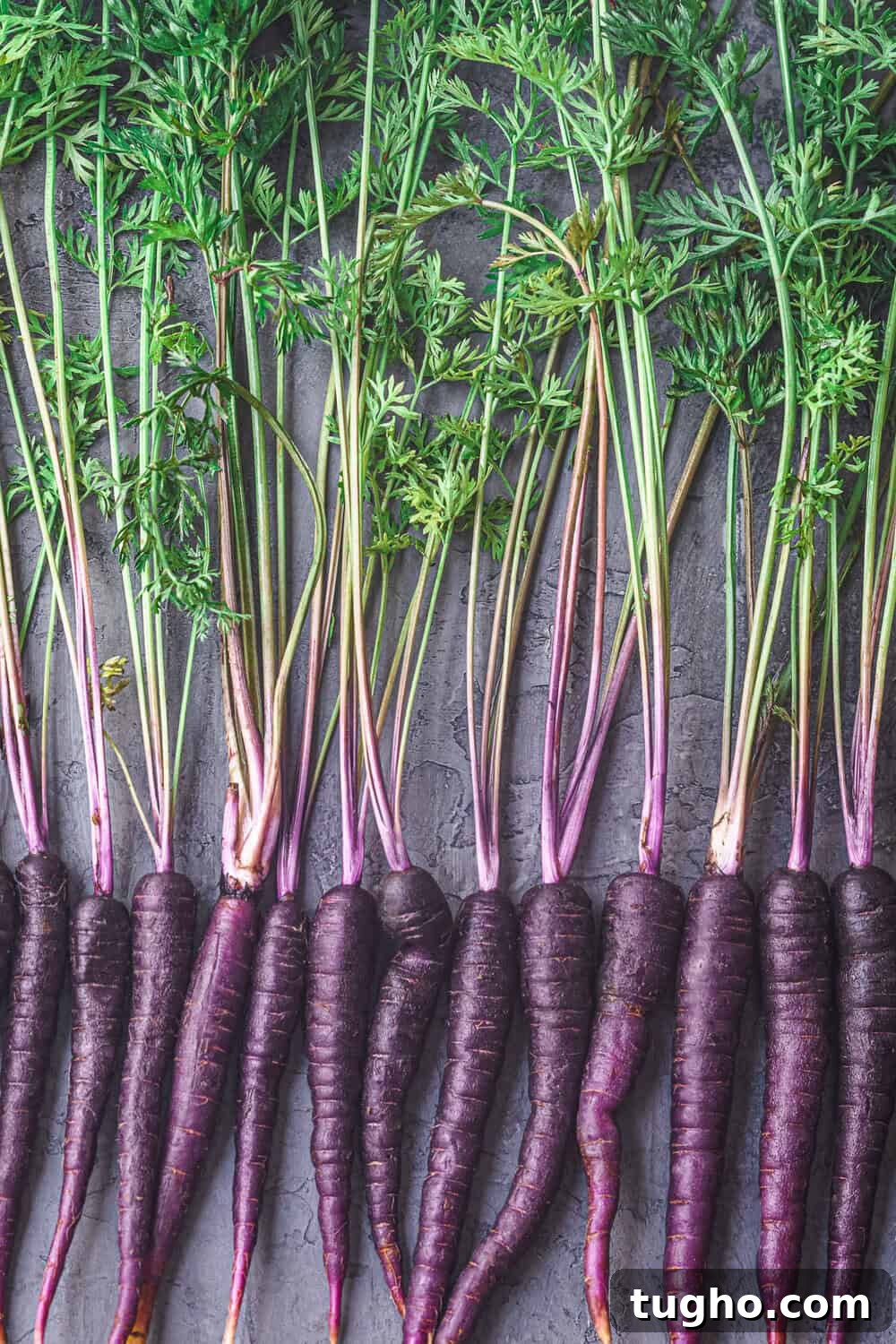
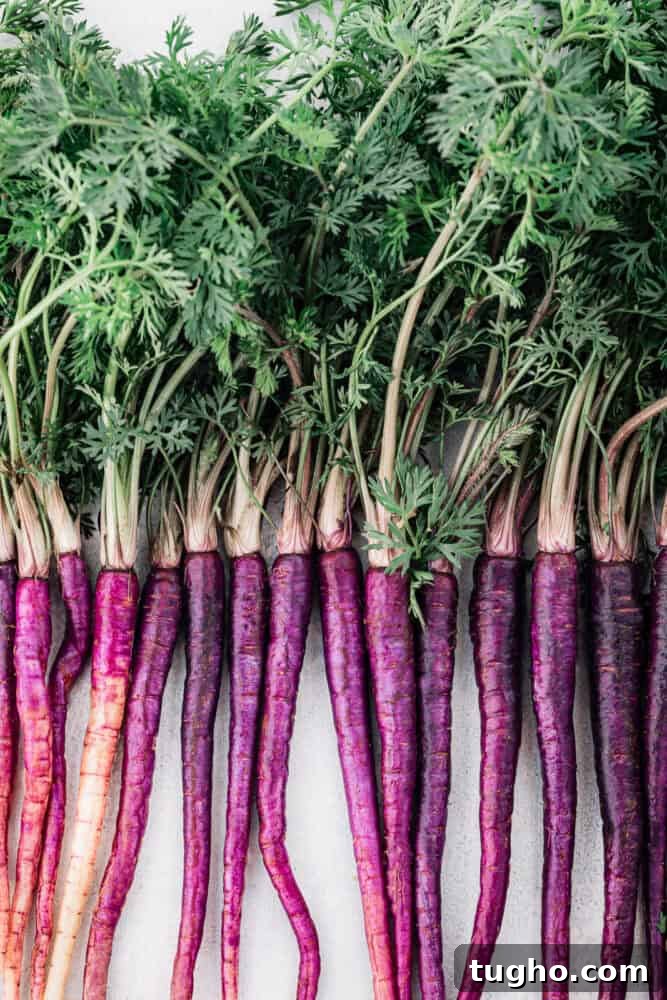
I’ve fallen back in love with the original carrot color: deep purple. These carrots are striking to look at and rich in antioxidants, a reminder that the orange carrot is actually the upstart variant.
Though most carrots sold today are orange, their earliest cultivated forms were purple (with some white and yellow types). The orange varieties became dominant later through selective breeding, but purple carrots remain a vibrant, nutritious choice.
A Quick Carrot History
Carrots originally come from Central Asia and were predominantly purple for centuries. For over a thousand years, purple varieties—with occasional white and yellow types—were the norm. It was not until the 16th century that Dutch growers developed the sweeter, beta-carotene-rich orange carrot we recognize today, and that color gradually became the standard.
Despite orange carrots’ popularity, purple varieties never disappeared. Today there are more than 500 carrot varieties in hues ranging from purple and red to orange, yellow, and white. Many gardeners and cooks are rediscovering purple carrots for their color, texture, and nutritional benefits.
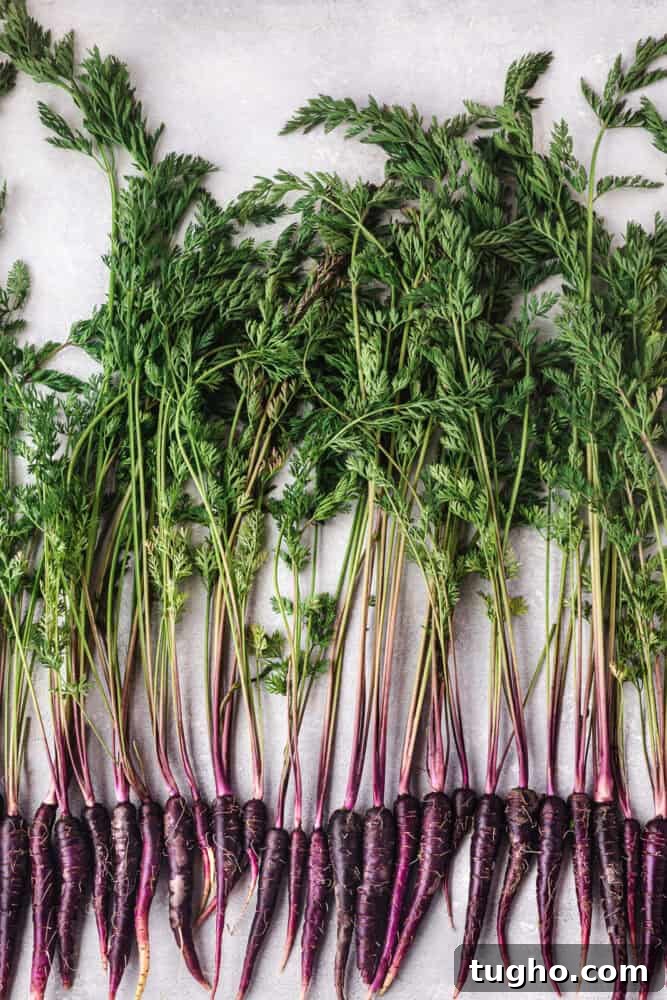
What Are Purple Carrots?
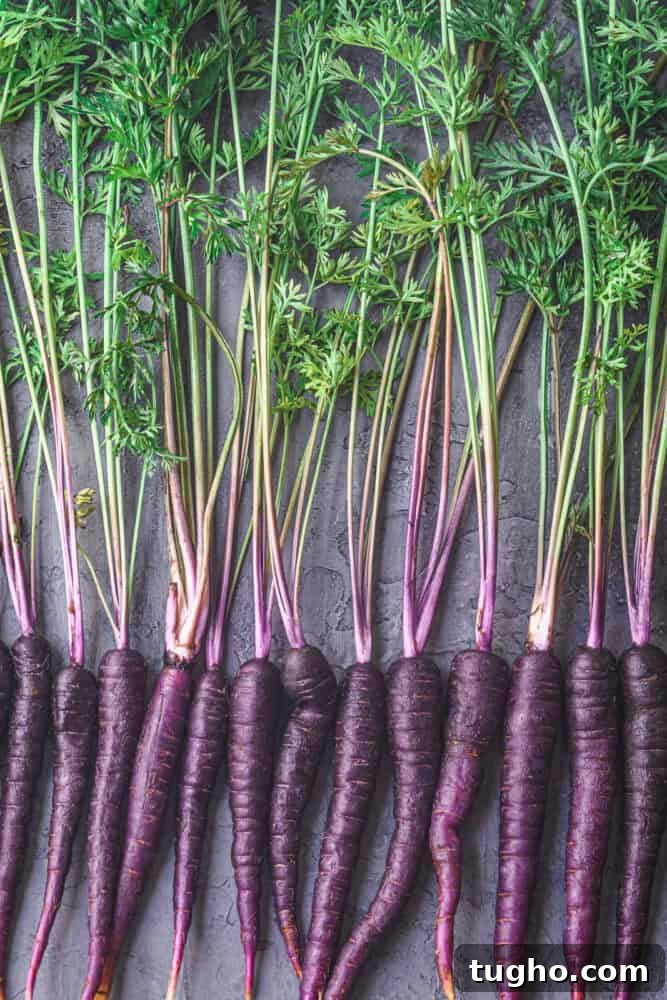
Purple carrots describe a group of varieties that develop naturally purple skin. These include both heirloom types and modern cultivars. Skin tones range from bright violet to nearly black, while the interior can be purple, orange, or yellow depending on the cultivar.
They are not a modern laboratory creation; purple carrots are simply traditional, naturally occurring varieties. Their distinct color comes from plant pigments, and many purple carrots offer slightly different textures and flavor profiles compared with orange ones.
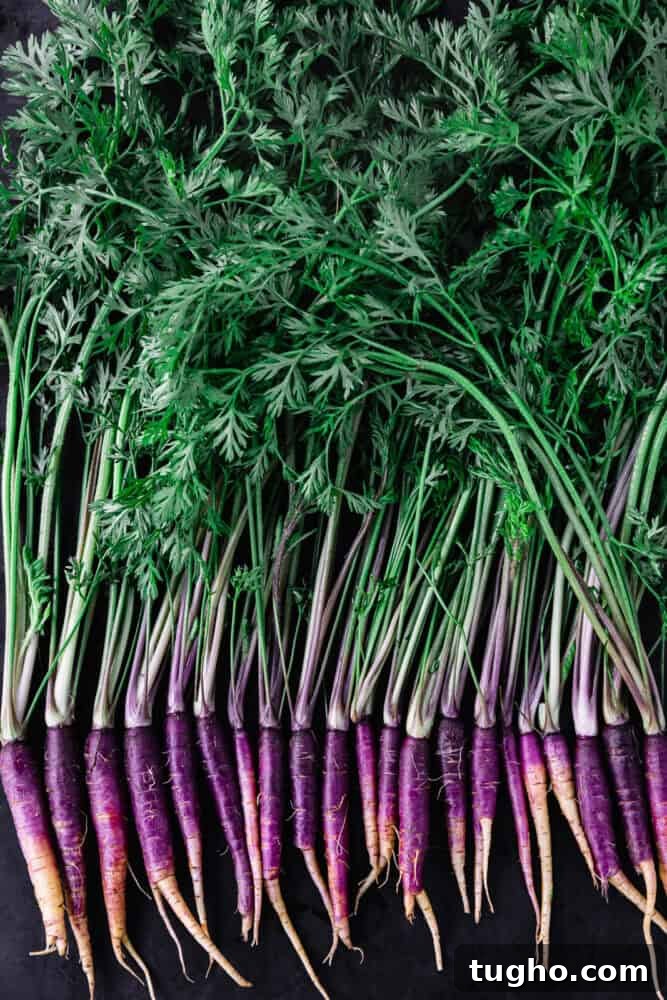
Why Are Purple Carrots Purple?
Their color comes from anthocyanins, natural pigments that also serve as antioxidants. Anthocyanins produce the red, purple, and blue shades you see in many fruits and vegetables—think purple potatoes, red cabbage, and certain berries.
Because of these pigments, purple carrots tend to have higher antioxidant levels than many orange varieties. That antioxidant boost is one reason to include them in a varied diet, alongside their visual appeal.
Each carrot color comes from different pigments: beta-carotene gives orange carrots their hue, while anthocyanins are responsible for purple tones. This variety of pigments means different health benefits and subtle taste differences among carrot types.
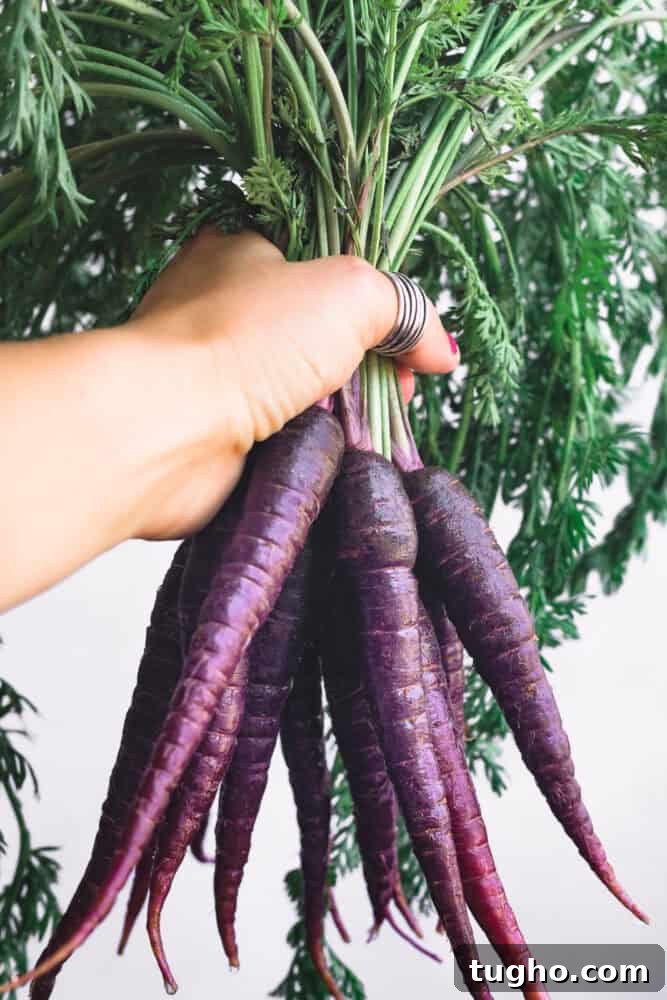
Cooking with Purple Carrots
Cooking methods for purple carrots are the same as for other carrots: roast, steam, sauté, shave raw into salads, or blend into purées and dips. The color holds up well in many preparations, though prolonged cooking can sometimes mute the hue.
Flavor differences are usually subtle. Raw purple carrots can be slightly earthier or peppery compared with orange types; some varieties are quite sweet when roasted. The color won’t dramatically change the taste, but it will make any dish more visually striking.
Try purple carrots in hummus, salads, tarts, or simply roasted with olive oil, salt, and herbs. They pair well with citrus, nuts, goat cheese, and bright herbs—ingredients that highlight both color and flavor.
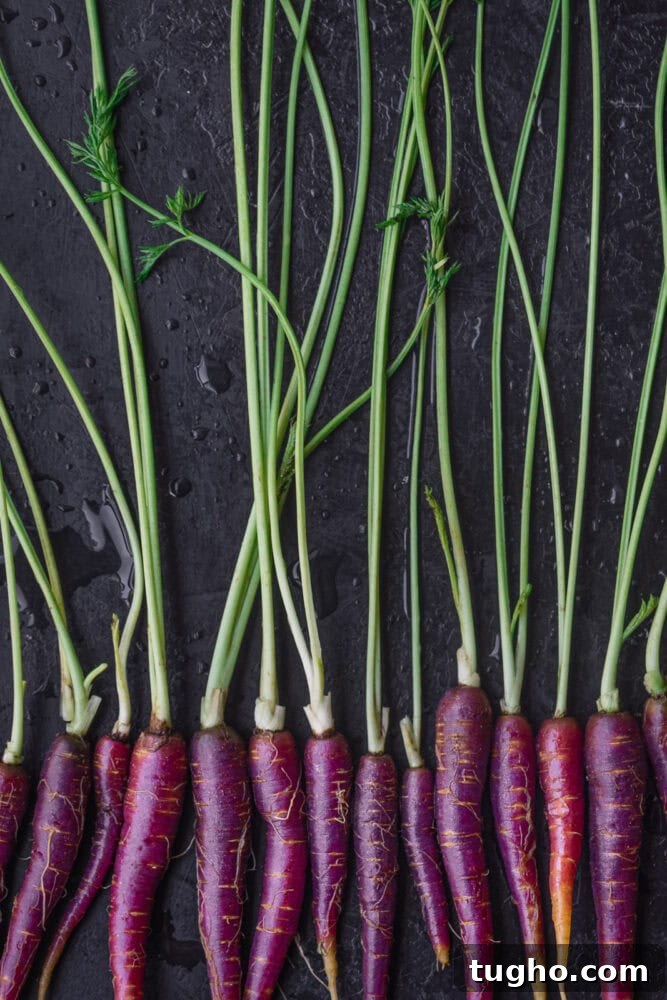
Purple Carrot Varieties
There are many named purple varieties, including Purple Haze, Cosmic Purple, Black Nebula, Purple Dragon, Purple Sun, and Deep Purple. Some of these have an orange or yellow core, while others are purple throughout. Sweetness varies by cultivar—some are as sweet as orange carrots, while others lean earthier in flavor.
When choosing purple carrots, consider whether you want a fully purple interior for dramatic color, or a multicolored root that reveals a contrast when sliced. Both types bring nutritional benefits and kitchen versatility.
More Purple Veggies
If purple carrots appeal to you, there’s a whole world of purple produce to explore. Purple cauliflower, potatoes, Brussels sprouts, kale, asparagus, basil, and radicchio all showcase similar pigments and offer their own textures and flavors. Adding a range of purple vegetables can diversify your plate visually and nutritionally.
- Purple cauliflower — a colorful, antioxidant-rich twist on a kitchen staple.
- Purple potatoes — vibrant and hearty, great roasted or mashed.
- Purple Brussels sprouts — sweeter and more colorful than the green variety when roasted.
- Purple kale — a striking leafy green with a slightly different mouthfeel.
- Purple asparagus — tender and sweet when cooked briefly.
- Purple basil — the same herbaceous notes as green basil, with dramatic color.
- Radicchio — bitter and bold, excellent in salads and winter dishes.
Carrot Recipes
Looking for ideas? Purple carrots work beautifully in many recipes that call for carrots of any color. Roast them until caramelized, shave them into tarts or salads, or blend into bright hummus and dips. They’re a simple way to elevate familiar recipes with color and added antioxidants.
- Carrot hummus — a colorful, creamy dip that showcases purple hues.
- Shaved carrot tart — elegant and savory, great for entertaining.
- Roasted carrots — high heat brings out natural sweetness and intensifies color.
- Savory carrot tarts — combine roasted carrots with cheeses, herbs, and a flaky crust.
- Spring salads — pair young purple carrots with peas, fresh herbs, and a bright vinaigrette.
If you cook with purple carrots, share your experience—comments and photos are always welcome. Their color and nutrition make them an easy, beautiful addition to any kitchen. Let’s keep bringing color back to the plate and making waves in the kitchen.