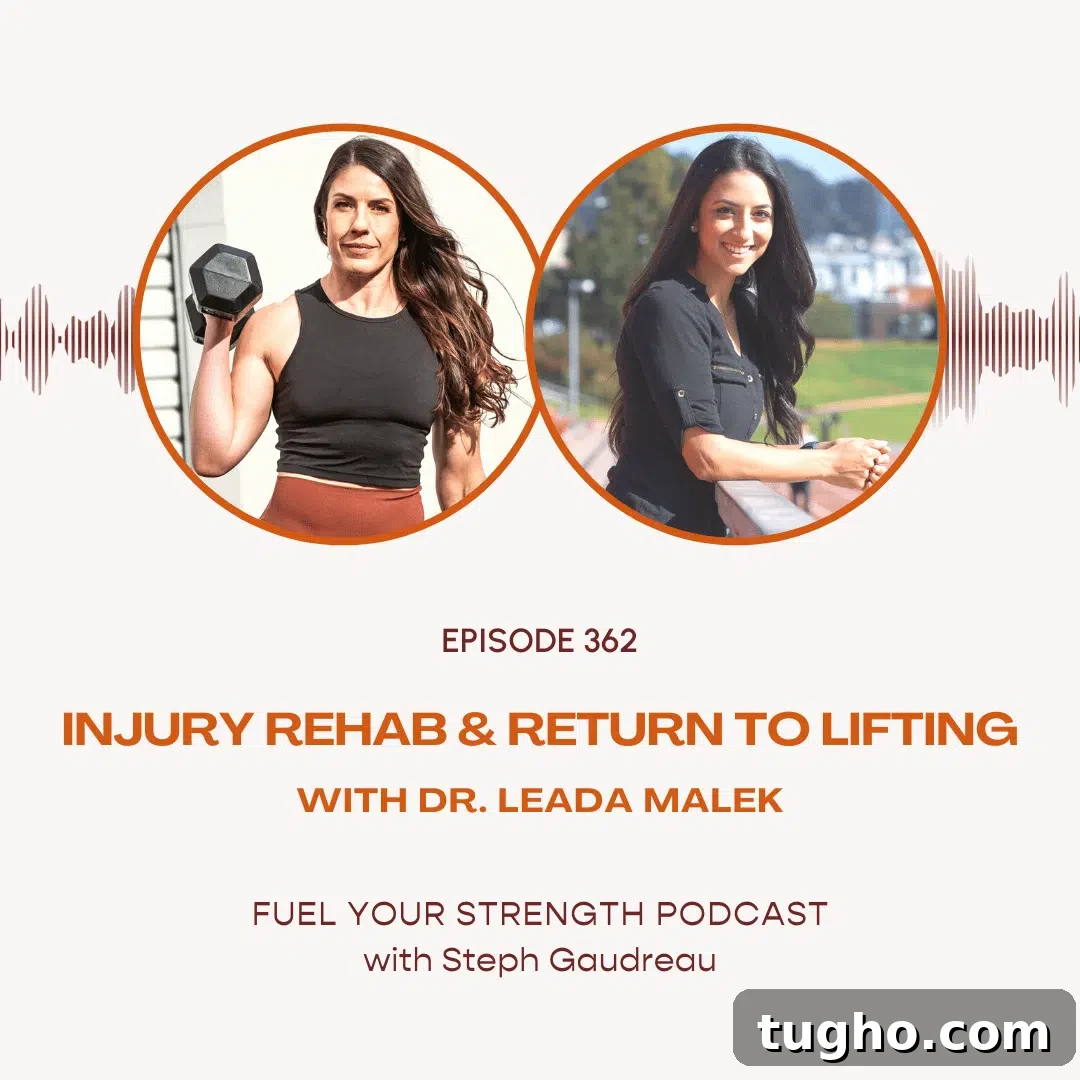
One of the questions I hear most often is: how do you safely return to lifting after an injury, and how should you modify training during recovery? It’s normal to feel nervous, but with a thoughtful plan and the right support, most people can rebuild strength, confidence, and the ability to return to the activities they love.
Listen to this episode on your preferred podcast app:
iTunes (Apple Podcasts) | Spotify
Want a free week of strength workouts? Click here to get started!
Watch this Episode on YouTube
Key Takeaways
If you want to return to lifting after an injury, focus on:
- Listening to pain as informative—but not always catastrophic
- Addressing fear and anxiety so graded return is possible
- Working with a professional to find the right dosage and rate of progression
Getting Back to What You Love with Dr. Leada Malek
Dr. Leada Malek is a licensed physical therapist and board-certified sports specialist who treats dancers, professional and recreational athletes, and active adults. She combines manual therapy with progressive exercise to help people recover, perform, and return to their passions. Her approach emphasizes whole-person care—understanding a person’s goals, fears, and lifestyle to design sustainable rehab and prevent future injury.
Treating the Whole Person
Injury affects more than the body: it can influence mood, sleep, immune function, and hormones. Dr. Malek prioritizes understanding what drives a person, what scares them, and what they want to do again. Addressing beliefs and expectations around pain and reinjury is often a key part of recovery—helping people build confidence alongside physical capacity.
Get Past Your Fear and Back Into the Gym
Aging or a past injury can make people doubt their ability to rebuild muscle and bone. However, the body remains adaptable. With the right progression—appropriate load, frequency, and patience—most people can regain strength and function. Pain should be treated as a signal to interpret, not an automatic sign of structural damage. Guided, incremental exposure to movement helps the brain and body relearn safe, effective patterns.
Are you ready to address fear and return to lifting? Share your thoughts in the comments below.
In This Episode
- Common issues across athlete types, even at high performance (10:02)
- The role of low energy availability and its effects on training (14:49)
- Physical signs associated with low energy availability during recovery (20:56)
- How to approach lifting again if you feel fearful or skeptical (24:42)
- How to determine the right amount of mobility work for you (34:20)
Quotes
“Once I got in and really started to appreciate how you could use exercise to help someone continue to exercise despite their ability to not exercise, that was really cool to me.” (7:14)
“It may not show up in hormonal levels, or maybe it is, and you just can’t see it, but it can show up in your mood, in sleep disturbances, in immune function.” (20:24)
“Not every question that you ask the person may be about the injury, but every question you ask should be about them… Because if you have all that information, and they are having an off day because of something else, you might catch something at a very early stage that could save them from a future injury.” (23:11)
“You should be able to complete everything you want to do without the looming fear of ‘this is going to injure me again’. Because your body is super resilient.” (27:24)
“There is someone out there that is dedicated to making sure that you understand your body in the sense that is going to offer the way of exercising for longevity, and that doesn’t hinder your progress.” (29:39)
Featured on the Show
Apply for Strength Nutrition Unlocked Program
Dr. Leada Malek Website
Follow Dr. Malek on Instagram | Facebook
Support the Podcast
Get 20% off Legion Supplements with code STEPH
Get your first month of Whoop free ($30 off)
Save 10% off GORUCK with code FUELYOURSTRENGTH
Follow Steph on Instagram
Rate and review on Apple Podcasts
Related Episodes
LTYB 358: Hypermobility, Pain, and Strength Training with Nikki Naab-Levy
LTYB 351: Strength Training Risk vs Benefit
LTYB 350: Are You Eating Enough? Low Energy Availability in Sport
Sports Injury Rehab and Returning to Lifting w/ Dr. Leada Malek
Steph Gaudreau
I frequently get messages from people asking how to modify training after injury and how to return to lifting safely. A decade ago I hurt my back and remember the fear, pain, and confusion of wanting to get back to the gym. That’s why I invited Dr. Leada Malek to share practical guidance on rehab, strength training after injury, and how to regain confidence.
Physical Therapy Journey
Dr. Leada Malek
Dr. Malek trained in kinesiology and physical therapy and found her calling in sports orthopedics. Early experiences in athletic training rooms and exposure to dancers, high school athletes, and professional sports shaped her practice. She values using exercise and graded exposure to help people move and perform despite temporary limitations.
Commonalities Across Athlete Populations
Though sports have different demands, athletes share core needs: mobility, stability, energy management, and recovery. Dancers and football players may surprise each other with overlapping capacities—hip and ankle mobility, core control, and endurance matter across activities. Everyone also needs adequate rest and fueling to perform and heal well.
Everyone Is an Athlete
Dr. Malek defines an athlete as anyone who organizes their life around a physical activity they love—if missing that activity would harm their wellbeing, they deserve athlete-level care. Even if someone doesn’t self-identify as an athlete, treating them with that same attention to detail can improve outcomes.
Low Energy Availability (LEA)
Low energy availability—taking in fewer calories than required for daily life plus training—impacts hormones, bone health, immune function, mood, and sleep. It’s often overlooked but critical: delayed healing, frequent illness, fatigue, and mood disturbances can all stem from insufficient energy. LEA affects both females and males and can present as missed periods, stress reactions, or prolonged recovery times.
Signs and Clinical Clues
Physical therapists often notice delayed healing, slow response to rehab, persistent fatigue, sleep disturbances, and mood changes. Because clinicians spend time with clients, they can detect patterns—off days that aren’t explained by injury alone—and ask the right questions to uncover energy, sleep, or stress issues.
Returning to Strength Training After Injury
Treat fear and pain thoughtfully. Pain is a message, not always a sign of catastrophic injury. Graded exposure—starting with lighter or partial movements and progressively increasing load—builds physical capacity and confidence. Mental factors like self-efficacy shape pain perception; addressing beliefs and anxiety is as important as loading progressions.
Functional Movements and Practical Rehab
Avoid blanket bans on everyday movements. If someone is told to never squat or deadlift again, life becomes unnecessarily limited. Instead, regress movements (wall sits, partial ranges) and progress methodically. The goal is functional independence and longevity—so stair descent, lifting everyday objects, and basic strength should be preserved or rebuilt.
Mobility and Warm-Ups
Pre-workout warm-ups should be efficient: 10–20 minutes of dynamic movements and light mobility that mimic the lifts you’ll perform. Add targeted mobility or soft-tissue work (foam rolling 3–5 minutes) one to two times weekly for persistent restrictions. Cool-downs and stretching are optional—do what feels good and supports recovery.
When to See a Specialist
If pain or mobility limits alter your form, daily function, or cause persistent worry, consult a physical therapist. Good practitioners dig into the whole picture—mobility, strength, sleep, nutrition, and psychological factors—and offer practical, progressive plans to get you back to the things you love.
Where to Find Dr. Malek
Visit DrMalekPT.com for more resources and follow her on Instagram for mobility drills, rehab ideas, and practical, often humorous, educational content.
Steph Gaudreau
Thanks to Dr. Malek for sharing her thoughtful, nuanced approach. If you’re injured or hesitant to lift again, start with gentle, progressive steps, seek informed guidance, and prioritize fueling and sleep. For show notes, resources, and information on Strength Nutrition Unlocked, visit StephGaudreau.com. If you enjoyed this episode, please subscribe and leave a review—both help the podcast reach more listeners. Stay strong and take care.