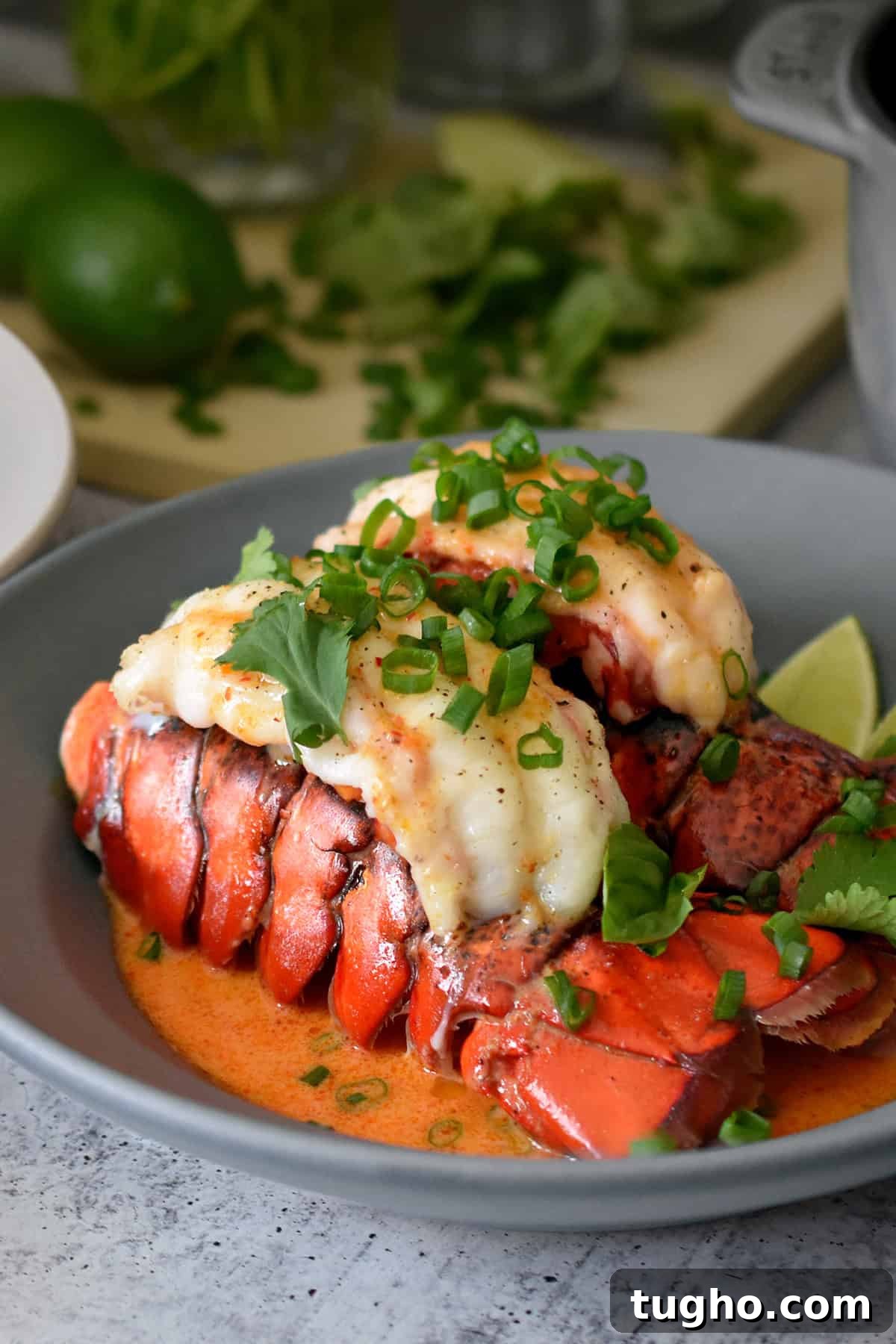
This simple and flavorful lobster tail recipe with Thai red curry sauce is a show-stopper. Learn how to butterfly lobster tails like a pro and cook them to juicy perfection—by broiler or air fryer. The sauce is make-ahead and versatile.
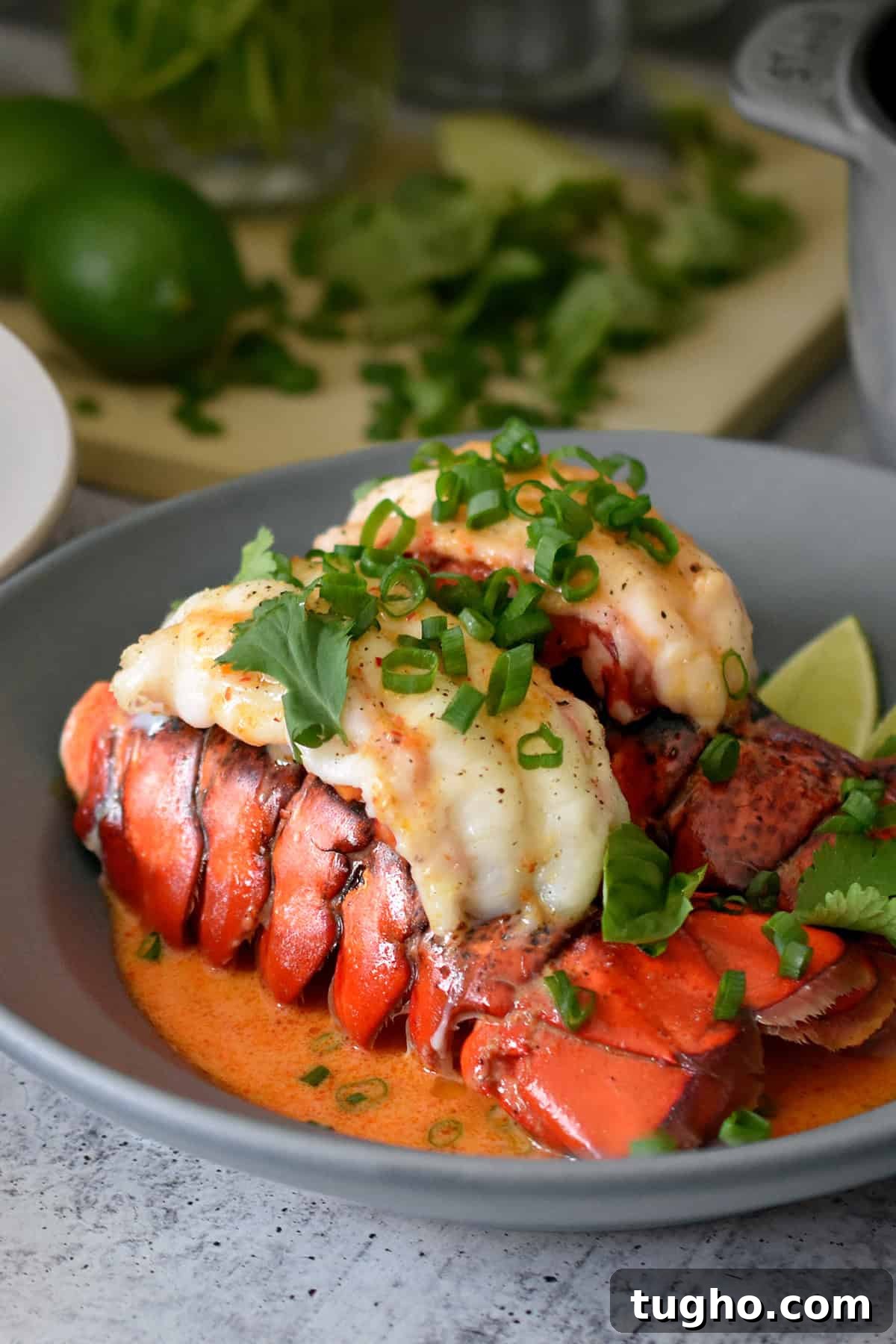
Table of Contents
- The best lobster tail recipe!
- The Thai red curry sauce is the secret weapon
- Why you’ll love this lobster tail recipe
- Ingredients
- For the Thai red curry sauce
- For the lobster tails
- How to make Thai red curry lobster tails
- Step 1: Make the Thai curry sauce
- Step 2: Butterfly the lobster tails
- Step 3a: Broil the lobster tails
- Step 3b: Air fryer instructions
- Step 4: Assemble and serve
- What to serve with it
- How to store leftovers
The best lobster tail recipe!
This lobster tail recipe pairs sweet, tender lobster with a rich Thai red curry sauce for a dish that looks like it belongs in a restaurant but is easy to make at home. It’s adapted from a popular cookbook and designed to maximize flavor while minimizing fuss. Whether you’re cooking for a special occasion or a memorable weeknight dinner, these lobster tails are straightforward to prepare and reliably delicious.
The Thai red curry sauce is the secret weapon
The Thai red curry sauce is the star. It’s creamy, balanced, and full of umami—plus it’s fast to make and stores well. Make the sauce ahead to save time: any extra reheats beautifully with shrimp, chicken, or vegetables for an easy curry later in the week. For the best results, use a high-quality Thai red curry paste and full-fat coconut milk or coconut cream to achieve a luxurious texture and bright flavor.
Why you’ll love this lobster tail recipe
- Impressive but simple: Butterflying lobster tails looks professional but is quick and easy once you know how.
- Bold Thai flavors: The red curry sauce adds rich, savory depth—perfect with delicate lobster meat.
- Flexible cooking: Finish the tails under the broiler or in an air fryer, depending on what’s more convenient.
- Make-ahead sauce: The curry sauce stores well and can be reused for quick meals.
Ingredients for Thai red curry lobster tails
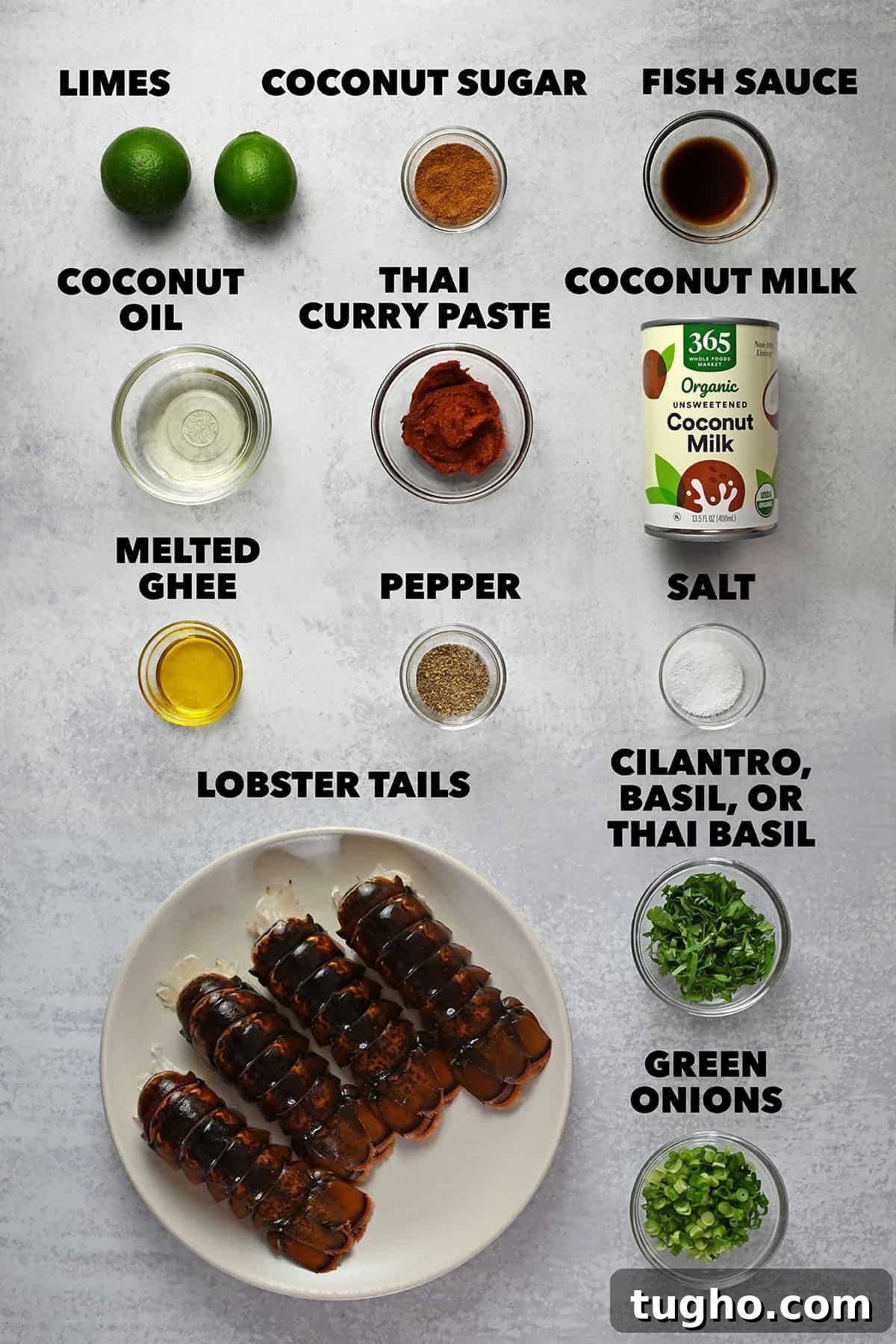
For the Thai red curry sauce
- 1 tablespoon coconut oil (or avocado oil)
- 2 tablespoons Thai red curry paste (choose a brand you enjoy)
- 13.5 ounces full-fat coconut milk or coconut cream
- 2 teaspoons coconut sugar (or 2 tablespoons apple juice to keep it Whole30-compatible)
- 1½ teaspoons fish sauce (adds essential umami)
- 2 tablespoons fresh lime juice (about 1 medium lime)
For the lobster tails
- 4 lobster tails (4-ounce tails are ideal; thaw overnight if frozen)
- 2 tablespoons melted ghee (or avocado oil to brush on top)
- Diamond Crystal kosher salt (or your preferred kosher salt)
- Freshly ground black pepper
- 1 lime, cut into wedges
- 2 green onions, thinly sliced
- 2 tablespoons fresh herbs (basil, Thai basil, and/or cilantro, chopped)
How to make Thai red curry lobster tails
Step 1: Make the Thai curry sauce
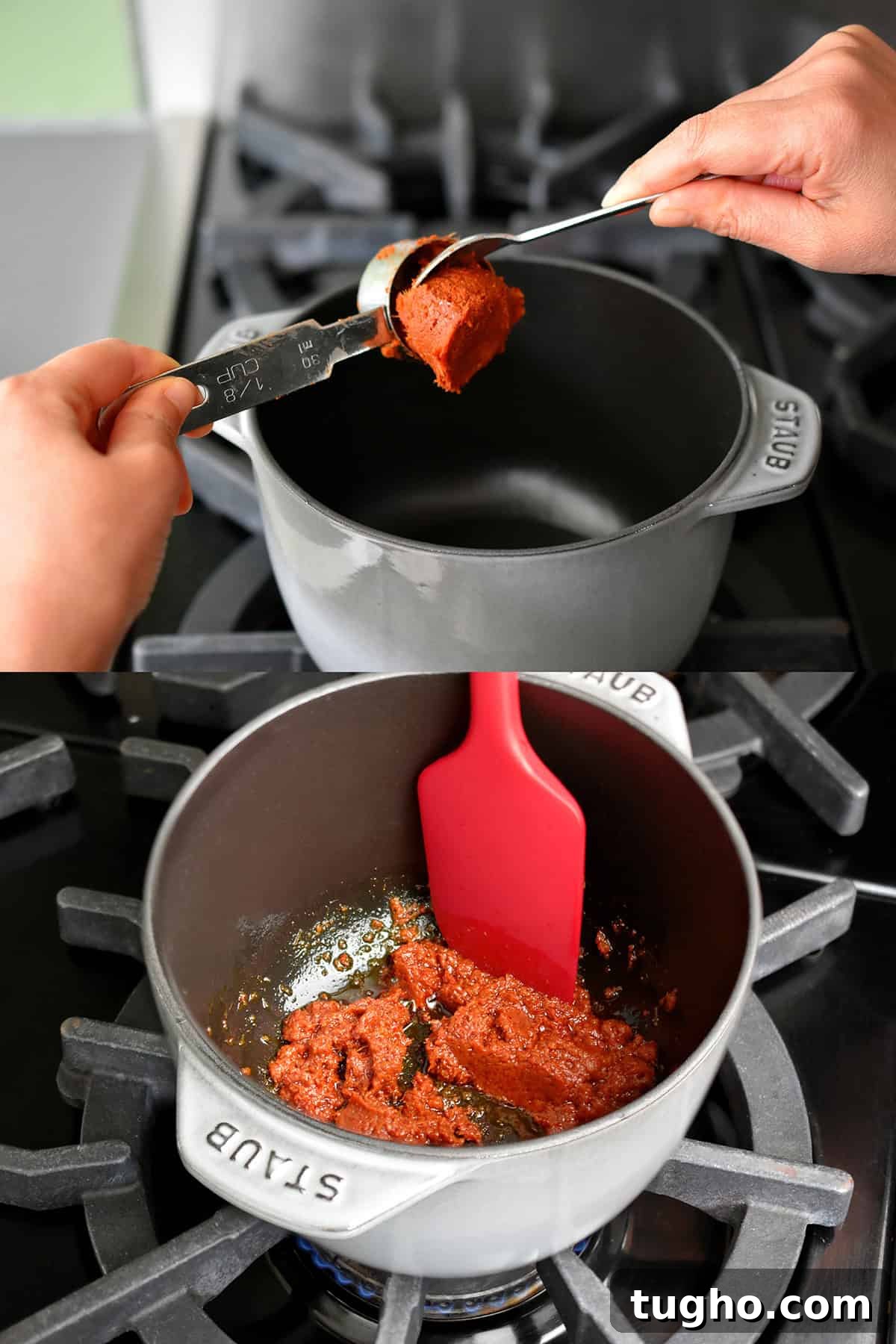
Heat the coconut oil in a small saucepan over medium heat. Add the red curry paste and sauté until fragrant. Pour in the coconut milk, stir to combine, and bring to a boil over high heat. Reduce the heat to maintain a vigorous simmer and cook, stirring occasionally, until the sauce has reduced by about one-third—about 15 minutes. Stir in the coconut sugar and fish sauce, then remove from heat and add the lime juice. Taste and adjust seasoning as needed. Cover and set aside.
Step 2: Butterfly the lobster tails
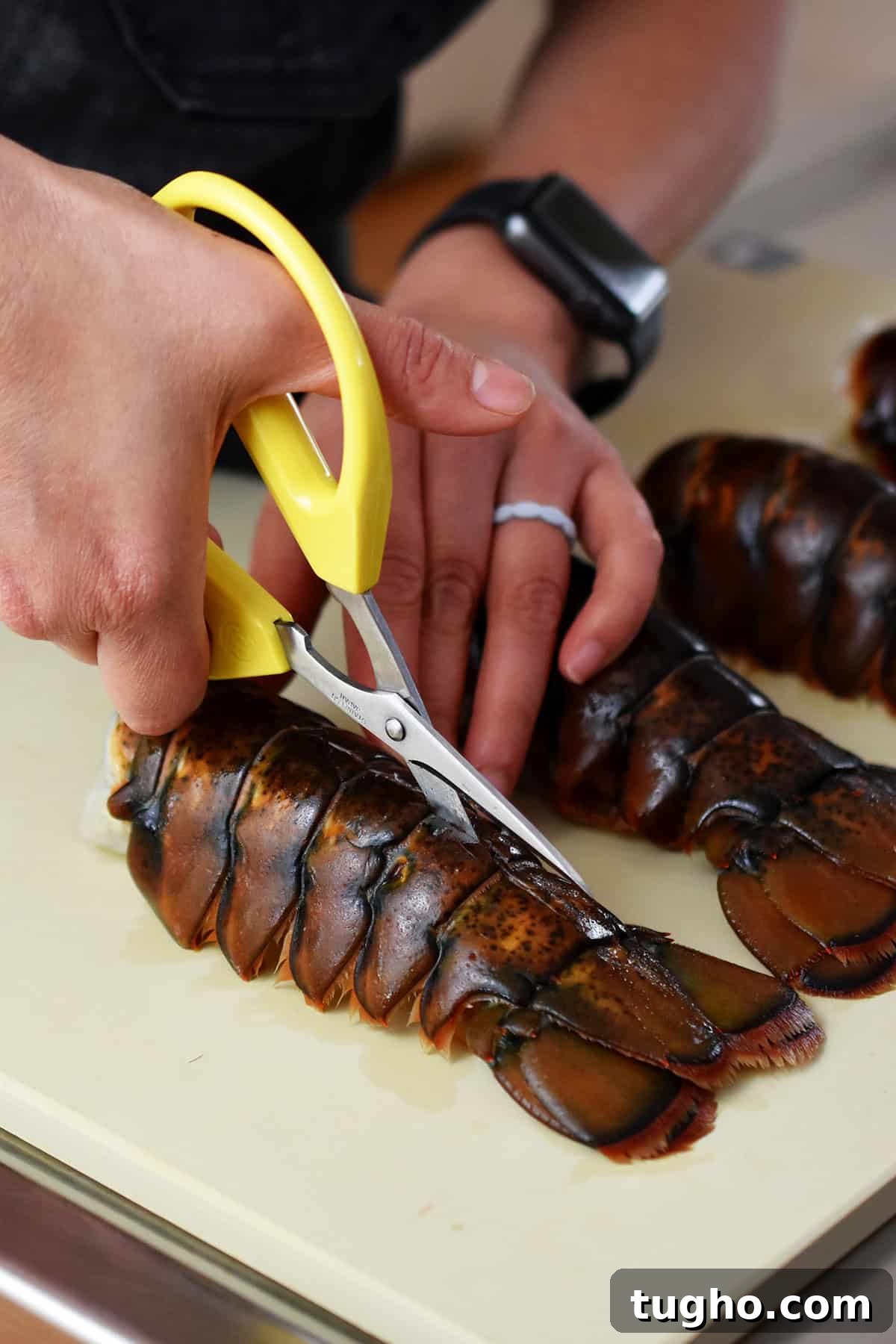
Using sharp kitchen shears, cut lengthwise down the top of each shell until you reach the tail, but do not cut all the way through. Flip the tail over and gently press the underside ribs to loosen the meat. Carefully lift the lobster meat from the shell with your fingers, keeping the tail end attached, and pull the meat up to rest on top of the shell. Repeat for all tails. Pat the meat dry and arrange the tails on a rimmed baking sheet. Brush with melted ghee, then season lightly with salt and pepper.
Step 3a: Broil the lobster tails
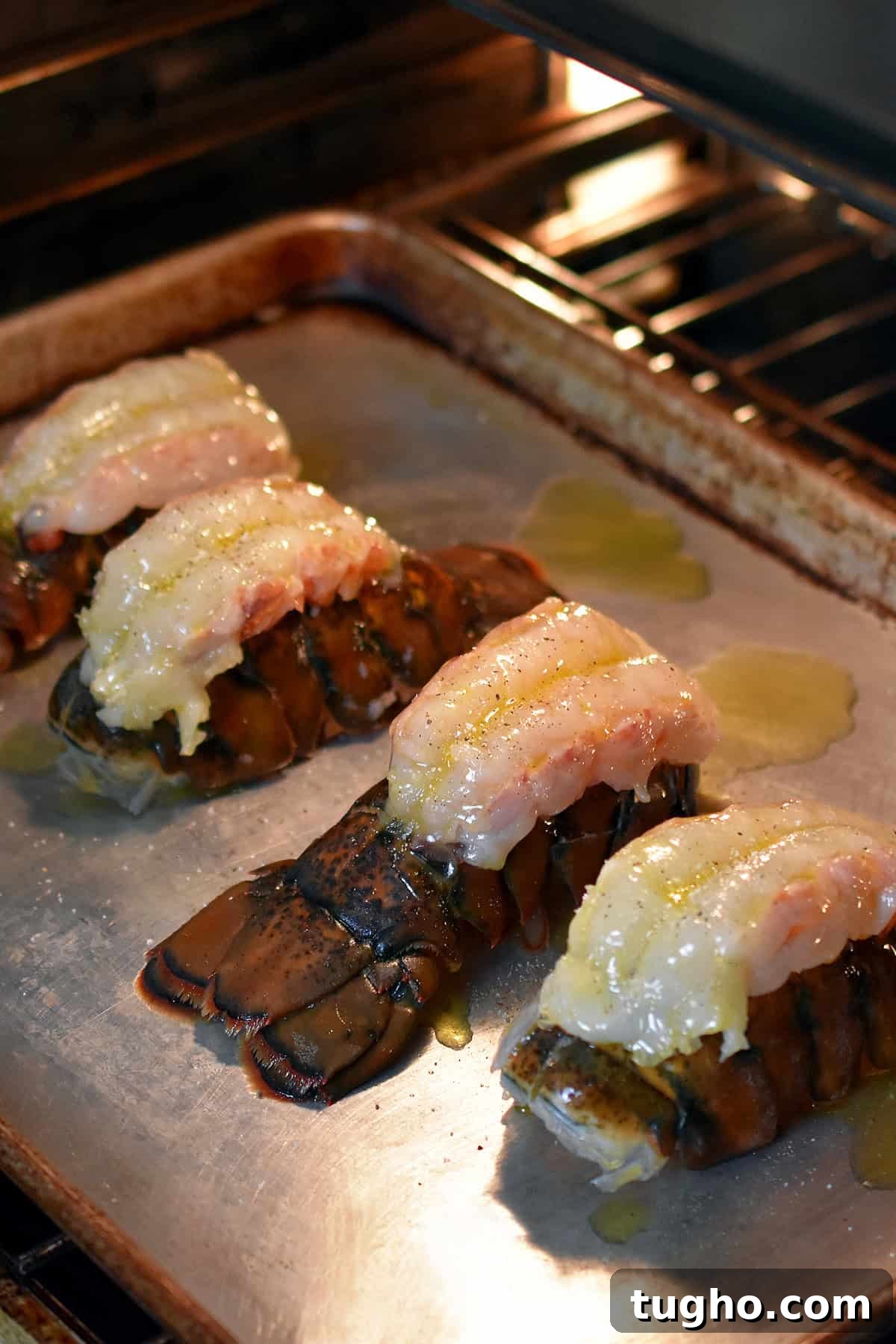
Position an oven rack about 10 inches from the broiler and preheat the broiler. Broil the tails until the shells are bright red and the meat is opaque—about 4 to 6 minutes total (roughly 1 minute per ounce). Start checking at 4 minutes to avoid overcooking. The internal temperature should read between 135°F and 140°F in the thickest part of the meat. Remove from oven and rest briefly.
Step 3b: How to air fry lobster tails
To air fry, preheat the air fryer to 400°F. Place the prepared lobster tails in a single layer in the basket and cook 4–6 minutes, checking for opaque meat and an internal temperature of 135–140°F.
Step 4: Assemble and serve
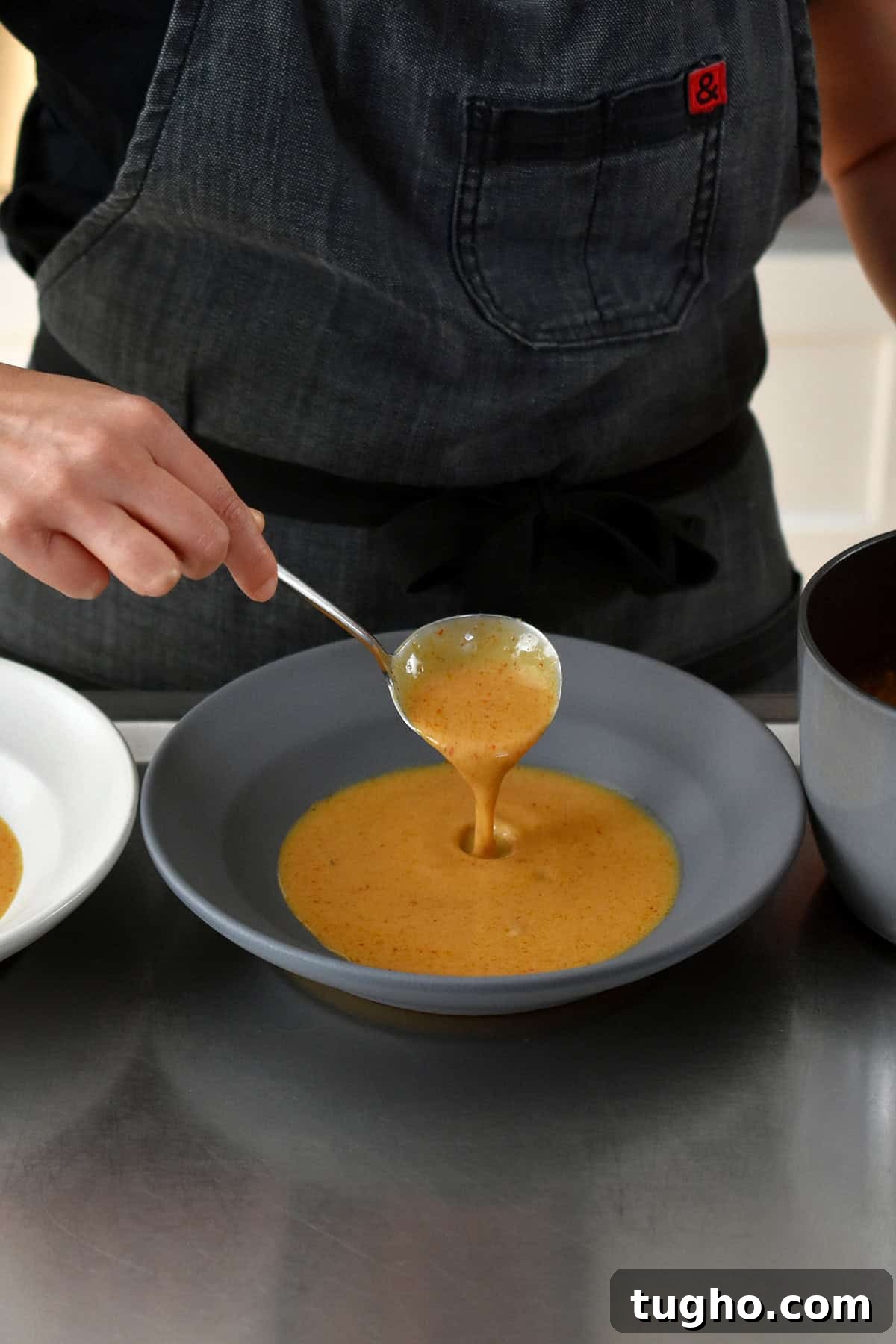
Spoon a generous layer of the Thai red curry sauce into shallow bowls. Arrange two cooked lobster tails per bowl on top of the sauce and ladle additional sauce over them. Garnish with sliced green onions and chopped basil, Thai basil, and/or cilantro. Serve with lime wedges on the side.
What can you serve with it?
- Quick Asian sugar snap peas or garlic green beans for a bright, crunchy side.
- Simple cauliflower rice or spiralized zucchini noodles to keep the meal light and grain-free.
- If you prefer carbs, steamed jasmine rice or rice noodles soak up the curry sauce beautifully.
How to store leftovers
Lobster is best eaten fresh, so cook only what you plan to serve. The Thai red curry sauce, however, stores well in an airtight container in the refrigerator for up to 4 days. Reheat gently and add additional protein or vegetables for an easy curry-style meal later in the week.
Easy & Elegant Lobster Tail Recipe with Thai Red Curry Sauce
Prep time: 15 mins | Cook time: 30 mins | Total time: 45 mins | Servings: 2
Author: Michelle Tam
This simple and flavorful lobster tail recipe with Thai red curry sauce is a show-stopper. Learn how to butterfly lobster tails and cook them to juicy perfection—by broiler or air fryer. The sauce is make-ahead and versatile.
Ingredients
For the Thai Red Curry Sauce
- 1 tablespoon coconut oil or avocado oil
- 2 tablespoons Thai red curry paste
- 13.5 ounces full-fat coconut milk or coconut cream
- 2 teaspoons coconut sugar (or 2 tablespoons apple juice)
- 1½ teaspoons fish sauce
- 2 tablespoons fresh lime juice (juice from 1 medium lime)
For the Lobster Tails
- 4 lobster tails (use 4-ounce tails; thaw if frozen)
- 2 tablespoons melted ghee or avocado oil
- Kosher salt and freshly ground black pepper
- 1 lime, cut into wedges
- 2 green onions, thinly sliced
- 2 tablespoons minced fresh basil, Thai basil, and/or cilantro
Instructions (summary)
- Make the sauce: Sauté curry paste in oil, add coconut milk, simmer until reduced by one-third, stir in coconut sugar and fish sauce, finish with lime juice.
- Butterfly tails: Cut the top of the shell lengthwise, loosen and lift the meat to rest on the shell, brush with ghee, season.
- Cook: Broil about 4–6 minutes or air fry at 400°F for 4–6 minutes, until meat is opaque and reaches 135–140°F internal temperature.
- Serve: Spoon sauce into bowls, add lobster tails, ladle more sauce over, garnish with herbs and green onions, and serve with lime wedges.
Notes
Air fryer instructions: Preheat to 400°F and cook 4–6 minutes until opaque and 135–140°F internal temperature.
Nutrition (approx.)
Calories: 447 kcal | Carbohydrates: 6 g | Protein: 23 g | Fat: 38 g | Fiber: 1 g | Sugar: 2 g
Nutrition information is an approximation.