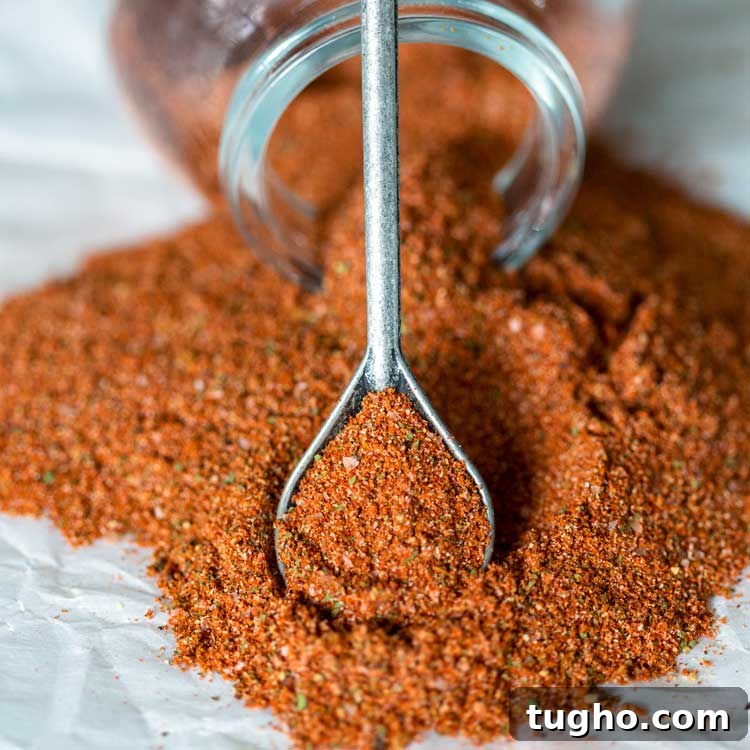
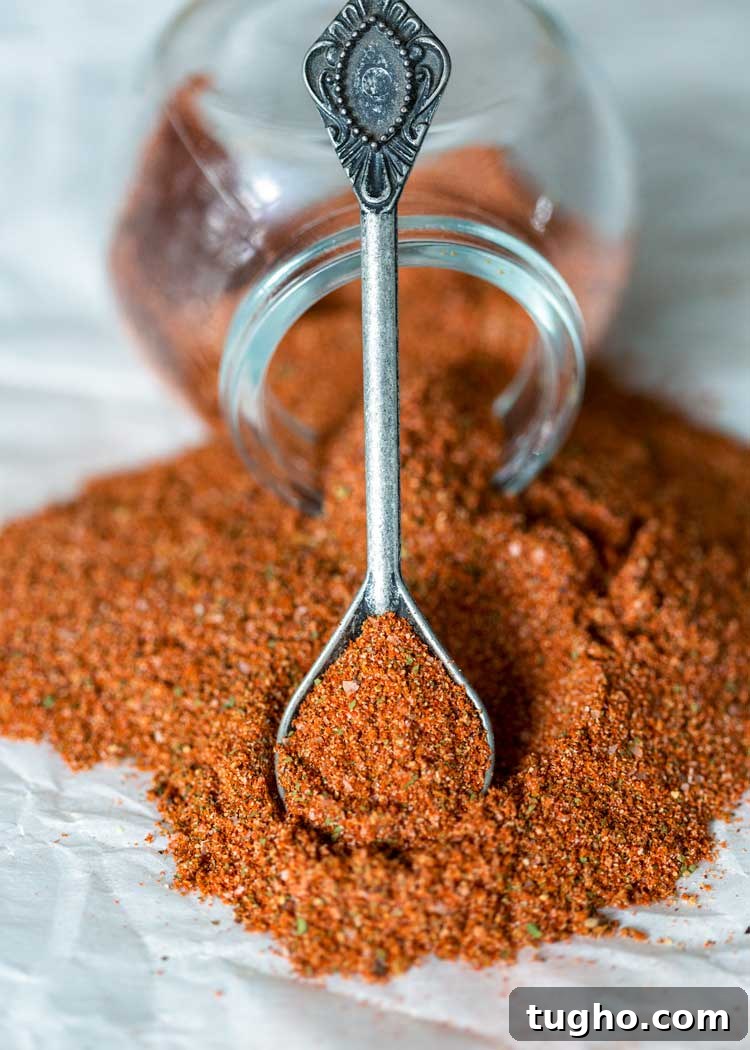
This Latin American sazon spice blend brings warm, herbal, and tangy notes to your cooking while lending a beautiful red hue. Despite its color, sazon is not hot or fiery — it delivers savory, earthy flavors with a subtle brightness that enhances rice, beans, meats, eggs, and more.
Sazon is a signature spice blend across many Latin American kitchens, including Puerto Rican and Caribbean cooking. While popular commercial brands are widely available, making sazon at home gives you control over freshness, salt, and additives. A homemade blend avoids artificial dyes, excess sodium, and ingredients you might prefer not to include, so it’s easy to tailor the mix to your taste.
Table of Contents
- Dried Cilantro
- Ingredient Notes and Substitutions
- How to Make Sazon
- Recommended Tools
- Storing and Reheating
- Frequently Asked Questions
- Sazon Seasoning Recipe
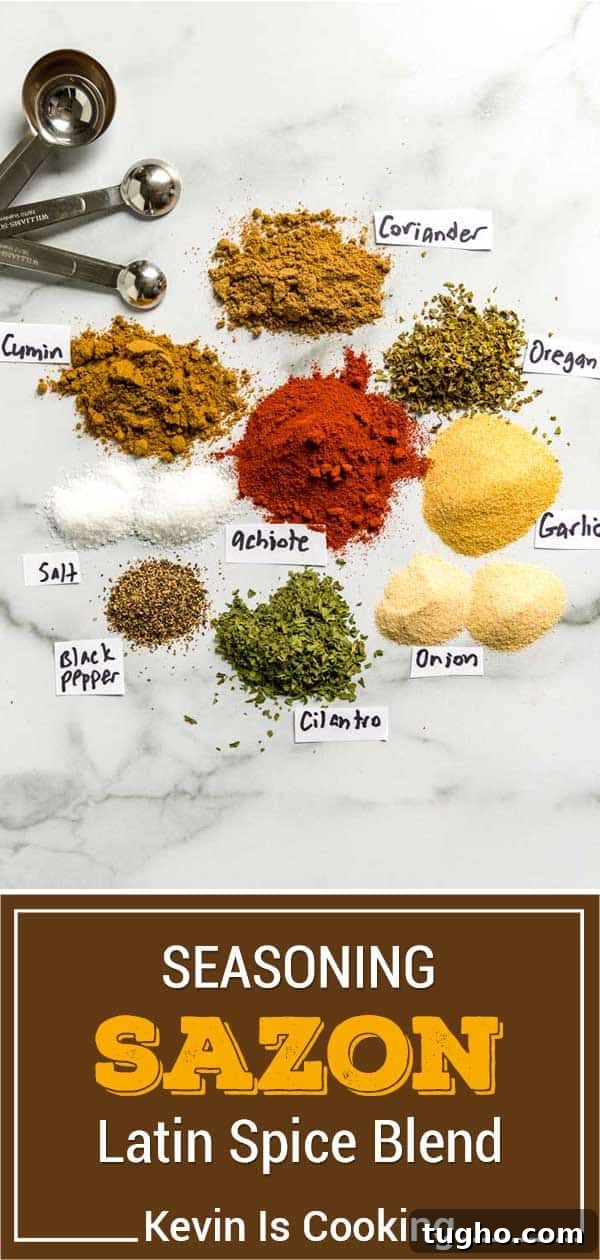
This is a highly versatile blend. Use sazon in rice and stews, sprinkle it on grilled steak or roasted vegetables, or stir it into beans and eggs. It brightens dishes without adding heat, and the balance of cumin, coriander, garlic, oregano, and achiote (annatto) creates a rounded, savory profile.
Tip From Kevin
Dried Cilantro
To make dried cilantro at home: wash fresh cilantro, pat dry, and spread leaves in a single layer on parchment. Let them air-dry in a cool, dark place for 1–2 weeks, or use a dehydrator set to about 95°F (35°C) for 4–6 hours. Once fully dry, crumble the leaves and store in an airtight jar. Dried cilantro preserves the herb’s flavor without the quick spoilage of fresh leaves.
Ingredient Notes and Substitutions
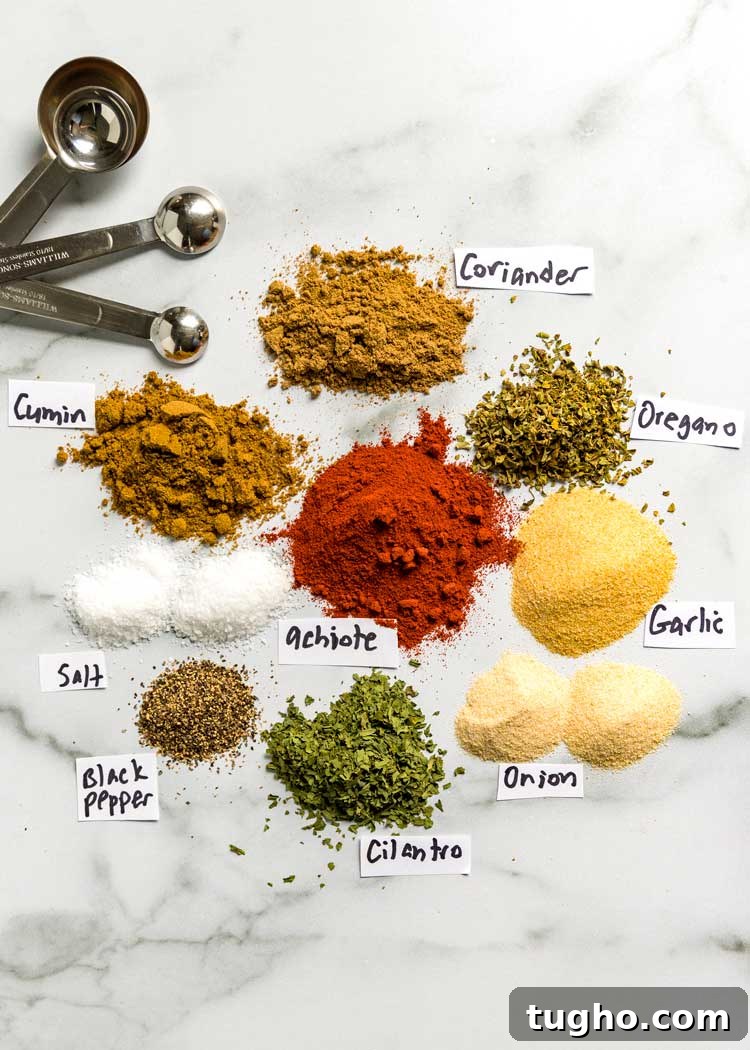
- Coriander & Cumin – Toasting and grinding whole seeds yields a brighter, fresher flavor than pre-ground spices. If you swap seeds for ground spices, use about ¾ teaspoon ground per 1 teaspoon seeds.
- Annatto / Achiote – Annatto (achiote) gives sazon its classic color and a mild earthy flavor. If you don’t have achiote, turmeric supplies color while remaining mild. For a slightly deeper tone and warmth, combine 2 parts paprika with 1 part turmeric.
- Oregano – Mexican oregano is preferred for many Latin recipes because it has a stronger, citrusy profile, but standard Mediterranean oregano works well if that’s what you have on hand.
- Dried Cilantro – If you dislike cilantro or find it soapy, substitute dried parsley or caraway for a milder green note.
- Garlic & Onion Powder – These are essential for the savory backbone of the blend. Fresh garlic or onion will not perform the same in a dry mix, so stick to powders for shelf stability.
- Salt – Salt replaces MSG in this homemade version. Using a modest amount lets you season as you cook rather than over-salting at the start.
- Black Pepper – Freshly cracked pepper offers the best aroma; grind whole peppercorns if possible.
How to Make Sazon
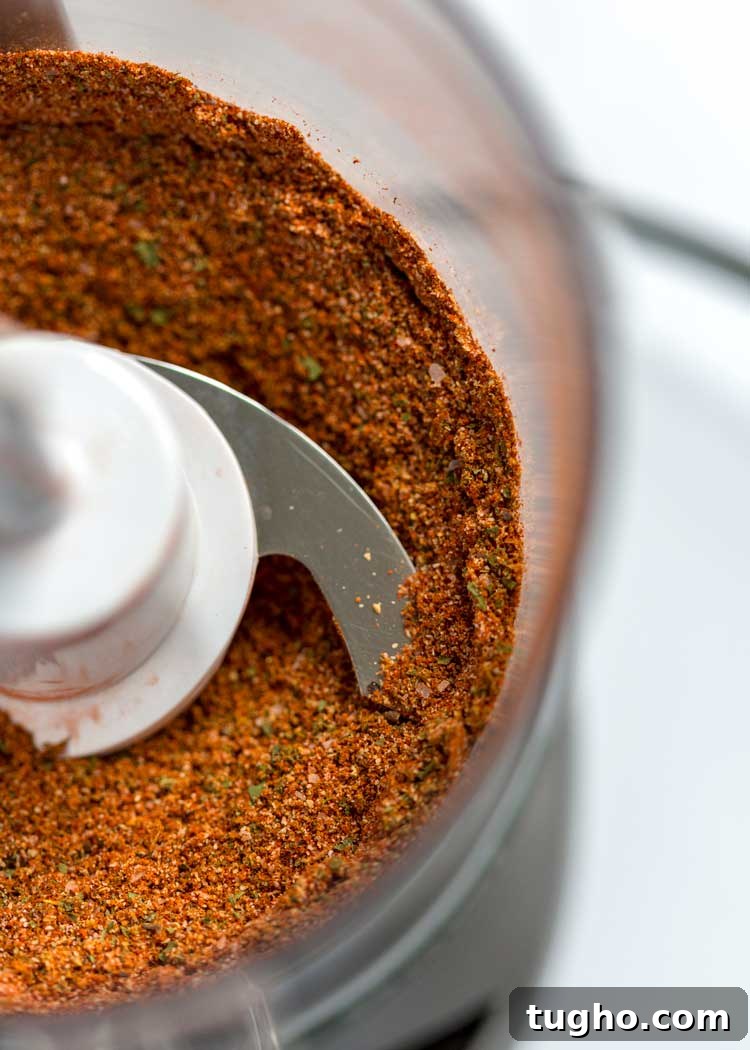
- Grind. Place all ingredients in a spice grinder or food processor. Pulse until the mixture is finely ground and uniform.
- Store. Transfer the finished sazon to an airtight container and store in a cool, dry place.
Recommended Tools
- Spice grinder or small blender – A dedicated spice grinder yields the finest, most even texture. A food processor works well for larger batches.
Storing and Reheating
Keep your sazon in an airtight glass or metal container away from heat and direct sunlight. Glass and metal are preferred because they won’t absorb oils or odors. Store the spice blend in a cool, dark cabinet; it will stay flavorful for about six months, though potency slowly decreases after that.
If using plastic, reuse a clean spice jar from store-bought seasonings rather than porous containers. Always smell and taste a small amount before use if the blend has been stored a long time, and shake the jar to reblend settled particles.
Frequently Asked Questions
Sazon appears across Latin American cuisines, including Mexico. Even when a Mexican dish doesn’t call for a labeled sazon blend, many of the same components—cumin, coriander, garlic, oregano, and onion—are commonly used.
Does sazon seasoning have MSG?
Some commercial packets of sazon include MSG. Making your own blend lets you avoid MSG or control the sodium content by adjusting the salt in the recipe.
How much sazon should I use?
Start conservatively and add more to taste. A good rule is about 1 teaspoon of sazon per pound of meat. This recipe yields roughly 1/2 cup (about 24 teaspoons), so you’ll have plenty for multiple uses.
Sazon Seasoning
Ingredients
- 1 tbsp ground coriander
- 1 tbsp ground cumin
- 1 tbsp achiote (annatto) powder
- 1 tbsp Mexican oregano (or regular oregano)
- 1 tbsp dried cilantro
- 1 tbsp garlic powder
- 2 tsp kosher salt
- 2 tsp onion powder
- 1 tsp ground black pepper
Instructions
- Combine all ingredients in a spice grinder or food processor. Pulse until the mixture is a fine, even powder.
- Transfer to an airtight container and store in a cool, dry place. Use as desired in savory dishes.
Notes
- Achiote is simply ground annatto seeds and provides color and a subtle earthy taste.
- Mexican oregano has a bright, citrusy kick that pairs well with Latin flavors, but regular oregano is a fine substitute.
- This batch yields about 1/2 cup total, roughly 24 teaspoons of seasoning.
Nutrition
Carbohydrates: 1 g |
Protein: 1 g |
Fat: 1 g |
Sodium: 292 mg
Nutrition values are estimates and should not replace professional dietary advice.
This post was originally published on March 4, 2019, and updated February 2024.