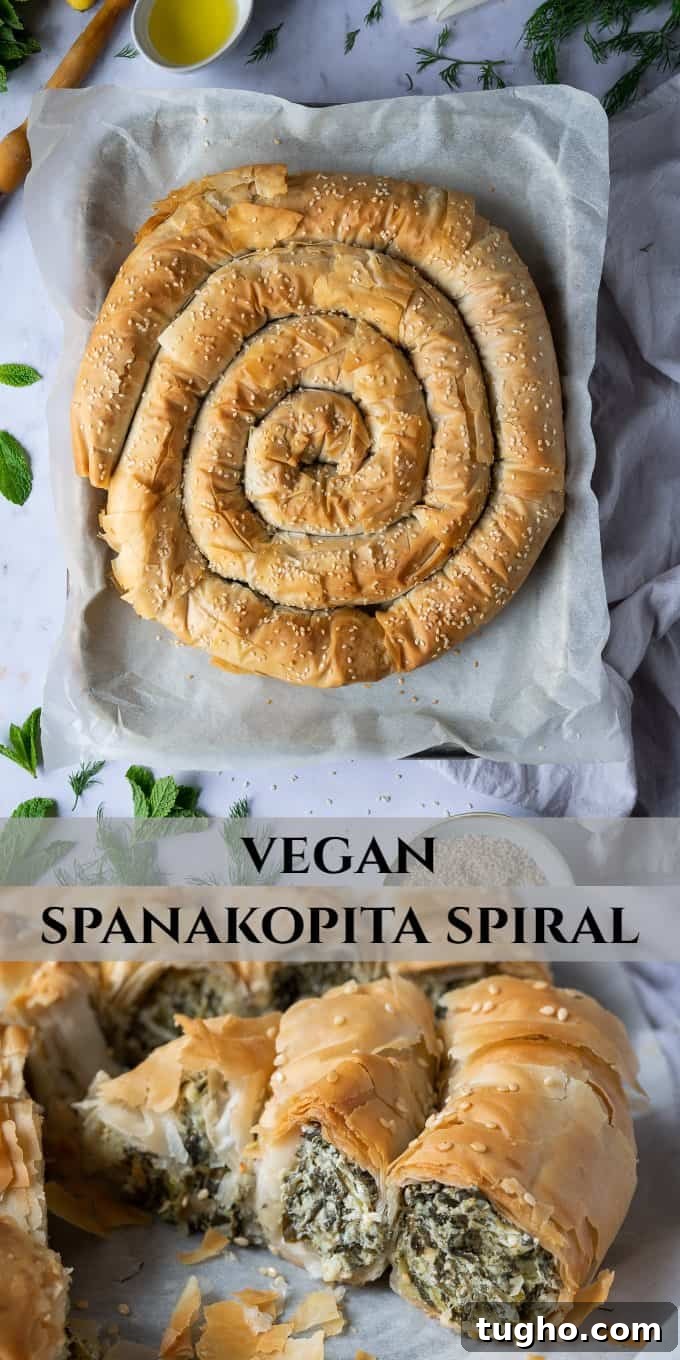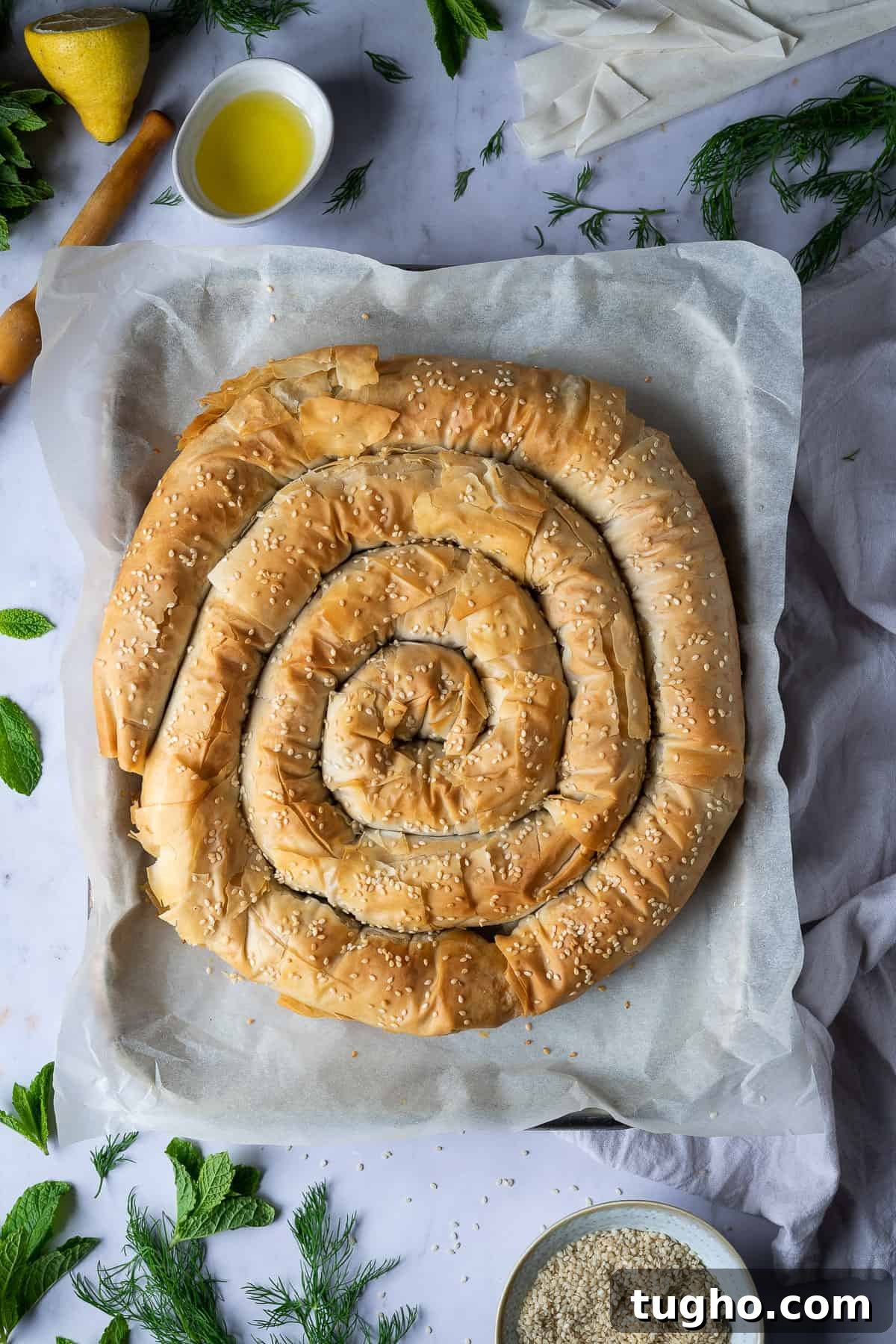
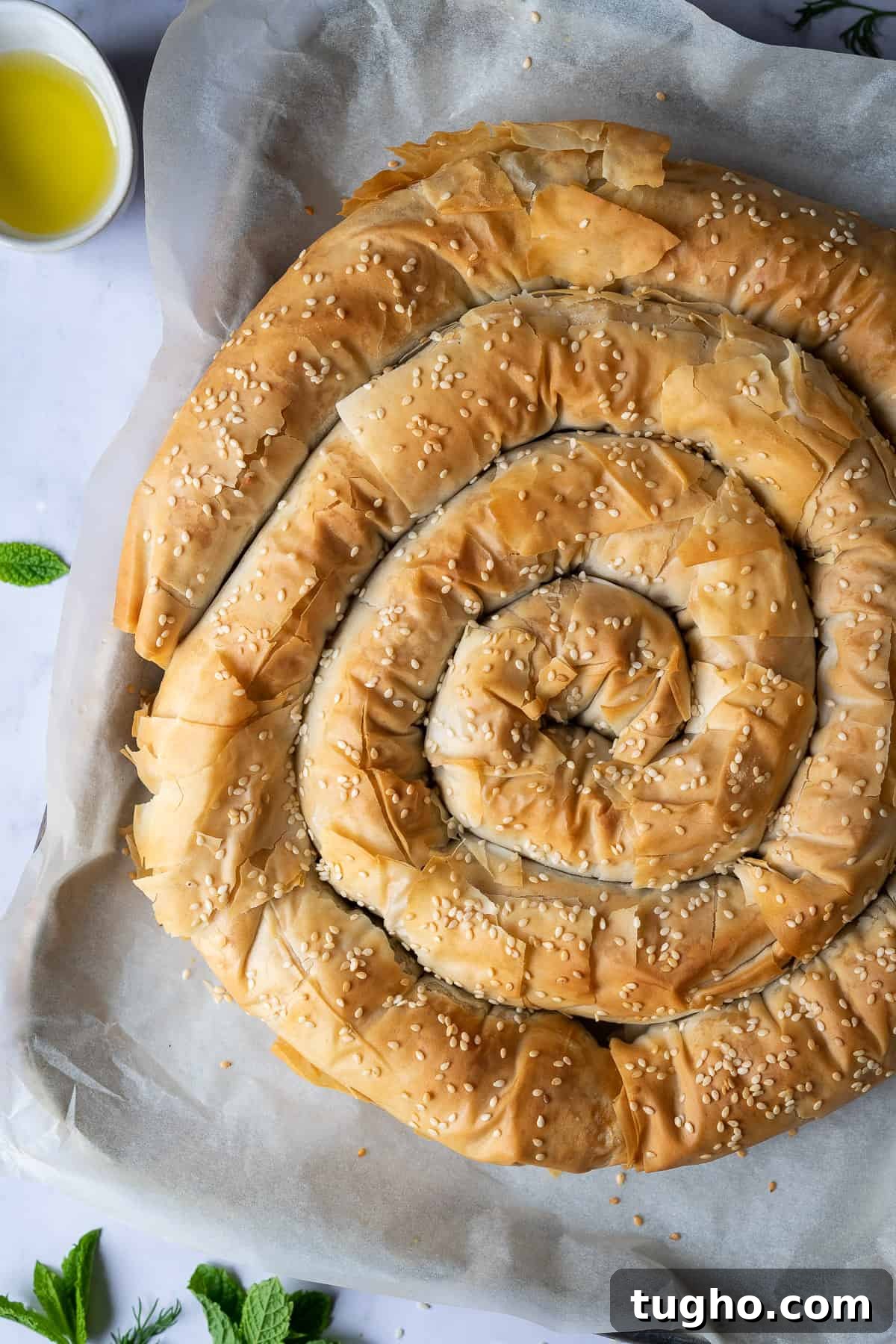
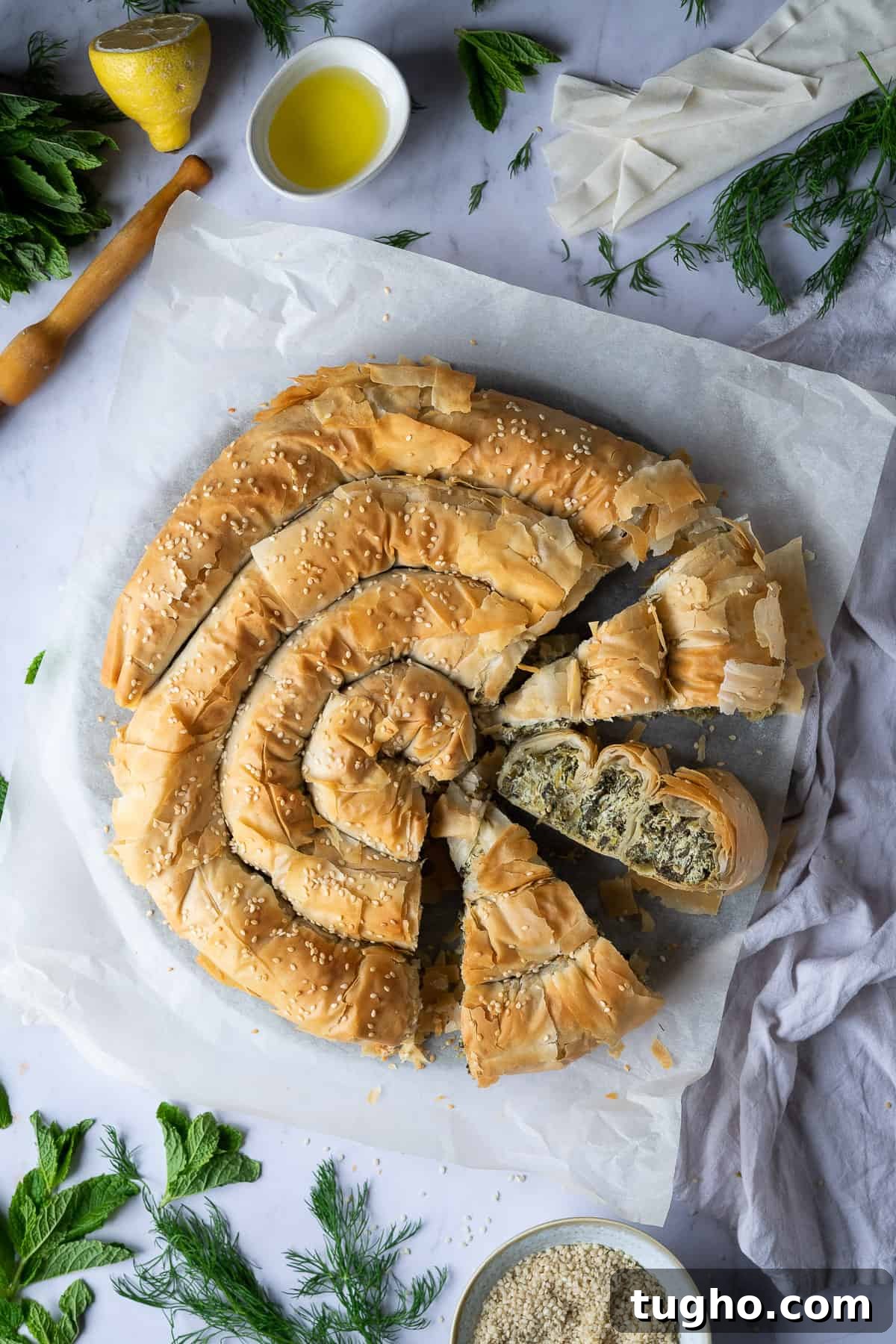
Vegan spanakopita spiral — an impressive vegan spinach and almond “feta” filo pie. A tangy, herby spinach filling wrapped in crisp phyllo pastry that looks spectacular yet is straightforward to make.
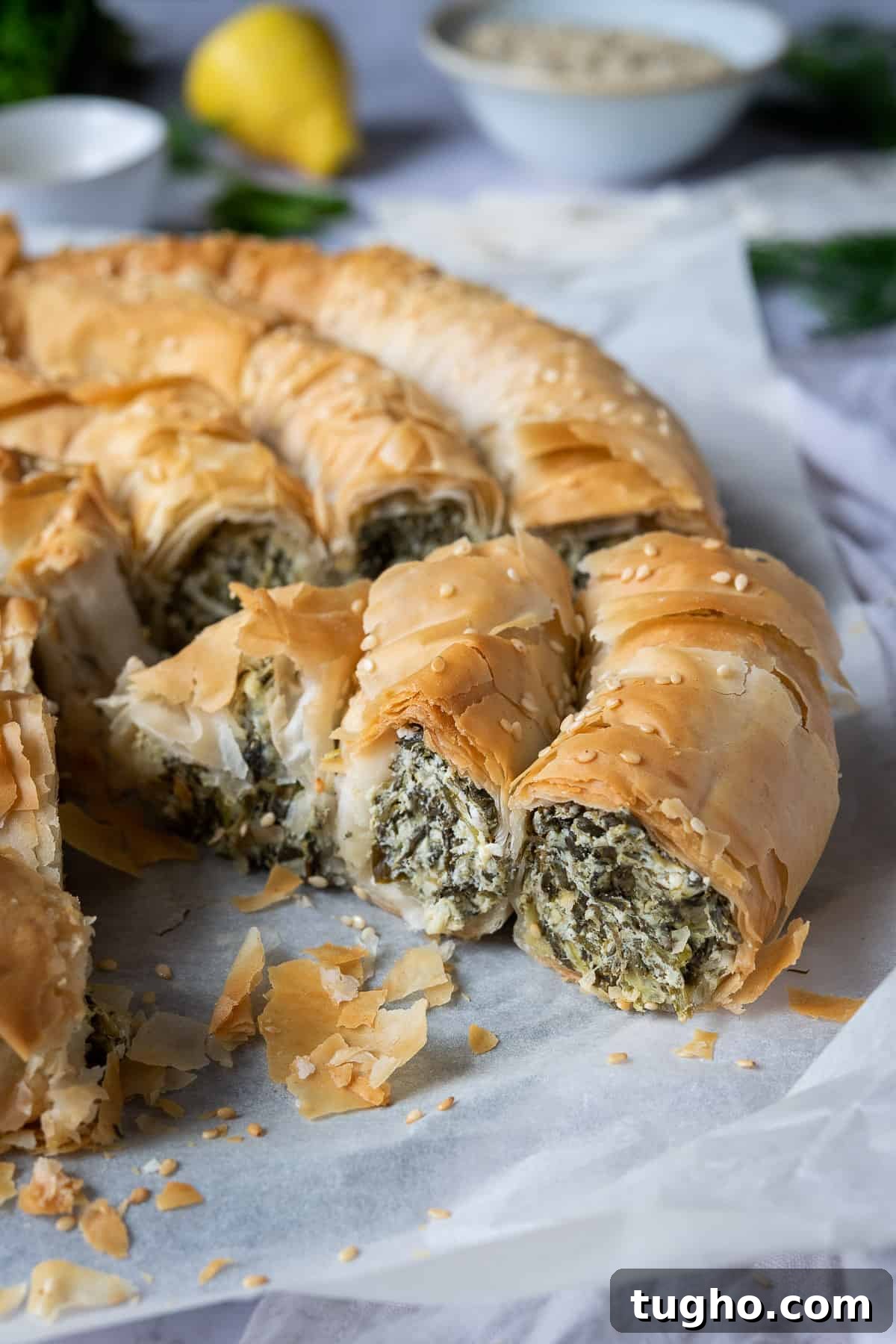
Before I went vegan, spanakopita — the Greek spinach and feta pie — was one of my go-to dishes. When I stopped eating dairy I assumed I’d have to miss it forever. Discovering a simple almond-based cheese substitute changed that. A few pantry staples blitzed in a blender with lemon and salt yields a creamy, slightly grainy almond “feta” that recreates the familiar tang and texture perfectly.
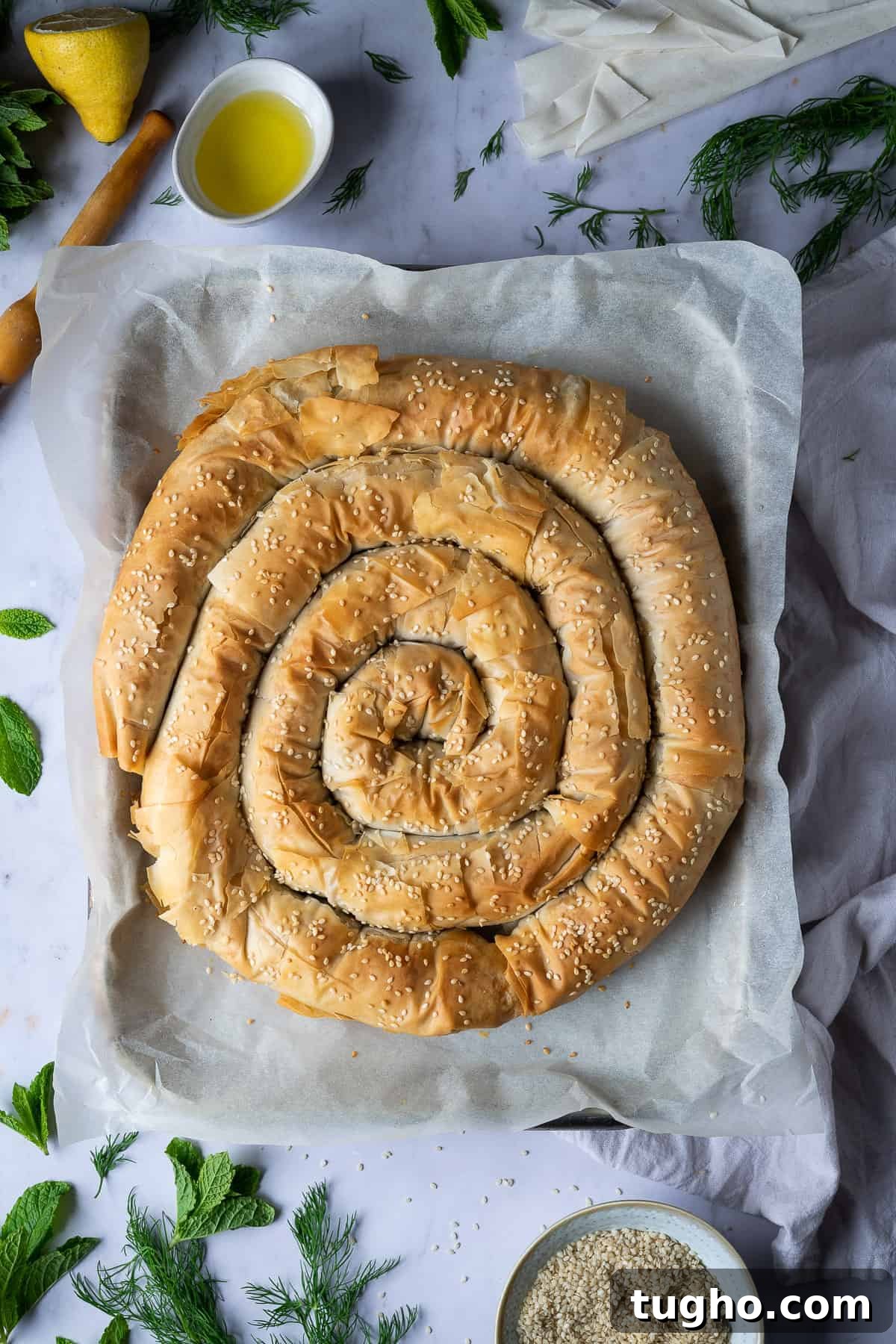
This vegan spanakopita spiral is one of my favourite ways to use that almond cheese. The filling is tangy, salty and aromatic, filled with dill, mint and a hint of nutmeg, while the phyllo bakes up golden and crisp. The spiral shape looks impressive on a sharing plate, but you can also layer the filling and pastry in a rectangular dish if you prefer.
How to Make Vegan Spanakopita
(See the full ingredient list and step-by-step instructions below.)
Pro tip: For best results, follow the measurements closely. Using a digital scale and gram measurements is more reliable than cup measures for consistent results.
Overview
Make the almond cheese ahead of time — ideally the day before you assemble the pie — so the flavours mellow and the cheese firms up slightly. The filling combines cooked leek, spring onions and very well-drained spinach with lemon zest, fresh herbs, nutritional yeast and the almond cheese. Layered between multiple sheets of phyllo, the filling is rolled into long logs and coiled into a spiral for baking.
Ingredients
Almond Cheese
- 200 g (about 2 cups) flaked skinless almonds
- 60 ml lemon juice
- 60 ml olive oil
- 60 ml water
- 1 clove garlic
- 2 Tbsp nutritional yeast
- 1 ½ tsp salt
Spanakopita Filling and Assembly
- 1 Tbsp olive oil (plus extra for brushing)
- 1 large leek (or 2 small), finely sliced
- 5 spring onions (scallions), thinly sliced
- 4 cloves garlic, crushed
- 850 g (30 oz) frozen whole leaf spinach, fully defrosted and very well drained
- Finely grated zest of 1 lemon
- 20 g fresh dill, finely chopped
- 20 g fresh mint leaves, finely chopped
- 1 tsp dried oregano
- ¼ tsp ground nutmeg
- 3 Tbsp nutritional yeast
- Salt and black pepper, to taste
- 2 packs phyllo (filo) pastry — about 18 sheets plus a couple extra for patching
- Sesame seeds to garnish (optional)
Instructions
Make the Almond Cheese
- Place the flaked almonds in a bowl and cover with boiling water. Soak for at least 30 minutes, then drain thoroughly.
- Blend the drained almonds with lemon juice, olive oil, water, garlic, nutritional yeast and salt until smooth and creamy. Scrape down the sides and blend until the texture is fairly smooth but still slightly grainy to mimic feta.
- Transfer the mixture to a bowl, cover and refrigerate. It can be used right away, but it will taste better and firm up if chilled overnight. Store in an airtight container for up to a week.
Prepare the Filling
- Heat 1 tablespoon olive oil over low heat in a large pan. Add the sliced leek and cook for about 10 minutes, stirring often, until soft and translucent.
- Add the crushed garlic and sliced spring onions and cook for 2 more minutes. Remove from the heat and allow to cool slightly.
- Thoroughly squeeze the defrosted spinach to remove as much liquid as possible. Finely chop and add to the leek mixture.
- Stir in lemon zest, dill, mint, oregano, nutmeg, nutritional yeast, black pepper and a small amount of salt (the almond cheese is already salty). Mix well.
- Fold in the almond cheese, taste and adjust seasoning if needed. The filling can be stored covered in the fridge for a day or two before assembling.
Assemble and Bake
- Preheat the oven to 180°C / 350°F / gas mark 4. Grease a 26–28 cm round cake tin or line a baking sheet with parchment.
- Work with the phyllo on a clean surface, keeping the unused sheets covered with a damp tea towel so they don’t dry out.
- Brush a short edge of one sheet with olive oil and overlap another sheet by about 5 cm. Continue layering and brushing so you have a strip of pastry a few sheets thick. The recipe uses triple-layered sections (three sets across) — about 18 sheets in total — but you can double-layer if you have fewer sheets.
- Place one third of the filling in a long sausage shape along the long edge of the pastry, leaving a 5 cm gap at the bottom. Roll up from the bottom into a long sausage.
- Coil the sausage seam-side down into the tin or onto the baking sheet. Repeat with the remaining pastry and filling, tucking the start of each coil into the end of the previous one to form a continuous spiral.
- If the pastry tears, patch with a scrap of unused phyllo brushed with olive oil—this hides easily in the finished pie.
- Brush the entire spiral with olive oil and sprinkle with sesame seeds if using. Bake for about 45 minutes until golden and crisp. Allow to cool slightly before slicing and serving.
Top Tips
- Ensure frozen phyllo is fully defrosted and keep sheets covered with a damp tea towel to stop them drying out and becoming brittle.
- Different brands and packs of phyllo vary in sheet count and size. If you have fewer sheets, use double layers instead of triple.
- Squeeze the spinach extremely well; excess moisture will make the pie soggy. When you think it’s dry, squeeze it again.
- Brushing with olive oil is essential for a golden, crisp finish — don’t skip this step.
- Minor tears in the pastry are easily patched with extra phyllo brushed with oil.
Make-Ahead and Storage
The pie is best enjoyed freshly baked while the pastry is still crisp. The filling and the almond cheese can be prepared a day or two in advance and stored covered in the fridge. You can assemble the spiral ahead of time, but note that assembled phyllo may soften if refrigerated overnight; baking straight from assembly gives the best texture.
If you made this recipe, enjoy sharing it with friends and family — it’s a standout vegan version of a classic Greek favourite.
Images and content copyright protected; please use sharing tools when sharing this recipe.