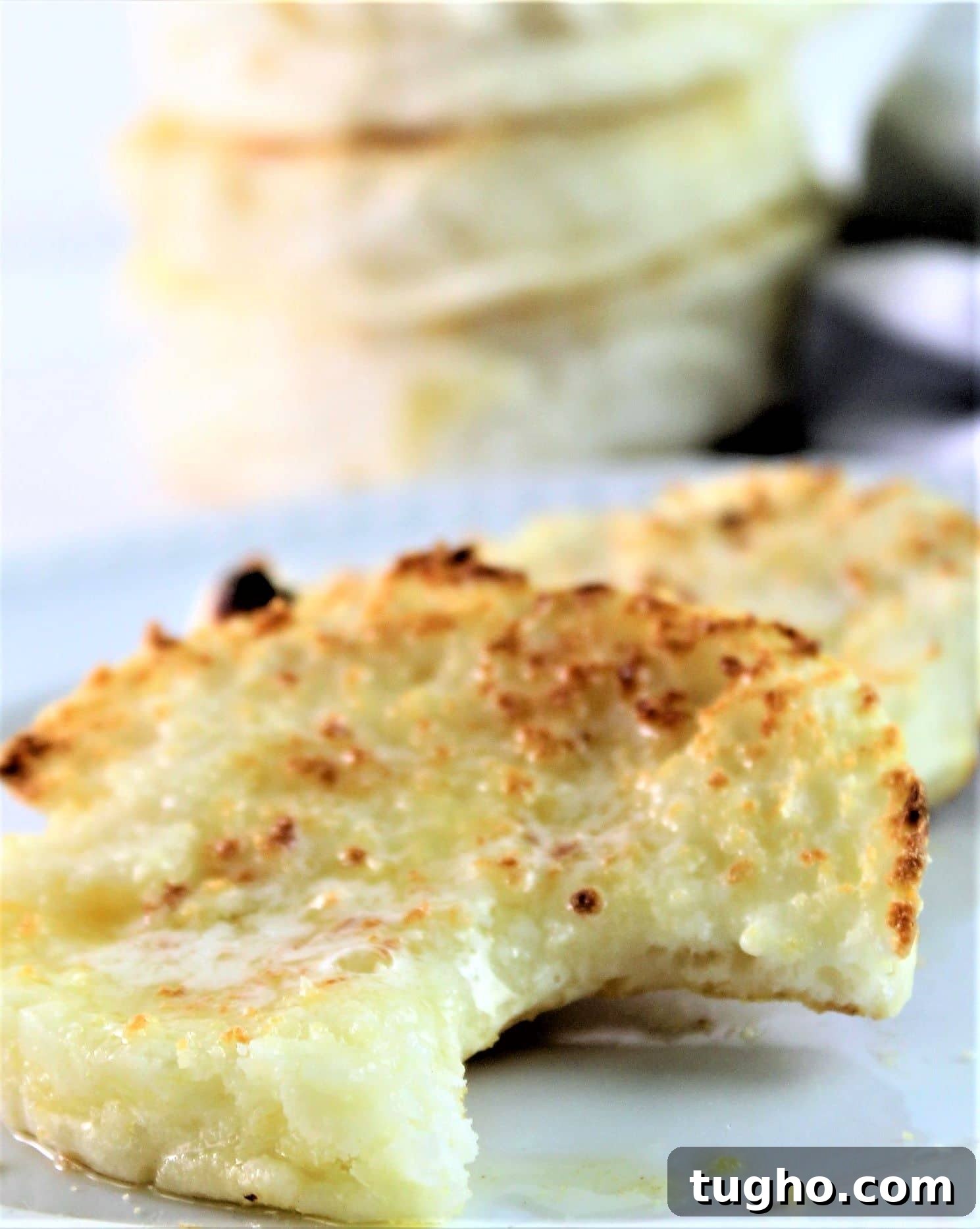
Gluten Free English Muffins
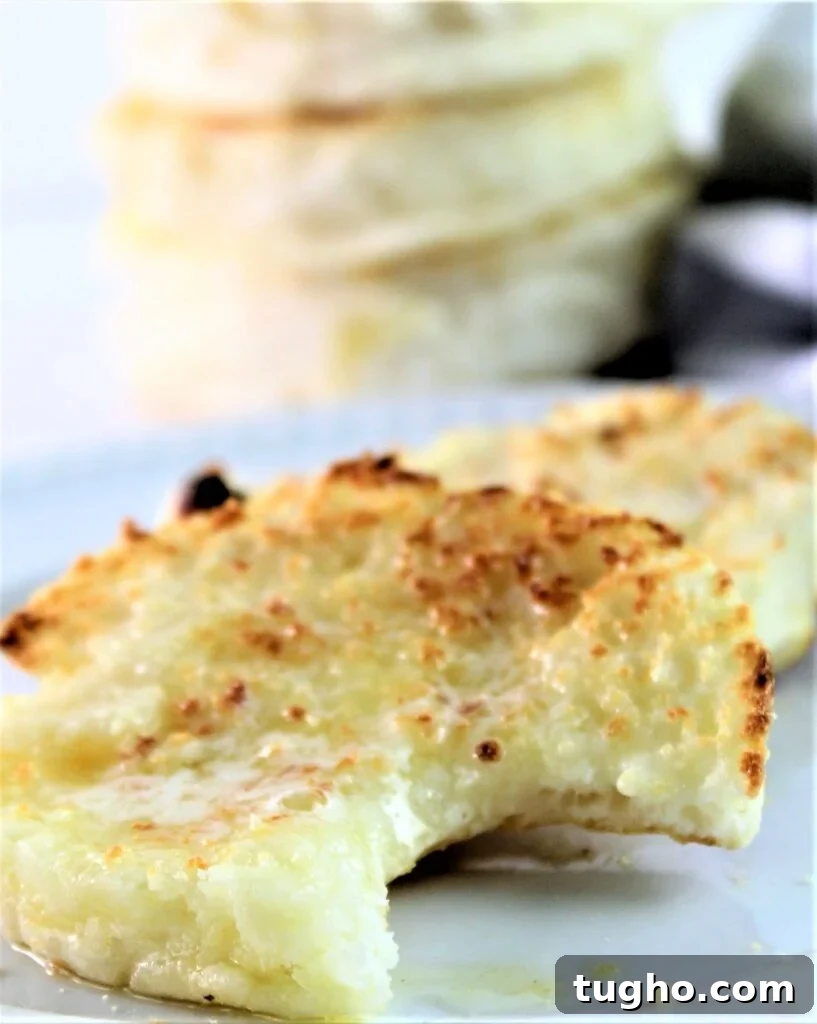
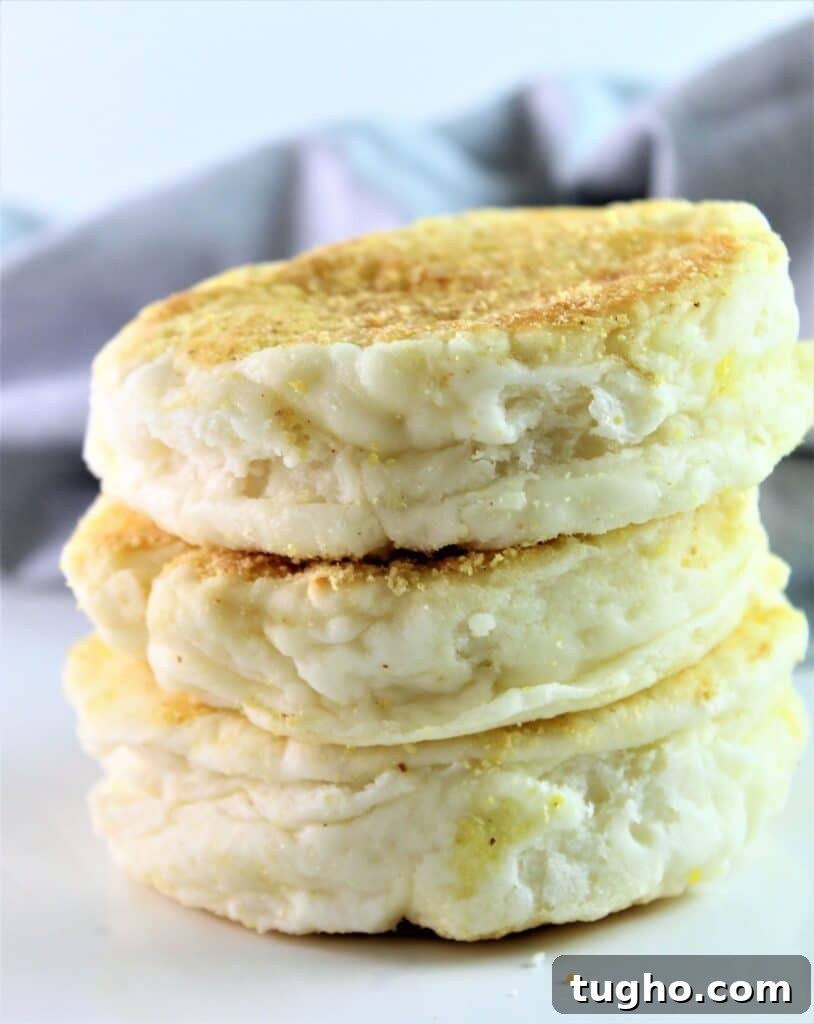
Move over, Thomas’ English Muffins—these gluten free English muffins deliver the same beloved nooks and crannies we all miss. I got tired of waiting for a commercial gluten free option, so I developed my own. The result is tender, airy, and perfect to fork-split and toast for breakfast.
Some items I mention may be affiliated in the original post. I include them here only as helpful notes.
My husband grew up in Pennsylvania and grew up on Thomas’ English Muffins. When I made this gluten free version for breakfast, he kept saying “amazing!” and joked that I should tell Thomas’ to sell a gluten free muffin. He doesn’t need to eat gluten free, but he happily enjoys what I make—so this recipe has full-family appeal.
What Are English Muffins?
English muffins are small, round, yeast-leavened breads traditionally split with a fork to reveal a surface full of little holes and crannies—perfect for catching melted butter. Their origin traces to bakeries in the 19th century where similar griddle-baked breads were popularized. Commercial recipes like Thomas’ are closely held, which is why a homemade gluten free version fills an important gap for those who avoid wheat.
My Favorite Tools for Making English Muffins
None of these tools are required, but they make the process easier and help create uniform muffins.
- Electric skillet: Acts like an oven and a skillet at once, making temperature control simple. If you don’t have one, use a heavy skillet with a tight-fitting lid and keep the heat low.
- English muffin rings: These give neat, round muffins and help them hold their shape. You can skip them and spoon the dough into rounds, but the rings produce the prettiest results.
How To Make English Muffins
This recipe is surprisingly easy. There’s no kneading and no second rise. After the initial rise in a warm, draft-free area, the dough chills in the refrigerator, then is cooked in a skillet until golden on both sides. The process yields light, airy muffins with the characteristic nooks and crannies.
Mix the dry ingredients, then slowly add the milk and melted butter while beating. The dough will be loose and high-hydration; you can mix it with a stand mixer, a hand mixer, or even a wooden spoon. Let it rise until doubled—about two hours—then refrigerate for at least four hours to firm up the dough and develop flavor.
To cook, heat an electric skillet to about 200–250°F (or a skillet over medium-low), melt butter, and place greased rings in the pan. Sprinkle cornmeal in the bottoms of the rings, spoon dough into each ring (they will expand), and sprinkle more cornmeal on top. Cover and cook 7–8 minutes, then flip and cook another 7–8 minutes. Remove the rings and cook an additional minute or two to finish the sides. Cool completely before fork-splitting and toasting.
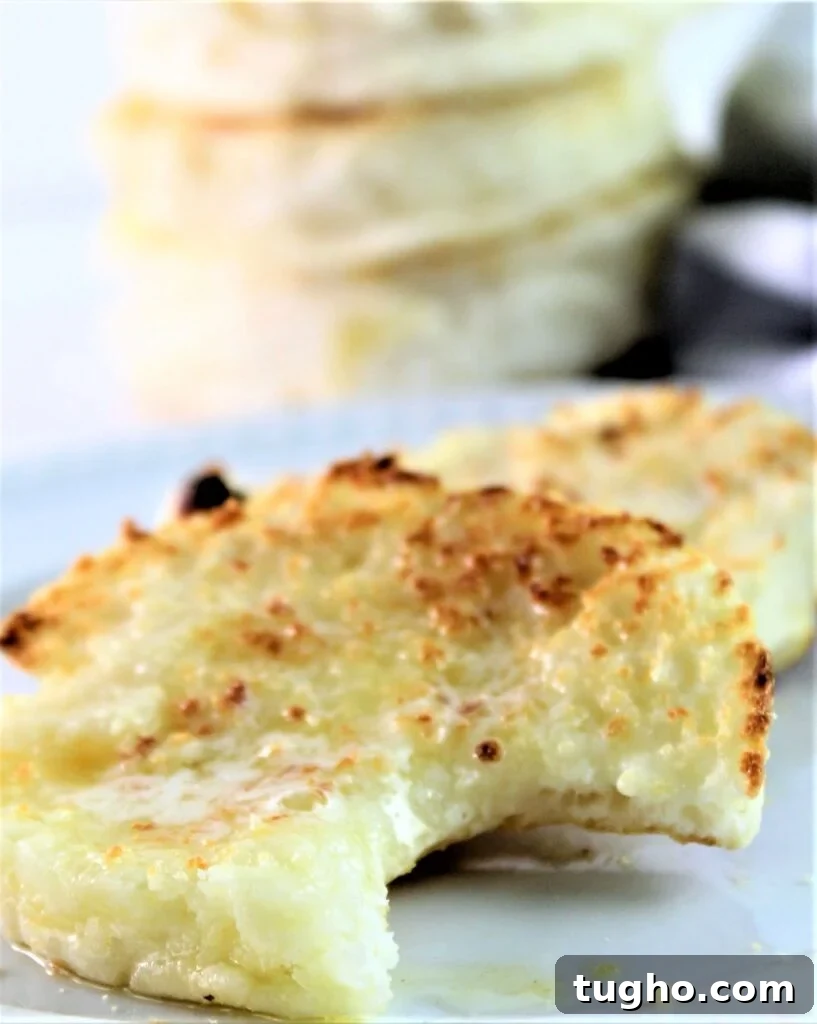
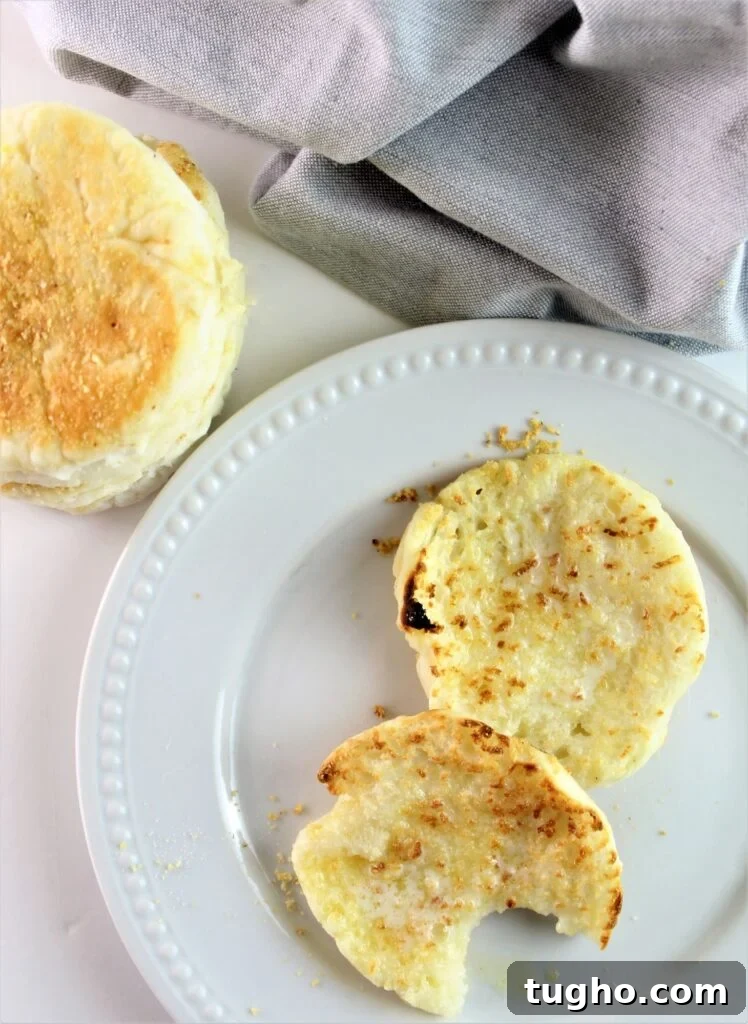
Fork-splitting is essential to expose the interior texture—those little pockets are what make English muffins so special for butter, jam, or any spread you like.
Recipe Details
Course: Breakfast • Cuisine: American • Keyword: english muffins, Gluten Free
Prep Time: 10 minutes • Cook Time: 20 minutes • Inactive Time: 6 hours • Total Time: 6 hours 30 minutes
Servings: 8 muffins • Author: Kim
Ingredients
- 3¼ cups (455 g) gluten free bread flour blend*
- 1 tablespoon plus 1 teaspoon (16 g) granulated sugar
- 2 teaspoons kosher salt
- 2 teaspoons rapid rise (instant) yeast
- 2½ cups (600 ml) whole milk
- 4 tablespoons butter, melted
- about ½ cup gluten free cornmeal for sprinkling
- 2 tablespoons butter for frying/baking
Instructions
- In a large bowl, weigh the flour and add the sugar, salt, and yeast. Whisk to combine. Using a stand mixer with a paddle or a hand mixer, start on low and slowly pour in the milk and melted butter. Increase to medium and beat for 5 minutes.
- Cover the bowl with plastic wrap and place in a warm, draft-free spot until doubled in volume, about 2 hours. Refrigerate the dough for at least 4 hours or up to 7 days.
- Spray the insides of muffin rings with nonstick spray if using. Heat an electric skillet or a heavy skillet with a lid to medium-low (about 200–250°F) and add 1 tablespoon butter. Place rings on the butter and sprinkle each with cornmeal.
- Spoon dough into the rings—do not fill to the top, as the muffins will rise to fill the rings. Sprinkle more cornmeal on top. Cover and cook about 7–8 minutes until the bottoms are browned.
- If desired, divide 1 tablespoon butter over the tops, carefully flip using tongs, replace the lid, and cook another 7–8 minutes. Remove the lid and carefully remove the rings; they should slide out if greased. Replace the lid and cook 1–2 more minutes to finish the sides.
- Remove muffins and cool completely before fork-splitting and toasting.
Notes
If you skip muffin rings, spoon the dough into small rounds on the buttered skillet and sprinkle with cornmeal—the shape will be less uniform but the flavor remains excellent.
*Note about flour: This recipe was developed using a specific gluten free bread flour blend for the best texture and rise. If you use a different store-bought blend, results may vary. Many store-bought blends will give good results, but the final texture and structure can depend on the blend you choose.