May 1st marks the beginning of Celiac Disease Awareness Month — a time to amplify education about celiac disease, support those affected, and encourage testing and safe practices. Awareness matters year-round, but dedicating a month gives our community a focused opportunity to share accurate information, correct misconceptions, and make everyday environments safer for people living with celiac disease.

This year I asked the celiac community what they most wished others understood about the condition. The responses were honest, heartening, and real. I turned the most common themes into shareable graphics to help spread awareness. Please use them, share them, and help others learn what living with celiac disease really means.
Celiac Disease Awareness Month Graphics
These images are free to pin, post on Facebook, Instagram, Twitter, or other social media, email, print, or otherwise share to raise awareness. Visuals can open conversations and help correct misconceptions — thank you for helping us get the word out.
#1: It’s Forever.
Celiac disease is a lifelong autoimmune condition. You can’t outgrow it, and there is no “cheat” day. Strict adherence to a gluten-free diet is currently the only effective treatment to prevent intestinal damage and associated health problems.
#2: Celiac disease affects more than your digestive health.
Beyond digestive symptoms, celiac disease can cause fatigue, nutrient deficiencies, reproductive issues, anxiety, brain fog, mouth sores, depression, migraines, anemia, low bone density, skin conditions, joint pain, and more. There are well over 300 reported ways celiac disease can present, so symptoms vary widely from person to person. Recognizing non-digestive signs helps more people get diagnosed and treated.

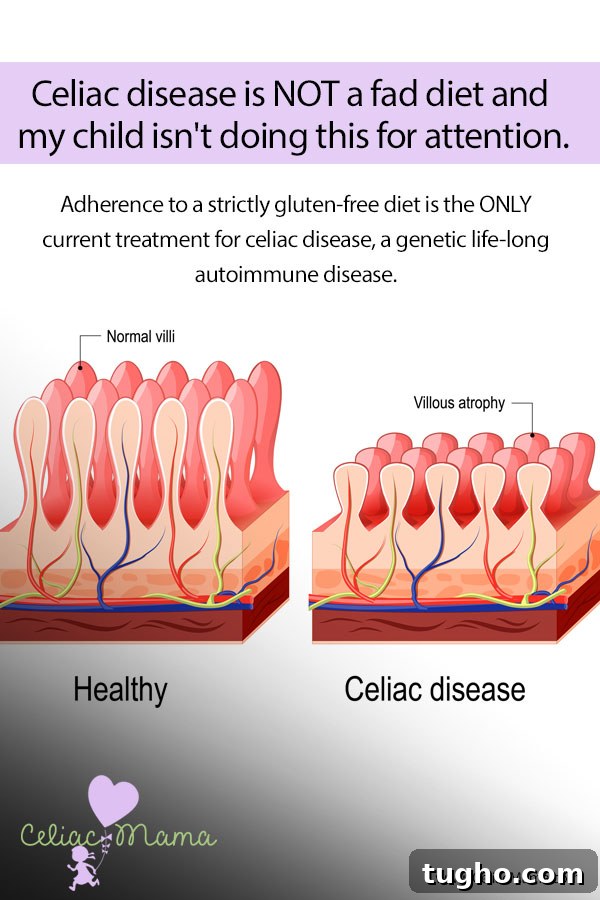
#3: Celiac disease is NOT a fad diet and my child isn’t doing this for attention.
Following a strict gluten-free diet is a medical necessity for people with celiac disease. It is a genetic, autoimmune condition — not a lifestyle choice. Children and adults who must avoid gluten do so to protect their health.
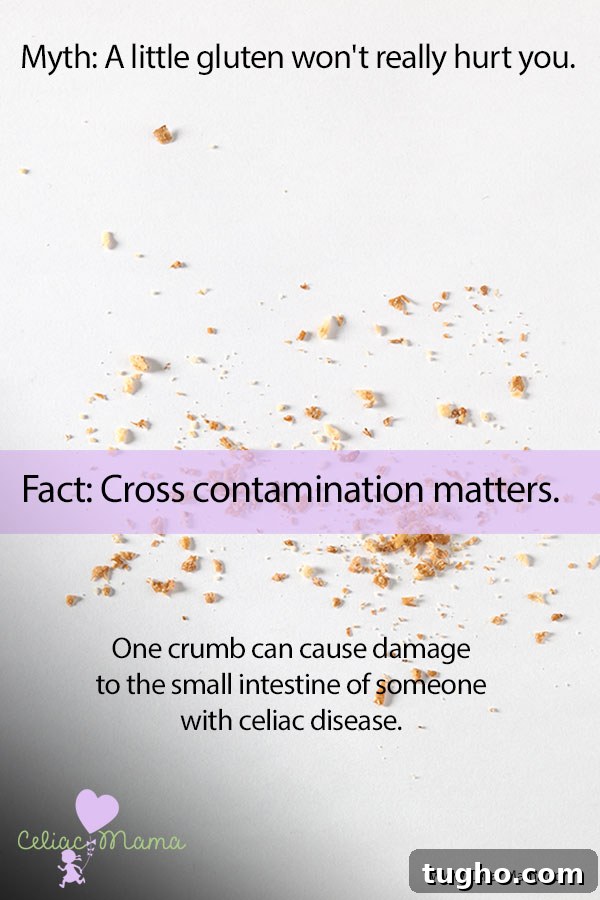
#4: Myth – A little gluten won’t really hurt you.
Cross-contact matters. Even a tiny crumb or trace from shared utensils, surfaces, or fryers can damage the small intestine of someone with celiac disease. Safe food preparation and strict avoidance of cross-contact are essential to prevent harm.
#5: Celiac disease runs in families.
If a parent, child, or sibling has celiac disease, relatives have about a 1 in 10 chance of developing it at any age. Because untreated celiac disease can lead to other serious health issues, family members should discuss screening and testing with their healthcare provider when there is a known diagnosis in the family.
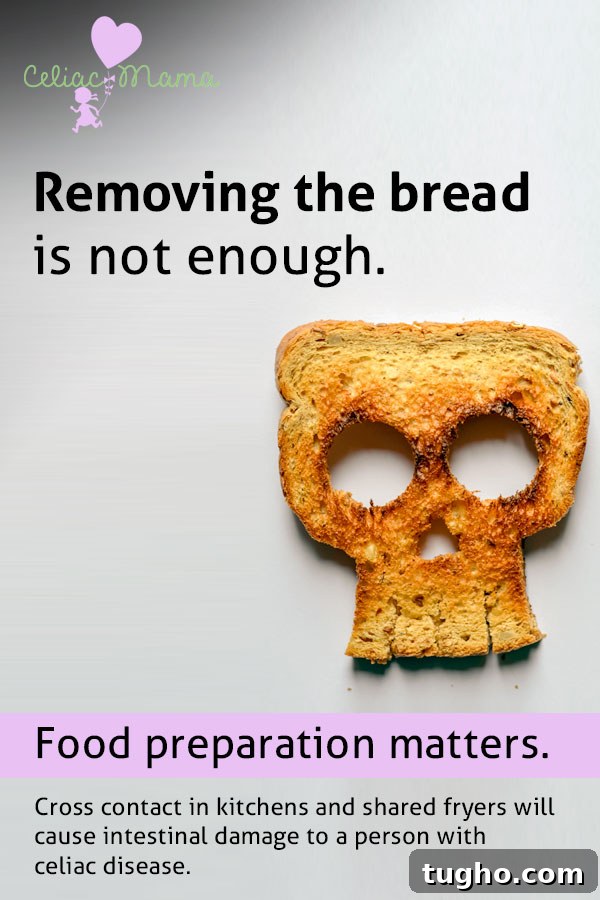
#6: Removing the bread is not enough.
Restaurants and hosts offering gluten-free options need to go beyond simply omitting bread. Shared fryers, cutting boards, utensils, and cookware can contaminate otherwise gluten-free food. Training staff on cross-contact prevention and using dedicated equipment where possible are important steps to serve truly celiac-safe meals.
Thank you for sharing these messages during Celiac Disease Awareness Month and throughout the year. By educating friends, family, restaurant staff, and medical providers, we can improve understanding, reduce accidental exposure, and help more people find diagnosis and treatment. If you suspect celiac disease in yourself or a loved one, speak with a healthcare professional about testing before starting a gluten-free diet so accurate diagnosis is possible.
Together we can make everyday spaces safer and increase early detection — your voice and actions make a difference.