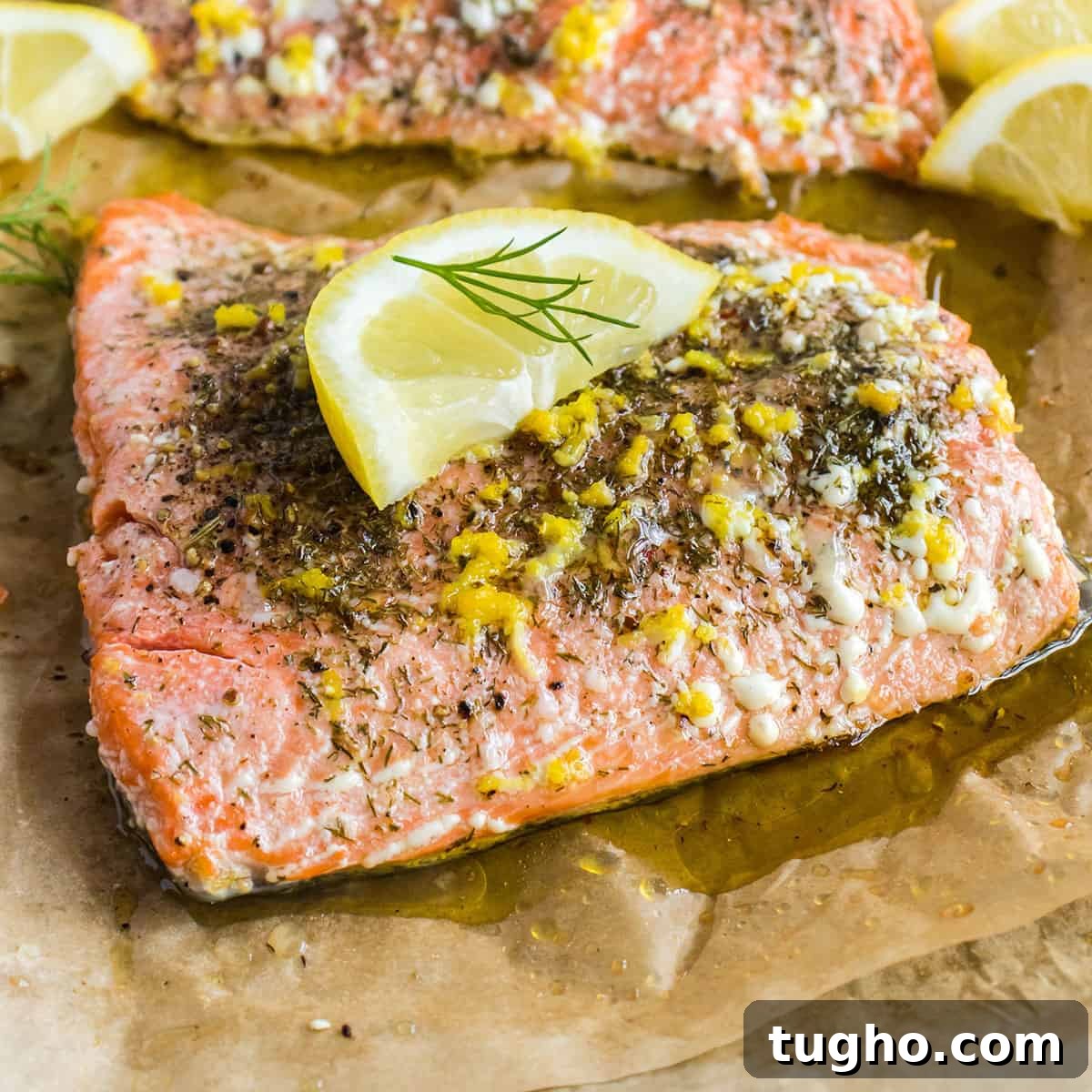
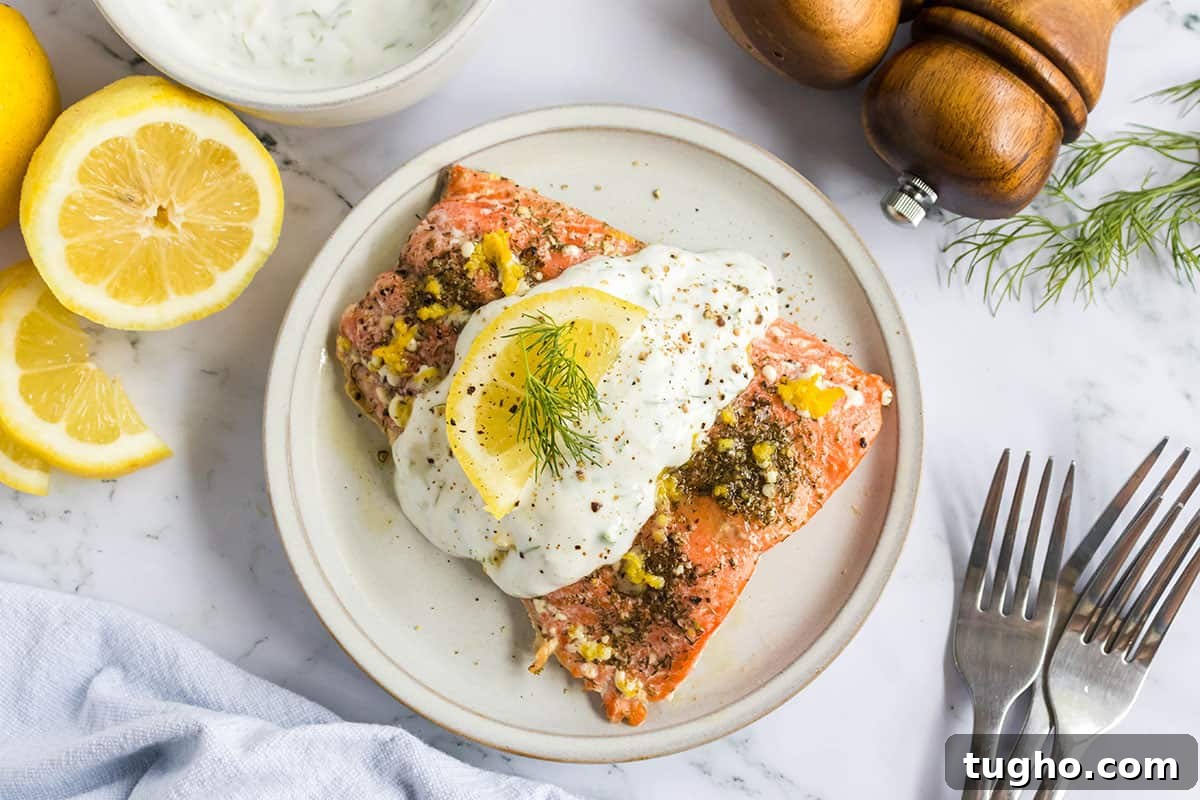
Lemon Dill Salmon is an easy oven-baked dish that always pleases a crowd. Tender, flaky salmon absorbs bright lemon flavor and the fragrant, delicate notes of dill. It looks elegant on the plate but comes together in minutes. Serve it with a creamy lemon dill sauce for an extra layer of flavor that complements the fish beautifully.
This simple baked salmon lets the oven do the work so you can enjoy a restaurant-quality dinner at home. Like other quick salmon preparations, dinner can be on the table in under 20 minutes when you keep prep minimal and cook to the right internal temperature.
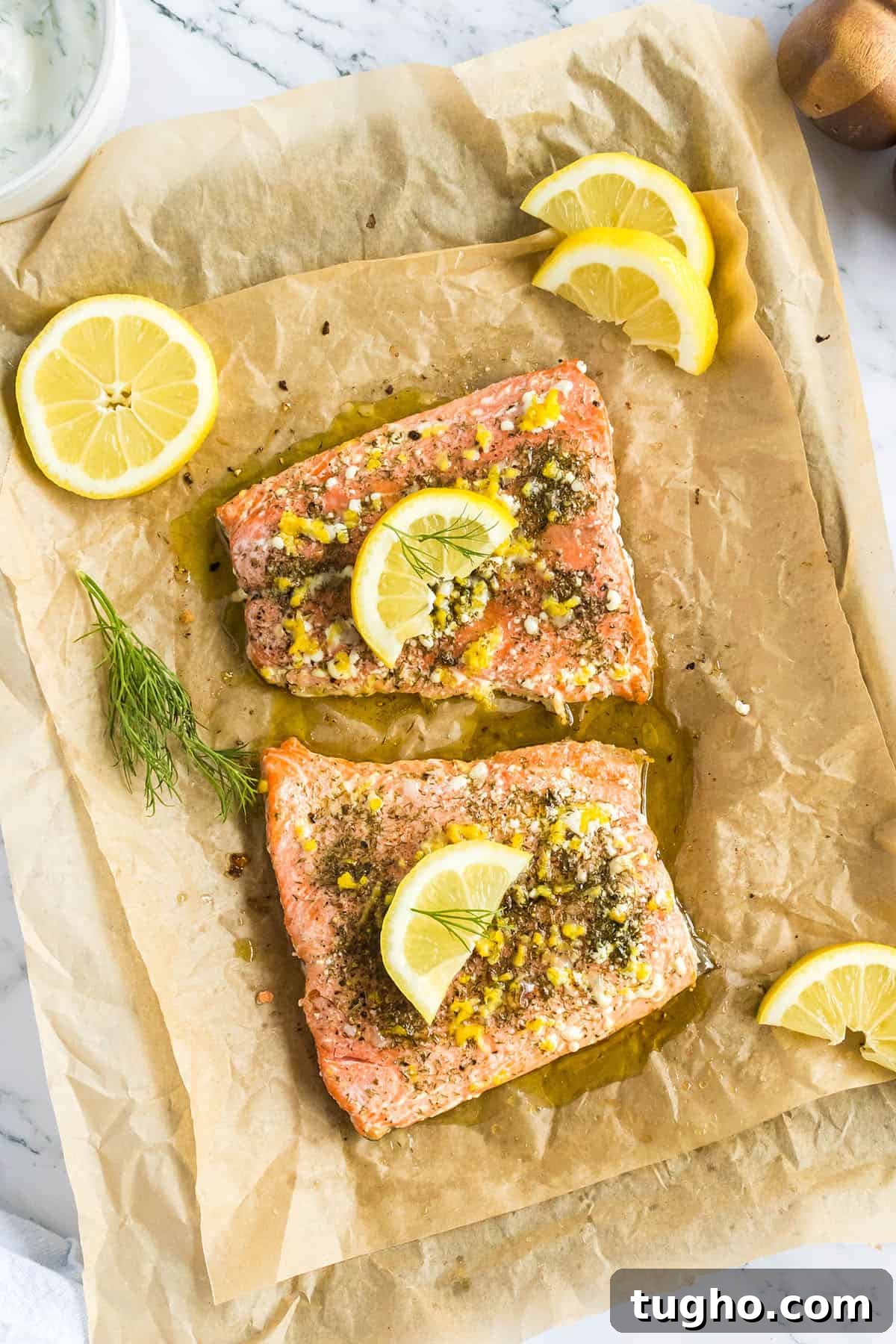
Why You’ll Love It
Salmon has a rich, slightly sweet flavor and a buttery texture that works with many seasonings and cooking methods. Baked Lemon Dill Salmon is especially appealing because it combines bright citrus with an herb that pairs naturally with fish. The method is forgiving — whether you bake, broil, or grill, the lemon and dill enhance the salmon without overpowering it.
This recipe is versatile. Use it as a weeknight main, serve it at a dinner party, or adapt the seasoning to suit other cuisines. The result is reliably moist salmon with a lift of lemon and the herbal freshness of dill.
What to Serve with Salmon
Salmon pairs well with a wide range of sides. Consider roasted vegetables, simple grains, or a bright salad. Below are a few meal ideas that complement the flavors of lemon and dill:
- Meal Plan 1: Honey-roasted carrots and parsnips, crusty garlic bread. Finish with a skillet apple crisp if you like.
- Meal Plan 2: Roast green beans on the same sheet pan as the salmon for easy cleanup. Serve with a creamy cauliflower casserole.
- Meal Plan 3: Crunchy romaine or mixed greens salad with avocado and a lemon vinaigrette, plus warm yeast rolls.
Ingredients You’ll Need
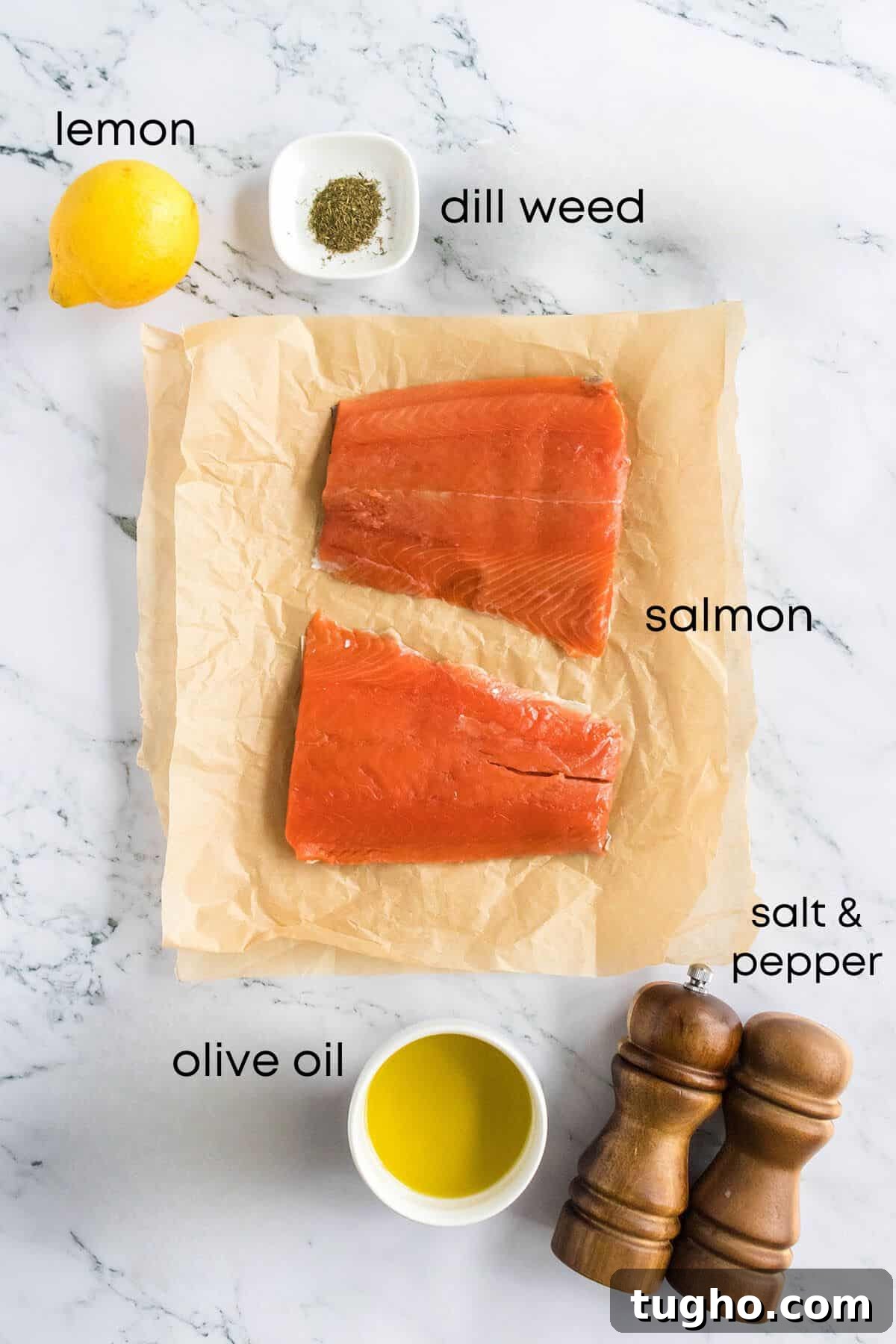
Salmon fillets — 1 to 1.5 lbs total (about 2–4 fillets depending on size). Tail pieces crisp nicely and take seasoning well.
Dried dillweed — simple and convenient; fresh dill can be used instead if available.
Salt and black pepper — finish to taste; coarse sea salt or pink Himalayan salt are good choices if you prefer them.
Lemon zest — adds a concentrated lemon aroma. A squeeze of fresh lemon juice after baking brightens the finished dish.
Ingredient Substitutions
If you want alternatives, these swaps keep similar textures and flavors so the recipe still works well:
Swaps for Salmon
- Catfish — softer texture with a stronger, hearty flavor.
- Redfish — mild and slightly sweet, bakes well and flakes nicely.
- Drum fish — milder and less oily than salmon, still firm and flaky.
- Cod or halibut — lighter flavor and flaky texture; watch cooking time as these can cook faster than salmon.
- Chicken breast — if you prefer poultry, lemon and herbs make a pleasant substitution; adjust cooking time accordingly.
Swaps for Dill Weed
- Tarragon — sweet, slightly licorice-like.
- Thyme — earthy and warm.
- Parsley — fresh and mild, a neutral green note.
- Basil — sweet and slightly peppery, especially nice with lemon.
- Rosemary — pungent and piney; use sparingly so it doesn’t dominate.
How to Make Lemon Dill Salmon
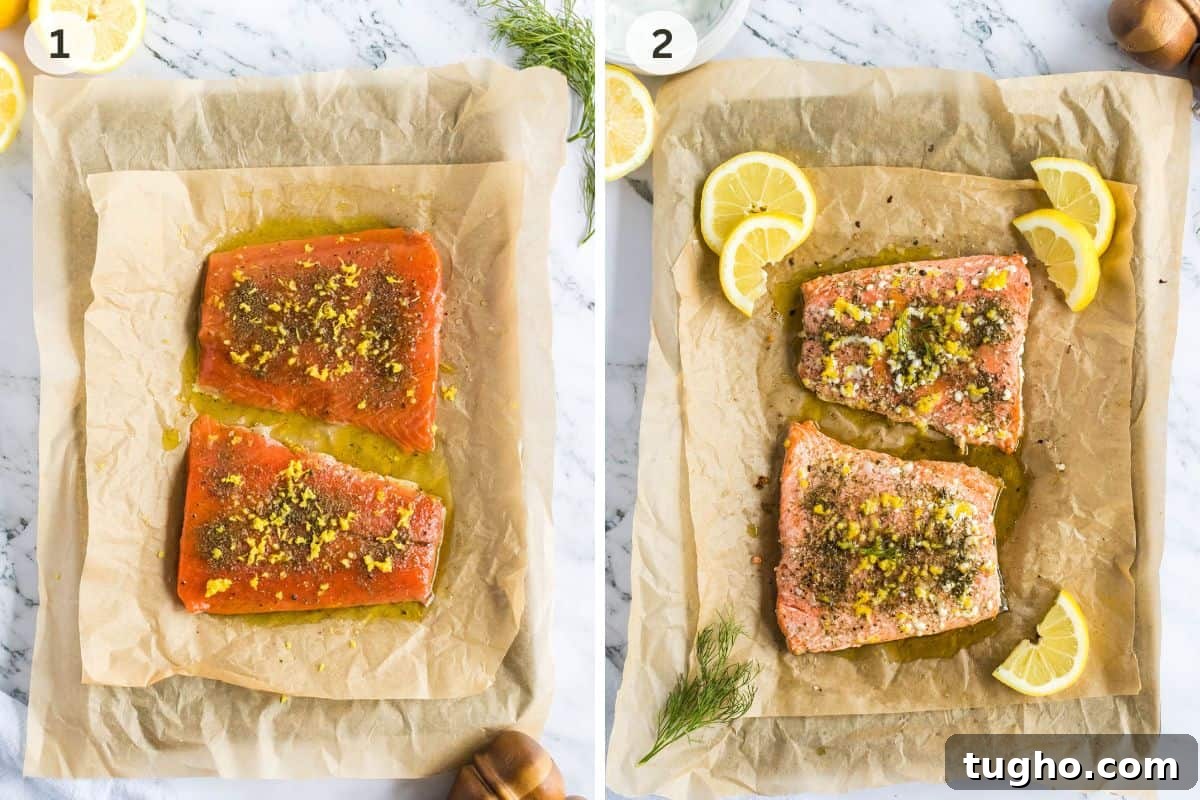
Step 1. Preheat the oven to 400°F (204°C). Line a baking sheet with parchment paper. Place salmon skin side down on the sheet and brush or rub the tops with olive oil.
Step 2. Evenly season each fillet with dried dillweed, salt, black pepper, and the zest of one lemon.
Step 3. Bake 10–15 minutes depending on thickness, until the salmon flakes easily and reaches your preferred doneness. A range of 125–130°F (52–54°C) produces tender, slightly rare center; 145°F (63°C) is the USDA-recommended temperature for fully cooked fish.
Serving suggestion. Let the salmon rest for a few minutes, then spoon lemon dill sauce or a squeeze of fresh lemon over the fillets before serving.
Tips for Success
Choose fresh salmon. Fresh or high-quality frozen salmon gives best flavor and texture — look for bright color and a clean aroma.
Avoid overcooking. Check for flakiness and use an instant-read thermometer if you have one. Remove the fish from the oven just before it reaches your ideal temperature since carryover heat will finish it.
Let it rest. Allow the salmon to sit a couple of minutes after baking so juices redistribute and the texture remains moist.
Tips for Leftovers
Storing and reheating. Cool cooked salmon and refrigerate in an airtight container for up to 2 days. Reheat gently to avoid drying; short bursts in the oven or microwave with a cover and a splash of water or lemon work well. For longer storage, wrap tightly and freeze for up to a month, though the texture may soften after thawing.
Use in salads or bowls. Flake cold leftover salmon into a salad with mixed greens, avocado, cherry tomatoes, and a lemon vinaigrette for an easy, healthy meal.
Frequently Asked Questions
Scoring (shallow slits) helps marinades and seasonings penetrate, but it can dry exposed flesh slightly. It’s optional for this simple lemon-dill treatment unless you plan to marinate the fish for an extended time.
Salmon should flake easily with a fork and feel firm but springy. An instant-read thermometer is useful: 125–130°F (52–54°C) yields a tender, slightly rare center; 145°F (63°C) is considered fully cooked by USDA guidance.
Fresh dill offers a brighter, more delicate flavor. Dried dill is more concentrated and slightly earthier; use about one-third the amount of dried compared to fresh to avoid overpowering the fish.
More Fish and Seafood Recipes
-
10-Minute Red Snapper with Lemon Butter Caper Sauce
-
Cod with Garlic Herb Butter
-
Fried Green Tomatoes with Shrimp Cajun Sauce
-
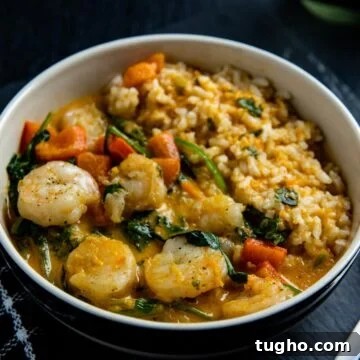
Thai Coconut Shrimp Soup
If you try this recipe, please leave a rating and review so other cooks know how it turned out. For more recipes delivered to your inbox, consider subscribing to recipe updates.
Recipe
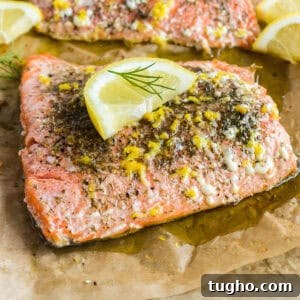
Baked Lemon Dill Salmon
Tender, juicy salmon bakes with bright lemon zest and fragrant dill for an elegant, easy main course.
Equipment
- Sheet pan
- Citrus zester or grater
Ingredients
- 1–1.5 lbs salmon fillets
- 2 teaspoons olive oil
- 1/4 teaspoon dried dillweed (or 3/4 teaspoon fresh, chopped)
- 1/2 teaspoon salt
- 1/4 teaspoon black pepper
- Zest from one lemon (plus lemon wedges to serve)
Instructions
- Preheat oven to 400°F (204°C). Line a baking sheet with parchment paper.
- Place salmon skin-side down on the lined sheet. Brush or rub the tops with olive oil.
- Sprinkle each fillet evenly with dried dillweed, salt, black pepper, and lemon zest.
- Bake 10–15 minutes, depending on thickness, until salmon flakes easily. For a tender, slightly rare center aim for 125–130°F (52–54°C); 145°F (63°C) is fully cooked.
- Let rest a couple of minutes, then serve with lemon wedges or a lemon dill sauce.
Notes
- Freshness matters: Choose fresh or quality frozen salmon for the best taste and texture.
- Temperature: Use an instant-read thermometer for consistent results and to prevent overcooking.
- Storage: Refrigerate leftovers in an airtight container up to 2 days; reheat gently to avoid drying.
Nutrition (per serving)
Nutritional information is provided as a courtesy. If you need exact values for dietary planning, calculate using the specific brands and portions you use.