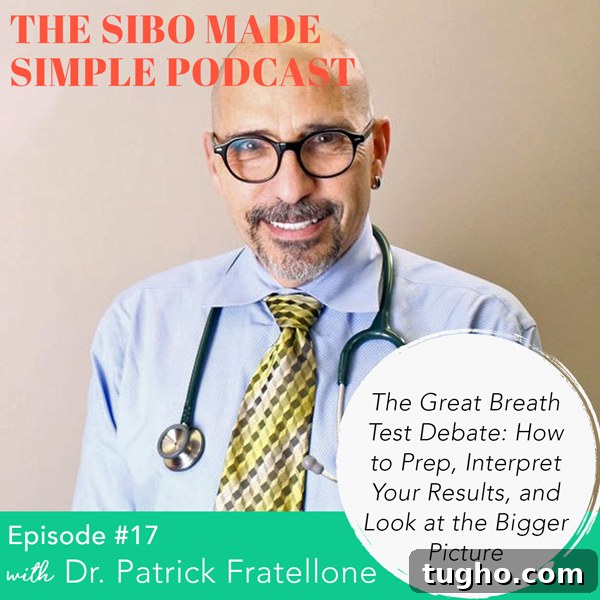
SIBO breath testing has stirred debate across medicine. This article summarizes a podcast interview with Dr. Patrick Fratellone, a functional cardiologist and herbalist, about the strengths and limits of breath testing for small intestinal bacterial overgrowth (SIBO), when testing makes sense, how to prepare so results are reliable, and what complementary tests can reveal about intestinal health.
Dr. Fratellone explains his methodical, functional-medicine approach: start with foundational bloodwork and clinical history, assess gut function and absorption, and only then pursue narrower tests like breath testing. He also discusses stool testing, genetic and methylation screens, testing for intestinal permeability (leaky gut), Candida and fungal overgrowth, and how to interpret hydrogen and methane breath results.
Key topics covered
- Is a SIBO breath test worth the time and money?
- Which additional tests clarify small intestinal function and gut health
- Why vitamin D is an important indicator of gut function
- How Dr. Fratellone prioritizes root causes before assuming SIBO
- MTHFR and methylation testing and what it implies for detox and gut insults
- Genetic contributors to IBS and how they fit into assessment
- How to distinguish Candida or SIFO from SIBO
- Testing for intestinal permeability and its clinical importance
- How to prepare correctly for a SIBO breath test to avoid false results
- What IgG food reactivity testing can and cannot tell you
Resources, mentions and notes
- Dr. Patrick Fratellone — practitioner and clinic
- Genova Diagnostics — comprehensive digestive stool analysis (CDSA)
- 3-hour lactulose breath test protocol for SIBO
- Intestinal permeability (lactulose:mannitol) testing
- Liquid vitamin D and powdered L-glutamine for gut repair
- Viome microbiome testing kits
- At‑home IgG food sensitivity tests
- SIBO Made Simple community and recipe testing opportunities

ALL ABOUT SIBO BREATH TESTING
Dr. Fratellone describes how his interest in integrative medicine evolved from childhood experience with herbal remedies through formal training in internal medicine, infectious disease and cardiology, leading to fellowships in integrative medicine and training in botanical medicine. That background informs his preference for combining conventional and herbal approaches when repairing the gut.
He emphasizes a stepwise assessment: begin with a focused history, physical exam and bloodwork to evaluate absorption and inflammation before concluding the problem is SIBO. Vitamin D is one of the first blood markers he looks at; very low vitamin D often signals impaired gut absorption or other gut insults. From there, he screens for infections, autoimmune disease, heavy metals and methylation defects (MTHFR variants) that hinder detoxification and can underlie persistent gut dysfunction.
WHAT VITAMIN D LEVELS TELL YOU ABOUT YOUR GUT
Vitamin D levels provide a practical window into gut physiology. Mild insufficiency is common in certain regions, but very low levels often indicate malabsorption or chronic gut insult. Dr. Fratellone treats low vitamin D as a sign to address gut integrity and absorption first. If common causes are excluded, then SIBO becomes a more likely contributor.
He routinely orders methylation testing (MTHFR variants) because impaired methylation affects detoxification, immune response and persistent infections—all of which can contribute to chronic gut problems. His point is that SIBO may be part of a larger, multifactorial picture, so a broader diagnostic approach often avoids ineffective or short-lived treatments.
DO SIBO BREATH TESTS WORK?
Dr. Fratellone acknowledges that breath tests can be helpful but are not definitive. A breath test can indicate hydrogen or methane production and suggest overgrowth, yet it does not identify the specific bacteria, fungal contributors, or the underlying causes of dysbiosis. He prefers to pair breath testing with stool microbiome analysis and other diagnostics to reveal the broader microbial and metabolic context.
For stool testing he favors comprehensive panels that include DNA-based microbiome profiling and targeted pathogen or parasite analysis. Newer clinical tests that combine genetic, microbial and metabolic information are emerging and may provide more actionable detail than older single-purpose assays.
HOW TO TEST FOR GUT OVERGROWTH AND OTHER DYSBIOSIS
Breath tests are a reasonable starting point, especially when resources are limited, but they are a single snapshot. Dr. Fratellone recommends follow-up with broader testing when possible: comprehensive stool analysis, microbiome sequencing, and intestinal permeability testing. These tests help distinguish bacterial overgrowth from fungal overgrowth (SIFO) or other disorders that can mimic SIBO.
HOW TO PREPARE PROPERLY FOR YOUR SIBO BREATH TEST
Preparation profoundly affects breath test accuracy. Dr. Fratellone advises a strict protocol: avoid antibiotics, antimicrobials, herbs and nutraceuticals for two weeks prior; stop vitamin C, magnesium and laxatives several days before; follow a very limited diet 24–48 hours prior (lean meats and plain rice, avoid fiber, dairy, eggs, spices and fats); and avoid vigorous exercise for at least 12 hours before testing. Failing to follow these measures can produce false negatives or false positives. Reported sensitivity and specificity for lactulose breath testing are imperfect, so careful prep is essential.
LACTULOSE VERSUS GLUCOSE BREATH TESTS AND INTERPRETING RESULTS
Lactulose tests measure fermentation of a non-absorbable sugar and sample a broader intestinal segment than glucose, which is absorbed earlier. Lactulose is commonly used and is preferred by Dr. Fratellone for its wider coverage. A rise in hydrogen of roughly 20 parts per million above baseline within the first 90 minutes is commonly used as a diagnostic threshold for SIBO, but interpretation must consider test limitations and pretest preparation.
HOW TO TREAT SIBO WHEN YOU HAVE LEAKY GUT
Treatment should address the underlying insults and repair gut integrity before or alongside direct antimicrobial therapy. Practical steps include removing offending foods or substances, restoring vitamin D with well-absorbed formulations, supplementing glutamine to support enterocyte repair, and using forms of nutrients that are readily absorbed (liquid or powder rather than large tablets). Dr. Fratellone often uses herbal therapies, soothing botanical teas and targeted antifungals when indicated. He tailors duration and dosing to the measured degree of permeability and clinical response.
IgG REACTIVITY TESTING AND FOOD SENSITIVITIES
IgG blood testing for food reactivity can provide useful clues but has limitations. At-home finger-prick kits may be convenient but are typically less sensitive than laboratory blood tests. Results must be interpreted in context: if a food has been consistently avoided, IgG may be negative despite clinical sensitivity. Positive results often indicate real immune reactivity, but a comprehensive assessment and professional interpretation are recommended before making major dietary changes.
FUNGAL OVERGROWTH (CANDIDA) AND ITS ROLE
Dr. Fratellone notes that Candida and other fungi commonly coexist with bacterial dysbiosis. He generally assumes yeast is present when SIBO is suspected and treats empirically in some cases, reserving targeted fungal testing for patients who remain symptomatic after treating bacterial overgrowth. A combined conventional and herbal antifungal approach is sometimes used when indicated.
FINAL ADVICE
If you have chronic IBS-like symptoms, start by assessing gut function with basic bloodwork and a careful history, then consider breath testing as one tool among many. When possible, add comprehensive stool or microbiome testing and permeability assessment to identify root causes. Home tests can offer insight, but professional guidance is important to interpret results and design a safe, effective treatment plan. Thoughtful preparation, individualized testing and treating underlying triggers usually lead to better, longer-lasting outcomes than relying on a single diagnostic or quick fix.
Disclaimer: The information in this article summarizes a podcast interview and is for educational purposes only. It is not medical advice and should not replace consultation with a qualified healthcare professional.