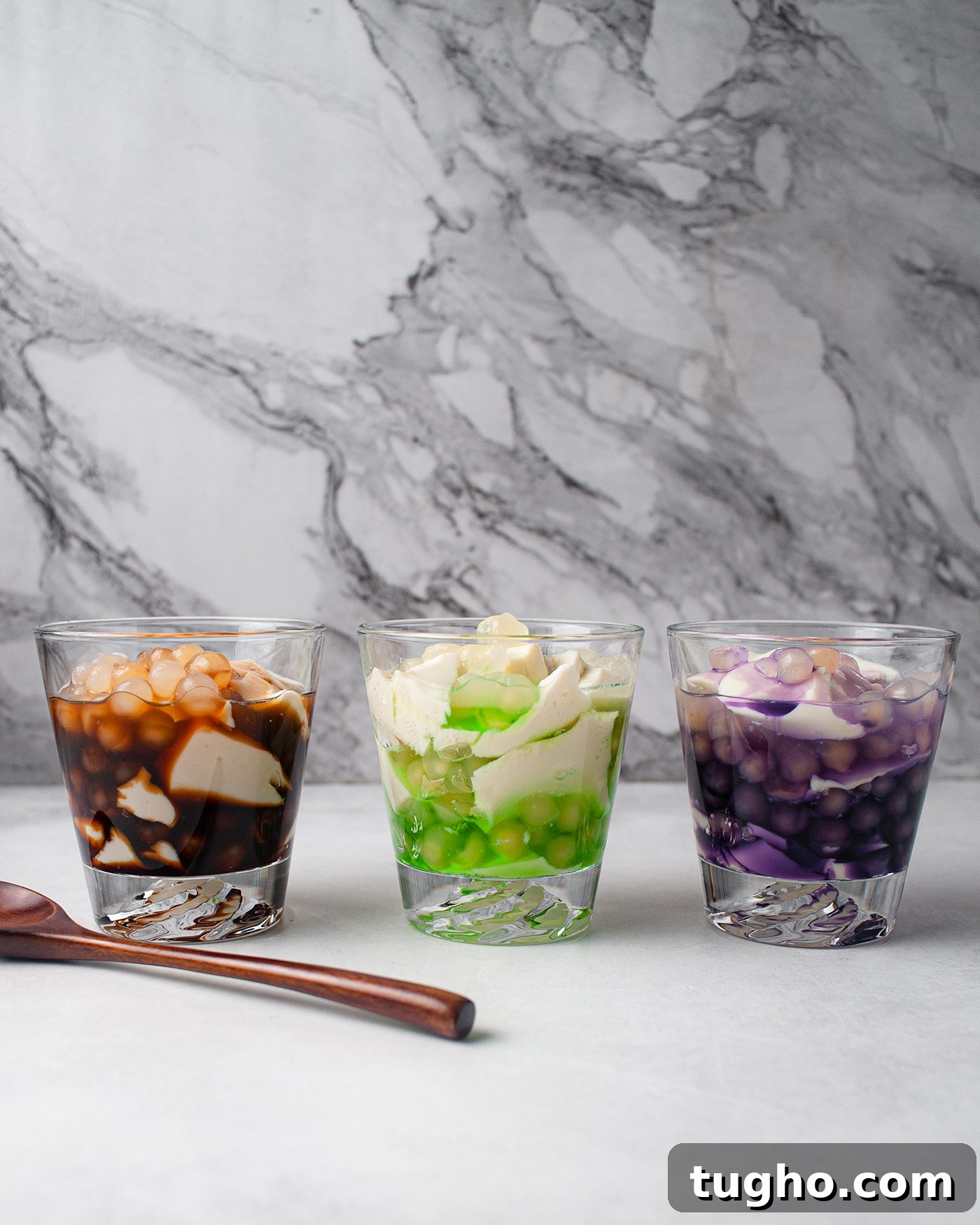
The Philippines is home to many delicious snacks that can be enjoyed at almost any time of day. One of the most beloved is taho, a warm, sweet, and comforting Filipino street food that is also surprisingly simple to prepare at home.
Taho is a soft tofu-based snack or dessert made with fresh silken tofu, chewy sago pearls, and a generous drizzle of sweet syrup. It is especially popular in the Philippines and is also connected to similar tofu desserts found in other Asian countries, including China and Singapore.
In this Filipino taho recipe, you will learn how to make three delicious versions: classic arnibal, ube, and pandan. Each flavor uses the same creamy tofu and sago base, but the syrups give every cup its own color, aroma, and sweetness.
Keep reading to learn how to make taho at home for yourself, your family, or friends. Whether you enjoy it warm in the morning or chilled on a hot afternoon, this easy Filipino dessert is a treat worth making.
This post may contain affiliate links. Please read our disclaimer policy for details. As an Amazon Associate we earn from qualifying purchases.
Table of Contents
- What is taho?
- What does taho taste like?
- What is taho sauce made of?
- What flavors can taho be made with?
- How to make taho:
- Ingredients
- Arnibal
- Ube Syrup
- Pandan Syrup
- Recipe
- Prepare the sago
- Make Arnibal
- Make Ube and Pandan Syrups
- Assembly
- How to store taho:
- Final Thoughts
- More Recipes You’ll Love
- References & Further Reading
What is taho?
Taho is a classic Filipino street snack made with silken tofu, soft sago pearls, and arnibal, a sweet brown sugar syrup.
This comforting dessert is closely related to the Chinese tofu pudding called douhua. Douhua can be served in many ways, either sweet or savory, depending on the region and ingredients used.
Filipino cuisine has been shaped by a long history of cultural exchange with China, and taho is one of the many dishes that reflects that influence. In the Philippines, taho has become its own familiar and nostalgic snack, often associated with mornings and neighborhood street vendors.
A taho vendor, known as a magtataho, is easy to recognize. Traditionally, the vendor walks through the streets carrying a pole across the shoulders, with two large buckets hanging from each side. These buckets hold the silken tofu, sago pearls, syrup, and serving tools needed to prepare each cup fresh for customers.
Many Filipinos also remember the sound of vendors calling out “Taho! Taho!” as they pass through residential areas. For many people, that call is part of the experience and charm of enjoying this simple but memorable Filipino dessert.
What does taho taste like?
Taho tastes sweet, creamy, soft, and lightly chewy. The silken tofu has a mild flavor and delicate texture, which allows it to absorb the sweetness of the syrup. The arnibal adds a deep caramel-like sweetness, while the sago pearls give each spoonful a fun, chewy bite.
The beauty of taho comes from the contrast of textures. The tofu is smooth and silky, the sago is tender and bouncy, and the syrup ties everything together with warmth and sweetness.
Taho is most commonly served warm, especially when purchased from street vendors in the morning. However, it can also be enjoyed cold. Chilled taho is especially refreshing during warm weather, making it a wonderful summer dessert or afternoon snack.
What is taho sauce made of?
The traditional sauce for taho is called arnibal. It is a simple brown sugar syrup made with brown sugar and water.
The color and thickness of arnibal can vary depending on the type of sugar used and how long the syrup is cooked. A longer simmer creates a thicker syrup, while a shorter cooking time keeps it lighter and more fluid.
For this recipe, we use a ratio of 2 parts muscovado sugar to 1 part water. This creates a rich, deep amber syrup with a fuller flavor and thicker consistency.
Muscovado sugar has a higher molasses content than many other sugars, which gives arnibal a more complex taste and darker color. If you do not have muscovado sugar, you can use dark brown sugar or light brown sugar instead.
Check out our Brown Sugar Boba Milk Tea recipe using muscovado sugar here!
What flavors can taho be made with?
Classic taho is usually made with arnibal, but modern taho can be prepared in many flavors. Popular variations include vanilla, ube, pandan, mango, and strawberry.
In this recipe, you will learn how to make traditional arnibal, plus two colorful flavor variations: ube taho and pandan taho.
Ube taho is made with ube extract, which gives the syrup a beautiful purple color and a subtle sweet, nutty flavor. Ube extract blends easily into simple syrup, making it a convenient way to flavor this dessert.
Ube extract is strong, so use it carefully. Adding too much can make the syrup taste bitter instead of pleasantly sweet.
Looking for more ube recipes? Try our Easy and Refreshing Ube Horchata Recipe.
Pandan taho has a soft green color and a gentle aroma often compared to vanilla. Pandan is a tropical plant commonly used in Asian desserts, including buko pandan salad. This syrup has a mild sweetness and a fragrant flavor that pairs beautifully with silken tofu and sago.
How to make taho:
To make homemade taho, prepare three main components: silken tofu, sago pearls, and syrup. Once everything is ready, the dessert is assembled in layers and served warm or chilled.
We recommend preparing large sago pearls one or two days in advance. Large sago takes time to become fully translucent and tender. If you want a quicker version, you may use smaller sago pearls or boba pearls and follow the package instructions.
This easy taho recipe walks you through the process step by step, including how to make classic arnibal, ube syrup, and pandan syrup.
Ingredients
- 1 package silken tofu
- 100 grams large sago pearls
- 1 liter water for boiling
Arnibal
- 1 cup muscovado sugar or brown sugar
- ½ cup water
Ube Syrup
- 1 cup sugar
- ½ cup water
- ⅛ tsp ube extract
Pandan Syrup
- 1 cup sugar
- ½ cup water
- ⅛ tsp pandan extract
Recipe
Prepare the sago
- Cook the sago pearls according to the package instructions, or use the basic double-boiling method below. Note: this method requires soaking the sago overnight.
- For 100 grams of large sago, bring 1 liter of water to a boil. Once boiling, add the sago pearls and cook for 15 minutes.
- Rinse the sago with cold water to stop the cooking. Transfer the pearls to a bowl, cover with water, and refrigerate overnight.
- The next day, repeat the boiling process, but cook the sago for only 10 minutes. Rinse again with cold water.
- Place the sago in a bowl of water and refrigerate for 3 hours, or until the pearls are translucent.
Make Arnibal
- In a saucepan over medium heat, dissolve the muscovado sugar or brown sugar in water. Stir often to prevent burning. Bring the mixture to a boil, then remove it from the heat. Simmer longer if you prefer a thicker syrup.
- Transfer the arnibal to a heatproof mason jar or container and set aside.
Make Ube and Pandan Syrups
- In a saucepan over medium heat, dissolve the white sugar in water. Stir often to prevent burning. Bring the syrup to a boil, then remove it from the heat. Simmer longer if you want a thicker syrup.
- Pour the syrup into a heatproof mason jar or container.
- Let the syrup cool for at least 5 minutes, then mix in your extract of choice.
- Repeat the same steps for the other flavor.
Assembly
- In a serving cup or bowl, add alternating layers of silken tofu and sago pearls.
- Pour your preferred syrup over the top. Add as little or as much as you like, then stir gently and enjoy.
How to store taho:
The best way to store taho is to keep each component separate in the refrigerator, then assemble the dessert when ready to serve. Store the sago pearls in water, or mix them with a small amount of syrup to help keep them from sticking together.
If the taho has already been assembled, it can be stored in the refrigerator for up to 2 days. The sago pearls may soften and become soggy the longer they sit, so taho is best enjoyed within a day or two.
To reheat taho, warm the syrup in a small pot on the stove. Add the tofu and sago to a serving cup or bowl, pour the warm syrup over the top, and stir gently before serving.
Final Thoughts
Homemade taho is sweet, creamy, comforting, and easy to customize. With soft silken tofu, chewy sago pearls, and your choice of arnibal, ube, or pandan syrup, this Filipino dessert is simple enough for everyday snacking but special enough to share.
Serve it warm for a classic street-food experience or enjoy it cold as a refreshing treat on a hot day. Once you learn the basic method, you can easily adjust the sweetness, syrup thickness, and flavor to your preference.
If you are still craving something sweet, explore more of our dessert recipes!
Thank you for reading! If you enjoyed this recipe, please leave a star rating and review on the recipe card below, and share your creations on Instagram by tagging us @itsforkandspoon.
Taho – Arnibal, Ube, & Pandan
Equipment
-
Saucepan
-
Fine mesh strainer
-
Mixing bowls
-
3 mason jars or heatproof containers
Ingredients
- 1 package silken tofu
- 100 grams large sago pearls
- 1 liter water, for boiling
Arnibal
- 1 cup muscovado sugar or brown sugar
- ½ cup water
Ube Syrup
- 1 cup sugar
- ½ cup water
- ⅛ tsp ube extract
Pandan Syrup
- 1 cup sugar
- ½ cup water
- ⅛ tsp pandan extract
Instructions
Prepare the sago
- Cook the sago pearls according to package instructions, or use the double-boiling method below.
- Bring 1 liter of water to a boil. Add 100 grams of large sago pearls and cook for 15 minutes.
- Rinse with cold water to stop the cooking. Place the sago in a bowl of water and refrigerate overnight.
- The next day, boil the sago again for 10 minutes, then rinse with cold water.
- Submerge the sago in water and refrigerate for 3 hours, or until translucent.
Make Arnibal
- In a saucepan over medium heat, dissolve the muscovado sugar or brown sugar in water. Stir often and bring to a boil. Simmer longer for a thicker syrup, if desired.
- Transfer the arnibal to a heatproof jar or container and set aside.
Make Ube and Pandan Syrups
- In a saucepan over medium heat, dissolve the white sugar in water. Stir often and bring to a boil. Simmer longer for a thicker syrup, if desired.
- Transfer the syrup to a heatproof jar or container.
- Let the syrup cool for at least 5 minutes, then stir in the extract.
- Repeat for the other flavor.
Assembly
- In a serving cup or bowl, layer the silken tofu and sago pearls.
- Pour your chosen syrup over the top. Stir gently and serve.
Notes
- The number of servings depends on the size of your tofu block and serving cups. The sago and syrups may make more than you need for one block of tofu, so store leftovers separately in the refrigerator.
More Recipes You’ll Love
Check out this recipe
Check out this recipe
Check out this recipe
References & Further Reading
https://en.wikipedia.org/wiki/Douhua
https://en.wikipedia.org/wiki/Taho
https://www.esquiremag.ph/long-reads/features/the-history-of-taho-a00293-20200526#:~:text=The%20word%20taho%20is%20derived,impure%20salt%20to%20the%20concoction.